Why Buyer Confidence Is at an All-Time Low — and What to Do About It
Your car goes where your eyes go." That's a high-performance driving lesson — and it's the perfect metaphor for what's gone wrong in B2B sales. We've been staring at the wrong thing.
I'm Lee Levitt — sales coach, podcast host, and author of The Second Meeting and Together We Win, both due out later this year. Today I'm sitting down with Tom Pisello, known across the industry as The ROI Guy. Tom's been a value-selling pioneer for over 30 years — from his days as the Godfather of TCO at Gartner to founding GeniusDrive.
Buyer confidence is at an all-time low. More information, bigger committees, better tools — and yet two-thirds of buyers regret their decisions shortly after the ink dries. Why?
Here's what to listen for: Aristotle's three buy buttons — pathos, logos, and ethos — and why trust now accounts for 50% of the decision. The shift from fear of missing out to fear of messing up. And why more information doesn't create more confidence.
If you've ever had your best ROI story fall flat, this one's for you. Let's go.


Buyer confidence is at an all-time low — and more data isn't fixing it. In this episode, Lee sits down with Tom Pisello (The ROI Guy), value-selling pioneer and founder of GeniusDrive, to unpack why B2B deals stall even when the numbers are solid.
Tom and Lee explore Aristotle's three buy buttons, the shift from FOMO to fear of messing up, why trust now drives 50% of the purchase decision, and what vendors need to do differently in an era of AI-accelerated complexity.
Topics covered:
- High-performance driving as a sales metaphor: your car goes where your eyes go
- Why emotional connection precedes logical justification in every buying decision
- The confidence gap: why two-thirds of buyers regret purchases shortly after signing
- Collective buying committees, compromise, and eroded confidence
- AI's role in accelerating value frameworks — from six months to six days
- The outcome economy and why token-maxing is the wrong metric
- Leadership in an era of rapid, disorienting change
References and further reading:
- Frugalnomics Survival Guide by Tom Pisello — Tom's foundational work on value selling and the three buy buttons that drive every B2B purchase decision
- The Art of Racing in the Rain by Garth Stein — the book (and film) behind Tom's keynote framework, and the source of the episode's central metaphor
- The Challenger Sale by Matthew Dixon and Brent Adamson — foundational work on the role of emotion in B2B purchase decisions
- Todd Caponi — trust and transparency expert, author of The Transparency Sale; recommended by Tom as essential listening on the trust dimension of selling
- Lee's forthcoming books: The Second Meeting and Together We Win
Connect with Tom Pisello:
- LinkedIn: Tom Pisello (The ROI Guy)
- Podcast: Value Coffee Talk
- Website: geniusdrive.com/community
Help us grow the podcast reach!
Please comment on and share the podcast. Tell two coworkers about what you loved about this episode!
And...leave a personal message for us...click on the microphone icon on the right.
Thanks!
Thoughts on Selling™ is a trademark of The Acelera Group, LLC. All rights reserved. Federal trademark registration pending.
ce. They won't give you the helm.
Tom: Trust is really interesting right now. I had Todd Caponi on my podcast — highly recommend him if you haven't interviewed him yet. He talks about authenticity and transparency in the sales process a lot. Challenger hit on the emotions. Todd hit on trust. And I think the shift has happened: maybe a decade ago it was really about emotionally stoking change — the fear of missing out. Now it's the fear of messing up.
So trust is really, I think, the bigger driver right now in it all. If we had percentages: 25% is still emotion, and you've got to get them charged up to want to change. 25% is they're gonna have to justify this to themselves. But 50% of the decision-making now I think comes down to trust.
And what's really important is two-thirds of buyers are regretting deals not too soon after the ink is signed. Buyer confidence is at an all-time low. You would think that with the wealth of information and reviews — G2 and all this other stuff — there would be more trust. But it's actually more mistrust than ever. Why do you think that is?
Lee: I think there's so much uncertainty, and a collective buying committee is making a lot of the decisions. So everyone is going into it with the fear of: "If I mess this up, it's my job." And to overcome that fear, you get a bigger committee, and it keeps getting bigger, and there's so much compromise that I'm not sure anyone is really that enthralled with some of the decisions that are being made.
It's going to get even more interesting because there's a lot of decision-making happening around AI and rapid innovation — almost being forced from management. "You will take advantage of this or you'll perish." "You will take advantage of this or you'll become obsolete." I think it's gonna get even worse as we go into this period.
Tom: I am in complete alignment with you. I asked ChatGPT last fall, "What are the top four or five AI-based sales training tools?" And it came back with a list of ten, and also with: "Would you like me to write you an RFP?" This is not something a buyer could have done five years ago. Today I can go onto Gemini or Claude and say, "Here's my environment, here are the top three things I'm concerned about, here are the scores of my top reps and my bottom reps — what do I need, who are the vendors, send them RFPs."
Lee: Yet do we think that's going to improve the confidence in what gets purchased? I'm thinking that's not going to move the needle. There's still something fundamentally missing.
Tom: The process becomes easier, more informed. But is more information better? And ultimately, are they getting what they want and need?
On the vendor side — what are vendors doing to help overcome this? Many of them are still doing business the old way. With software as a service, professional services, assuring solutions were implemented right, adopted right, delivering the business value that was promised — those things were dirty words in a way. We eventually saw customer success get added, but how many accounts does the average customer success rep have? It's not that intimate a relationship. We've lost that intimacy that trust can be built out of.
Lee: Without the intimacy, you've got no trust. What I've seen is customer success managers became a pivotal part of larger sales teams, and then they all got quotas. They weren't salespeople — they didn't want quotas — and the role got bastardized into another sales rep. And because that wasn't successful, the CSM role has been diminished or collapsed back into account executives.
Tom: Right. But are we going to start to think about this differently — that it's not the product we sell or the service we deliver, it's the outcomes ultimately that are generated, which are unique to each buyer? We've got to uniquely identify that, uniquely measure it, uniquely assure delivery of it. I think it's that shared value planning and management process that can get us over this confidence gap.
Lee: I think we're gonna see a lot of vendors crashing and burning by adopting more and more scripts, more and more AI support — giving reps all the information they need so they don't have to be curious anymore. I'm sorry, how do you pivot in a conversation if you've read the script twice but don't really know what's going on?
Tom: More information, more, more, more. And it doesn't necessarily create that bond, that intimacy, that human connection. We all get the emails that are the first touch from a company and you're immediately turned off.
Salesforce just recently introduced the AWU — a workload unit — and they're saying token maxing isn't working. Measuring tokens is not gonna do it. But if we can assign it to a workload unit that connotes value, and that value is unique per customer, we can get to something more important. The outcome economy — focused on outcome delivery and realization for the customer — can help assure alignment and get us on the right track.
Lee: Going back to Joe Terry — activity is not the answer. Just because you're busy, just because you're spending a lot of tokens doesn't mean you're making forward progress. One of my favorite business books is Will It Make the Boat Go Faster? You can row all you want. If your oars are not in the water, you're not going anywhere.
Tom: Exactly. The best teams are measuring efficiency, have loops to continuously improve it, are coaching for it. It becomes a lot more about the activation and a lot less about the technology alone.
Lee: It never has been about the technology, Tom. You may know this — the first known instance of sales enablement happened a long time ago. Do you remember when it was?
Tom: I don't.
Lee: It happened at National Cash Register in the late 1800s. There's a sales primer that says, "Don't talk about the cash register on the counter. Talk about the flow of the business."
Tom: Amazing. I love it. The first value selling orientation — focus on the pain of an inefficient flow as opposed to the hardware to solve it.
Lee: Yeah, there was no software at that point. Just mechanical levers. Interesting stuff. So let's fast-forward — what's going on five years from now?
Tom: Even five years from now, I find it really hard to predict anything more than a year or two out anymore. As former analysts, we were responsible for five-year views. Can't do it anymore. I don't know how a CEO is doing it nowadays to see past six months or a year with the pace of change. And I think that's part of the unsettling that breeds the lack of confidence in everything else.
I've got this decided optimism, but also a lack of confidence in my ability to predict where we're gonna be. Six months ago, I didn't think AI could do some of the things so reliably that it can do today. I've got an engagement process to create a value framework and value story for customers. Back in the day, that would take six months, eight months. With AI assist, I got it down to six weeks. Now it's down to six days. Six months, six weeks, six days — in the timeframe of this past year.
Lee: Huge impact on time to value.
Tom: Huge multiplier. The amount of engagement capability and outcomes I can produce as a consultant are multiplied 5X, approaching 10X. But when you're in a system evolving that rapidly — does six days become two days, one day, or just an agent that goes and does it? And if I'm a traditional consulting business charging per hour, it's not six months of billable work anymore. Is it six days? You do it on an outcome basis. The economic rug is being pulled out from under a lot of businesses and business models.
Lee: I would really not want to be a CIO today. My world is changing so dramatically. I call my vendors, I call Gartner, I call IDC, Forrester, and I say, "Help me see around corners." And the answer is, "What corners? We don't see them either."
Tom: Exactly. It's a challenge. So we're gonna end on good news.
Lee: The good news is there's always a place for people who can see patterns. And by the way, what is AI?
Tom: AI sees patterns and tells you confidence levels. No different than us as analysts back in the day. We just used to be faster and better than software could do it. Now software is pretty good. But it's the human patterns too — the human patterns, the business patterns. When we are the ones giving AI the right prompts, we have to say, "Did you think of this? Look at it from this perspective. What about this perspective?" And we've all seen failings in the computations.
There's still a dramatic need for critical thinking and cross-system pattern recognition. That skill set doesn't go away. And EQ as opposed to IQ becomes so much more important.
But I do think there's one area that deserves more attention: we're gonna have a lot of people who are disheartened. A lot of people who are lost, who are just steamrolled by change. And I think there's never been a better time to be a leader — whether that's a thought leader, a people leader, a visionary — to provide that light and guidance in an environment that can appear so overwhelming. The people who can do that are gonna have a special place.
Not catastrophic mass unemployment as everyone predicts. I don't think that's going to occur to those levels. But it's enough to upset the apple cart. If you can provide leadership, clarity, frameworks, and authentic purpose — and create those intimate relationships with individuals — those are the skills to really amplify in this environment.
Lee: I'm 100% with you, Tom. Where can people find you?
Tom: LinkedIn — Tom Pisello, the ROI Guy. I've got a Value Coffee Talk podcast, available where all podcasts are consumed. And on our geniusdrive.com website, the community page has tons of great articles, advice, and events.
Lee: I'll put those links into the show notes. Tom, it's been a pleasure. It's always fun to talk with someone who has been living the value world for a long time.
Tom: Thank you, Lee.
Lee: Thanks, Tom.
Another deep dive into the topic of sales excellence and the performance mindset. If you found this conversation interesting, I would appreciate it if you would share the podcast with a coworker or two. To explore this topic in more depth, send me a note via the contact form on podcast.thoughtsonselling.com, or find some time for us to talk at meet.acelera.group. Thanks.
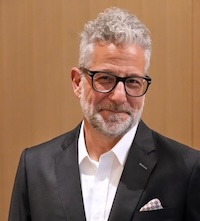
Value-Led Growth Pioneer, Author, Podcaster and founder / CEO of value consultancy Genius Drive
Tom, also known as the ROI Guy, is a long time value-led growth pioneer, creating some of the first automation software in the space. with companies Interpose, sold to Gartner, and Alinean, sold to sales enablement firm Mediafly.
Tom is an author, speaker and hosts the Value Coffee Talk podcast.
And in his latest role, the founder and CEO of value consultancy Genius Drive.