Who Are You Being? — Gina Smith on Trust, Listening, and the Real Job of a Salesperson
Gina Smith didn't plan to spend 27 years in sales. She planned to stay in HR — until a sales manager walked into her office and asked if she knew anyone who could fill an open role. She interviewed. She won. And what followed was a career that taught her everything she needed to know about trust, listening, and what actually moves buyers in complex environments.
In this conversation, Gina and Lee explore the gap between what people believe salespeople need to be and what the best salespeople actually are. They cover the shift in hospital buying dynamics, why honesty is a competitive advantage, and why no amount of process documentation will close the gap when the real variable is who you show up as. A sharp, grounded conversation for anyone selling in environments where the relationship has to come before the recommendation.


Gina Smith spent 27 years selling medical devices into hospital operating rooms — and she got there entirely by accident. No role models. No sales background. A career in HR she was tired of.
One conversation with a sales manager who couldn't fill a role. And a "mercy interview" she then went out and won.
In this episode, Gina and Lee dig into what actually drives sales performance in high-stakes, complex environments — and why it has almost nothing to do with product knowledge or closing technique.
What we cover:
- How Gina went from HR to 27 years in medical device sales — and why she was skeptical of salespeople herself
- Why the best salespeople are introverts who learn to act like extroverts — not the other way around
- The shift from OR presence to supply chain gatekeeping, and what it costs sellers who can't adapt
- The "painful truth" principle: why telling customers what they don't want to hear builds more trust than protecting the relationship
- "Who are you being?" — the question that reveals everything about a salesperson's intent
- Why mapping out a sales process on the CFO's whiteboard won't fix the real problem
- The difference between selling to people and serving them — and why buyers can always tell which one you're doing
Gina now coaches founders and small sales teams through her practice at ginarsmith.com.
Connect with Gina:LinkedIn: Gina R. SmithWebsite: ginarsmith.com
Connect with Lee:podcast.thoughtsonselling.comLet's Talk: meet.acelera.group
Help us grow the podcast reach!
Please comment on and share the podcast. Tell two coworkers about what you loved about this episode!
And...leave a personal message for us...click on the microphone icon on the right.
Thanks!
Thoughts on Selling™ is a trademark of The Acelera Group, LLC. All rights reserved. Federal trademark registration pending.
LEE: You know, for me it's always gonna be the people, and it's always gonna be the opportunity for me to build relationships with them and to gain their trust and to gain their confidence. So when there's time to make a decision, that trust is in me and what I've helped them to do.
Welcome back to the Thoughts on Selling podcast. I'm Lee Levitt, sales coach, podcast host, and author of The Second Meeting and Together We Win, both due out later this year. Today we're talking about what it really takes to build trust in complex sales environments and why being a great listener beats being a great talker every time.
My guest is Gina Smith, a sales coach who spent 27 years selling medical devices into hospital operating rooms before launching her own coaching practice. She came to sales by accident with no role models and every reason to believe salespeople were the enemy. Here's what to listen for: why the best salespeople are introverts who learn to act like extroverts. The question that changes everything — who are you being as a salesperson and why? The clinical champions who used to control buying decisions now have to share the vote with the supply chain. If you're selling into complex environments and wondering why relationships still matter when spreadsheets seem to make the decisions, this one's for you. Let's go.
Today it is my absolute pleasure to have Gina Smith join me to talk about all things selling. Welcome aboard, Gina.
GINA: Hi Lee. How are you? I'm happy to be on here today. Thanks for inviting me.
LEE: It's good to have you here. So Gina, first question — who is Gina Smith?
GINA: Who is Gina Smith? I am first a daughter. I'm the favorite auntie in my family. I'm a fun, loving person. I'm a cyclist, I'm a swimmer. I'm a cook, I'm a foodie. I'm a wine lover, and I love business. And I love selling.
LEE: Wow. So many threads to pull on there. Gina, let's talk about selling. Do you remember your first selling experience?
GINA: My first selling experience was Girl Scout cookies.
LEE: How'd it go?
GINA: It's hard to remember. I hate to say it, but I think my dad sold more cookies than I did back in the day. You had this little signup paper and you took it to his office and lots of people signed up for Girl Scout cookies. I might have gone door to door to some of the neighbors. We lived on a military base — my other Girl Scouts were all next door. A lot of us conglomerated into a fairly small community. But that was my first selling experience.
LEE: Yeah. I remember my first selling experience. I was selling Burpee seeds door to door because I wanted an airplane — a little model airplane. And of course, everyone in sales says if you want an airplane, a fast car, a vacation home, the fastest way to get there is to go into sales. So I went into sales at the age of 12 and I sold Burpee seeds door to door. My first important, impactful memory was knocking on someone's door in the middle of the afternoon, and a guy comes to the door in a bathrobe. And it was incredibly uncomfortable for me as a 12-year-old looking at this neighbor who was looking at me going, what's this kid doing on my front step? He just woke me up from a nap or whatever. And I'm sitting there thinking, I am so uncomfortable here. What I took away from that was: Burpee seeds can't get you an airplane. And I never want salespeople to be in a situation where they are uncomfortable about what they're doing. I want them to be prepared. I want them to show up with a point of view. I want them to be ready for that conversation. That's something that happened to me at the age of 12, and eventually I got into sales enablement and said, this is the culmination of all of that original discomfort — I can fix it. I can help salespeople be better prepared.
GINA: Yes. I think back on it and it's like I consciously didn't know any salespeople. Very few women even worked — there were very few women in the military at the time, and most of them were nurses. My mom was a stay-at-home homemaker, as were the moms of most of the kids I knew. Maybe the Tupperware lady — I didn't really look at her as a salesperson. Or the fellow who came around selling insurance. I never imagined that I would become a salesperson.
LEE: You had no role model?
GINA: No role model whatsoever. And I wouldn't include Girl Scout cookies as a big one. Like most people, I'd had some of those unfortunate sales experiences — car salesmen, whatever — and just the media impression of salespeople: fat old white men with a cigar hanging out of their mouth trying to cheat you out of your life savings. I was reflecting on this when I first went into corporate after my service in the military. I was in HR. The sales manager for this product division was there. I spent maybe five years in HR and I just really got tired of it — every year we're laying off people, same old thing. I did a project for my company in Bedford. I spent a year and a half there doing this project, and I'd gotten to know the sales managers for the different product divisions. I walked into one guy's office one day and he said, listen, we can't find anybody for this job. You're in HR — maybe you should help us. And I was like, well, what is it? So he describes the role to me and I'm thinking, I could do that. I'm really over HR and I want to do something different. That was the beginning of a sales career I never imagined.
LEE: Purely happenstance. You were in one discipline and just through happenstance this guy said, do you know anybody?
GINA: Yeah. In fact, I do.
LEE: It was interesting because your boss —
GINA: My boss, who was the regional president at the time, was like, why are you doing this? You're great at what you do. But part of me could see there really wasn't a lot of progression with HR. I was tired of it. And I literally think they gave me a mercy interview — she meets all the qualifications, we can't tell her she can't interview, we'll let her interview. But I killed it. In the process of getting ready for it, I realized I had been selling all along. I had to sell the company to people we were recruiting. Every year you've got to sell the declining benefits package. I was part of the management team. I had to sell ideas to them that we then had to sell to our employees. So I really had been selling all this time. The guy who ended up being my first sales trainer — they went downstairs to the bar and without talking, he said, who do we want? And they all said, we want Gina. And that was the beginning of this great adventure that I had for 27 years.
LEE: You know what they call that, Gina?
GINA: What?
LEE: They call that a vote of confidence.
GINA: Yes. Yeah, it was great. I sold to hospitals — a very consultative sell — and I loved it. I found that I was very good at it because I liked people and I listened to people. And maybe part of growing up in an Air Force community — you don't have a choice who lives next door to you, who goes to school with you. People move out, new people move in. So I learned to be adaptable with just about anyone. I could talk to the janitor — who, by the way, knows everything that's going on — or I could talk to somebody in the C-suite. I formed really good relationships that helped me do large volume sales. A very different pathway and one I never, ever imagined.
LEE: That's the way life works, right? The one thing I've always said is when looking at a new opportunity, does that opportunity open doors or close doors?
GINA: I like that question.
LEE: When I mentor other people, that's the question I ask them. Not will you enjoy this job — that's a piece of it. Not will it make you more money — that's a piece of it. Not is it the right career path — that's a piece of it. But will it open doors or close doors? When you open doors, you have more options.
GINA: Exactly. And it opened doors I never imagined would be open to me.
LEE: So Gina, aside from the sugar high of the Girl Scout cookies, what do you love about selling?
GINA: For me it's always gonna be the people, and it's always gonna be the opportunity for me to build relationships with them and to gain their trust and to gain their confidence. So when there's time to make a decision, that trust is in me and what I've helped them to do. I love problem solving. We sold customized disposable solutions into the hospital environment — into the big procedure areas. So there was a lot of hands-on work, a lot of consultation with the clinical people who were going to use this. At the end of the day there was even project-related work, because we would often help customers install what we sold and transition the other providers out. I got a chance to be with and interact with lots of people. And one of the things I learned over the years is the value of those relationships — people move around. It's a very small world. So having those people go somewhere else and call me and say, listen, the other company's in here and I don't like what I see — can you give me a quote? Or having other people say, we're going to bring you in here, their contract is up June 30th. Having people have confidence in me because they worked with me and they knew that I was honest and ethical. Lots of bad stuff happens, especially when they start making things offshore. One of the things I always did was tell my customer the painful truth. I realize the painful truth might mean they end our contract. But I can live with myself knowing that I told them — this is what's really happening, this is what I can or cannot do to help you. And if I can't help you, even though I hate to do it, my competitor has this — you might want to call them. But I can always go to sleep knowing that I told them the truth. And that had a lot of value for people.
LEE: Two things here. One is people would call you not based on what you were selling at the time, but based on who you are.
GINA: Yes.
LEE: And two, there's not a lot of room in the OR for saying, yeah, well it's supposed to do that, but it doesn't really.
GINA: No, there is not.
LEE: You have to be upfront and authentic before you get into the actual OR with a medical device.
GINA: And it's a tough environment. If things go wrong, your name can become mud really fast. I thought I was an introvert that had learned to act like an extrovert — but I was a really good listener versus the people who talked all the time. I thought to be a salesperson, you had to be that talky person entertaining the room. And I found that was not true, at least not for the environment I was in.
LEE: Right. So people buy from people.
GINA: Yes.
LEE: The customer has to like you?
GINA: Yes.
LEE: But that's not nearly sufficient.
GINA: No.
LEE: They have to like you and they have to trust you.
GINA: Yes.
LEE: And then maybe you can guide them. But if they like you but don't trust you, you're out of luck.
GINA: You're out of luck.
LEE: If they like you and trust you, but they don't believe you have the right perspective —
GINA: Yes —
LEE: You're out of luck.
GINA: Yes. There's so many things that get in the way of good selling.
LEE: You were asking me before — one of the ways you saw sales change. You're not actively in corporate now, you have your own business. One of the ways sales was beginning to change even before you left the corporate environment —
GINA: There was a time that we went directly to the clinical person to sell, and then we told supply chain what they wanted and they just said, the director wants that, get it in here. It changed to that being a partnership between supply chain and the clinical people. And then supply chain became a much more sophisticated group of people.
LEE: Now you're selling the regional medical distributor and giving you shelf space for 90 days.
GINA: Or you're dealing with group purchasing organizations and local aggregations. Someone at the top of one of those systems is making decisions. They might have clinical people on a committee with a vote, but at the end of the day it's going to be the scrutiny from supply chain and from value analysis — which is a clinically led validation of products — that carries more weight than Nurse Nancy.
When I started selling, I spent probably four days a week in an OR or a procedure area, watching surgery, talking with people. Our interest was learning: what is this procedure, what happens in it? And some medical device people actually got hands-on — let me show you how to do that, doctor. That's illegal now because someone got killed in the nineties, a rep doing exactly that. And HIPAA started the restrictions. Security started the restrictions. Things like the incident in a New York hospital where a rep was hands-on and a woman died — that started the process of keeping people out of those environments. So then it becomes harder to sell because you don't have that connection to make those personal relationships, and you probably aren't seeing things you could help people with because you don't get to see them.
LEE: You're counting on the people who don't know what they don't know to tell you what they need.
GINA: Exactly. I feel sad for the people who don't get that experience I had. It was very valuable for me to understand when they threw some clinical term out at me — okay, I understand what that procedure is, what that thing is, what that body part is.
LEE: So Gina, you left the corporate world and now you're having fun on your own. You've been on your own for just over four years. Tell me — what's been your learning about helping others to sell?
GINA: My learning has been that there are still a lot of people who hold those old attitudes about what salespeople are and what salespeople need to be. Whether that's on the business side looking to hire and develop people, or whether that's people who go into sales jobs and don't get leadership or support and are gone after 60 or 90 days. Just helping people to understand: sales is not icky. I work with some entrepreneurs — you're not an icky person if you're in sales. I hear people say, I don't want to be salesy. Well, if you don't sell something, you just have a very expensive hobby.
LEE: You know the origin of the word "to sell"?
GINA: No.
LEE: It's related to "to give." And most salespeople don't demonstrate that. They demonstrate the opposite — to take. I had a customer who said, you're great, you always come through with what I ask for. And I said, doesn't every salesperson do that? And she said, no — people don't even answer my calls until they want an invoice signed.
GINA: That's how we make our money — serving the customer. And some people never get back to you.
LEE: Some of that is sales hygiene, some of it is systemic — it's that ongoing search for the new logo. I don't care if you're not calling back people already in your pipeline, we want new logos that look more impressive on the QBR report. It's a disease. There's a lot of "we've always done it that way" mentality that doesn't serve the customer or the business. So when you have someone who says, I don't want to be that salesperson — how do you help them get through that?
GINA: I talk to them about mindset. Let's cast aside that old image of a salesperson because that's not true — that's what movies and TV have decided to portray salespeople as. I share with them about my own sales career and other great people I've known in sales. All the greats I know were never tricksters or anything like that. My foundational belief is: sales is a people business, sales is a service business. The highest form of service is for me to serve you and you pay me. Sales is problem solving. So instead of focusing just on, I've gotta close this or get this — what is the real problem here?
LEE: That's the inside-out view. It's about me. The outside-in view is about the customer.
GINA: Who is the real person here? What do they really need versus what I could possibly sell them?
LEE: I had a well-known author on about a year ago — Jeff Slius. His primary perspective is that selling is not about selling, it's about buying.
GINA: Yes.
LEE: And I actually take that one step further. I sat with that for quite a while and I completely agreed with him. And then I said, buying — the process — is not actually about buying. Buying is just a step in the larger process. The goal of the customer is not to acquire something. The goal of the customer is to put something to use to benefit them. So I take it to that next step: the purpose of selling is to help buyers achieve a strategic objective. That's the pure outside-in view. Why are we doing this? Because a buyer has an OKR they want to hit. And sometimes they don't know that something is achievable. Salespeople have to walk in with a perspective.
GINA: Yes.
LEE: And then you start testing that perspective. A hypothesis is nothing more than an educated guess. And the customer rewards you when you're on the right path — and usually it sounds like, that's not right, but it's close. Let me tell you what we're seeing.
GINA: And when they say that, you've got information. You've got a willing participant.
LEE: I love the discovery phase of sales. Though I should clarify — every phase of sales is discovery.
GINA: True. I love that discovery and co-creation phase. As Gerhard Schroer says, co-creation is what the buyer and seller do together. That's the part I like. So let's get to this point and let's create together. What will satisfy your needs? I have an idea, you have an idea. Let's get both of our ideas together. How do we best serve you with both of those ideas? And what am I not seeing? Because I don't live in your world.
LEE: Exactly. I brought the perspective of the Gartner Analytics maturity curve. The buyer brings the perspective of, oh, we have a bigger problem — or bigger opportunity — than we first thought. Speaking of Gerhard, another thing he mentioned to me recently: the number one question in sales is who are you? To the salesperson. Who do you show up as? Do you show up as someone who's inquisitive? Someone who's either talking or waiting to talk? Someone with an agenda? Dan Pink says everybody sells. Whether or not you carry a quota, whether or not you're carrying a box of Thin Mints — everybody sells. And to know who you are in that process is really important. So when you get to the VP of infrastructure, when you get to the head of nursing and they've decided that you are someone for them to bet on, they turn from buyer into seller. Now they have to sell you to the chief medical officer, or to the CFO.
GINA: That's true. Who are you? Are you needy? Everybody knows — that needy smell just comes right off of you.
LEE: So Gina, what does an ideal coaching client look like for you? Are you mostly working with individuals, or teams?
GINA: A good client for me is a company that has five to fewer than 50 salespeople, that has challenges meeting their revenue targets or just some kind of effectiveness issue in the sales force they can't explain. They don't really know why, because they believe they have good people in those roles, but the good people aren't producing the results they want. I have a couple of diagnostic tools I use with them. The tendency is to throw spaghetti at the wall — it's the economy, it's too hot already, whatever. Let's collect some data.
LEE: You've gone from the linguini test to the OMG test?
GINA: Yes. And OMG does not stand for oh my God. It lets us collect data and information about what's really happening. Is there a failure in the sales process? Is there a miss in training? Lots of companies — I worked for a Fortune 20 company in my first sales role, I went to a week of training, it was all about product and how to conduct yourself in a hospital OR. There wasn't one thing about prospecting or follow-up. None. And companies don't do that because they assume if we hired you in sales, you already know that. But I hadn't come from a traditional sales background, so some of that I genuinely didn't know.
LEE: And two, you get what you focus on. If HR or enablement focuses on training you on product, the natural conclusion of the rep is: we should talk about product. So many smaller companies don't have effective onboarding processes or programs. Here's a manual, here are the links to these videos, watch those, now go sell.
GINA: That's generally not a formula for success. It's not how you learn to ride a bicycle. Someone didn't say, go read this book and here are the car keys, go drive.
LEE: Now, are you specializing in medical device or healthcare generally?
GINA: I'm still figuring out what's the perfect market for me. That's definitely a direction I'm moving toward.
LEE: Because you have real specialty there. And I know from having looked for that for several friends — there's not enough knowledge, not enough expertise in coaching people how to successfully be in that business. There's a lot of tribal knowledge, and much of it is from the days of here's the product, here's the sharp end of the syringe, here's the pushy end, good luck.
GINA: Go hit those numbers. And sometimes the management is the linchpin. Sometimes it's the process they haven't defined for people. I just met a woman last week — she's with a company and she's their number one salesperson in the country. And she said, I have to talk to the CFO next week because he wants to know what my sales process is, since hardly anybody else is getting close to me. Big clue that something's missing here. Even though you have training and management and all this stuff in place, if one person is hitting the million-dollar club and very few other people are getting there, something is missing.
LEE: I'll give you a tip — it's not about her sales process.
GINA: It's about who she is.
LEE: Yeah. Mapping a sales process out on the CFO's whiteboard is not going to materially change what other people's results are. We've both been there, seen that. Where can people find you, Gina?
GINA: People can find me at ginarsmith.com — a very simple website — and on LinkedIn: Gina R. Smith.
LEE: And as you said — who are you being? That's the biggest thing we don't talk about enough in business because it sounds too squishy. Who are you being as a salesperson? Who are you being as a leader? Salespeople have a leadership role with their customers.
GINA: Who you are being, what your intent is — it's written on your forehead. Your customer knows: are they just a bag of groceries for you? Are they just a boat payment? Or do you actually care about their success? If they feel that you're in the boat with them, that goes a long way.
LEE: It goes a long way. Thanks Gina. This has been fabulous.
GINA: Thank you.
LEE: Another deep dive into the topic of sales excellence and the performance mindset. If you found this conversation interesting, I'd appreciate it if you'd share the podcast with a coworker or two. To explore this topic in more depth, send me a note at contact@thoughtsonselling.com or find some time for us to talk at meet.acelera.group. Thanks.
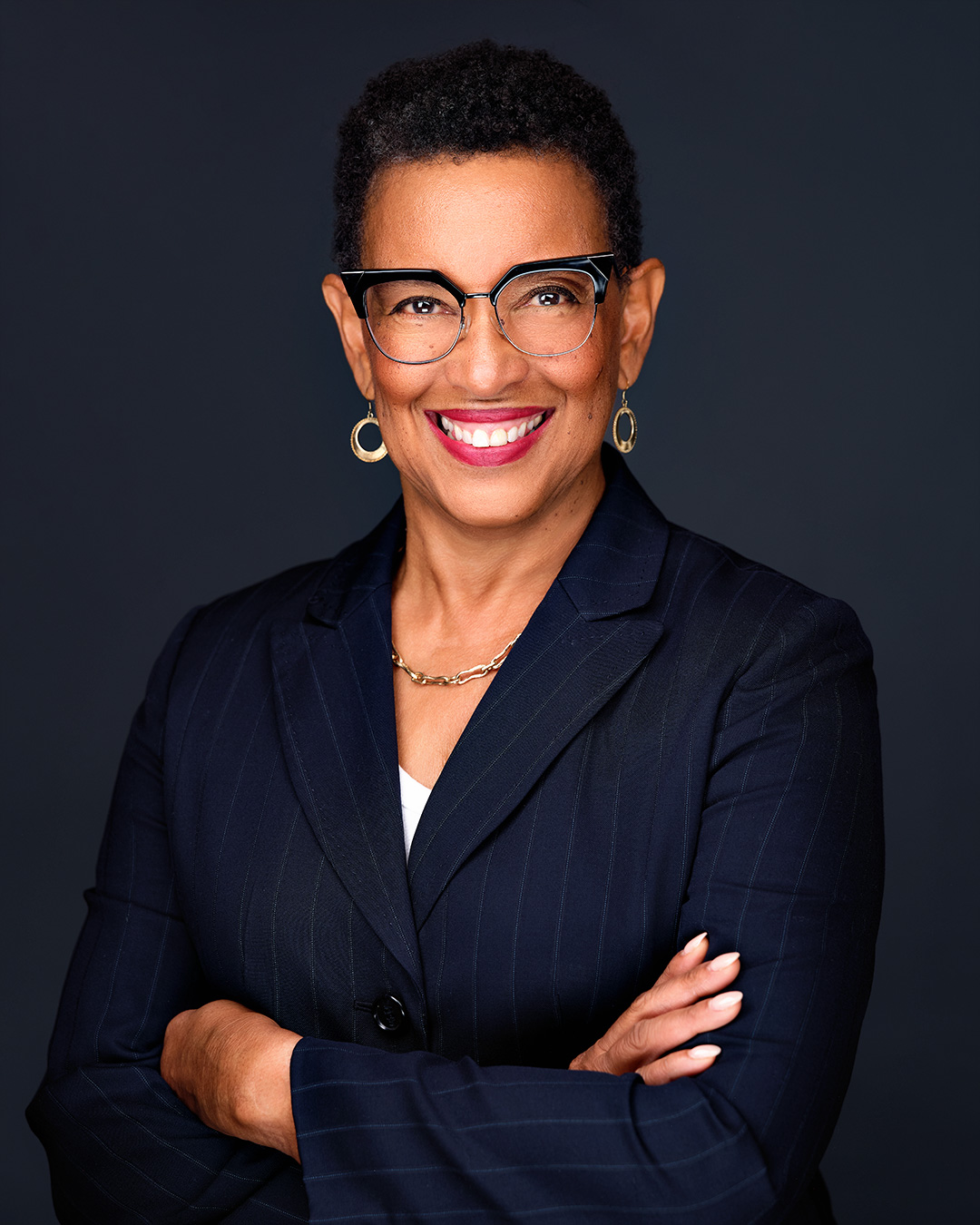
Founder
Gina R. Smith is a Fractional Sales Leader, Sales Strategist, Coach, Speaker and Author with over 27 years of award-winning sales and leadership experience. A former Regional Sales Director managing $150M in annual revenue, Gina now helps individuals and companies drive revenue with Clarity, Discipline & Results.
Gina knows the importance of managing our use of time since her service in the US Air Force commanding a busy flightline operation and more than 250 people. During her busy sales career and corporate life she honed her skills in the field managing multiple customers, geographical regions and teams while also carving out a “life” that wasn’t work. A life where she enjoyed personal time, rest, and reclaimed her joy
Gina is a U.S. Air Force veteran, Certified Health Coach, Certified Master Transformational Coach and holds a Master of Arts in Human Relations & Management

