Get Your Prospects to Notice You: Customer Centric Sales Engagement Practices that Really Work

Kris Rudeegraap—co-founder and co-CEO of Sendoso—joins me to talk about what happens when email stops working and you have to find another edge. Kris was a top seller who got 90% response rates in the early 2010s using mail merge. Then email sequencing tools flooded the market and response rates tanked. So he started sending handwritten notes, dog toys, and swag from the marketing closet—and booking more meetings than anyone else.
That curiosity—hearing a dog bark on a call and sending a dog toy—became the foundation of Sendoso, now the largest direct mail and gifting platform in the world. We cover the psychology of reciprocity, why the open rate of a FedEx box is 100%, and why dimensional mail is the channel that never stopped delivering.
The Kansas City ribs story is one you won't forget: a prospect broke a rib skiing, so the Sendoso team sent a rack of BBQ ribs to his office. He shared the story with his whole company, and they got the deal.
Kris's motto—"people buy from people"—isn't just a tagline. It's how they build their product, their culture, and their customer relationships. If you're tired of sending emails into the void, this conversation will give you ideas.


Kris Rudeegraap is the co-founder and co-CEO of Sendoso, the largest direct mail and gifting platform in the world. Before building a company with global warehouses, a drop-ship network across continents, and $150 million in funding, Kris was a top seller who got creative when email stopped working.
This conversation covers the origin story of Sendoso, the psychology of reciprocity, and why dimensional mail is the channel that never stopped delivering—even when everyone forgot about it.
What we cover:
- From mail merge to direct mail: how Kris went from 90% email response rates to running a mini mail room
- The dog bark moment: hearing a pet on a sales call, sending a dog toy from Amazon, and booking the meeting
- Curiosity as the single most important attribute of a salesperson
- "The open rate of a FedEx box is 100%" — why scarcity and tangibility still work
- Email was the cheap drug—easy but not effective anymore
- Building Sendoso: software + warehouses + drop-ship + AI recommendations
- The Kansas City ribs story: prospect broke a rib skiing, so they sent BBQ ribs
- The pizza box campaign: "Hungry for a new solution? Let's chat."
- Customer delight vs. door opening: 50%+ is top of funnel, but land-and-expand is huge
- AI/data layer: pulling interests from Gong calls to recommend gifts six months later
- Secret sauce: tenacity to win + creating wow experiences + bridging the gap for human connection
- "People buy from people they trust" — and trust comes from deposits in the relationship bank account
- What's next: AI agents, autonomous workflows, and doubling down on data
Key insight: "We're selling the emotional connection that comes from getting something delivered to your doorstep. That's the surprise and delight moment. That's the pattern disruption. That's the relationship."
Connect with Kris:
- LinkedIn: Kris Rudeegraap
- Email: kris@sendoso.com
- Website: sendoso.com
Help us grow the podcast reach!
Please comment on and share the podcast. Tell two coworkers about what you loved about this episode!
And...leave a personal message for us...click on the microphone icon on the right.
Thanks!
Thoughts on Selling™ is a trademark of The Acelera Group, LLC. All rights reserved. Federal trademark registration pending.
Lee Levitt: Today it is my absolute pleasure to have Kris Rudeegraap join me to have a conversation about selling. Kris, I think we're going to have a really fascinating conversation today. Here's the first question: Who is Kris?
Kris Rudeegraap: Kris is the co-founder and co-CEO of Sendoso. We're the largest direct mail and gifting platform. Started the company about nine years ago, and prior to that it's been about a decade in software sales.
I've always been an entrepreneur. I was the kid selling mistletoe or lemonade. Started a company in college, so always had that entrepreneurial bug. I live just a little north of San Francisco in Marin. I have an amazing family, a two-year-old son, an amazing golden doodle dog, and I love getting outside—camping, hiking, and backpacking as much as possible.
Lee Levitt: Sweet. You're in Marin County, but you didn't mention mountain biking.
Kris Rudeegraap: I know. I do a fair amount of mountain biking as well, but sometimes it's a little dangerous and hectic. So I stick to the easier hiking avenues sometimes.
Lee Levitt: Yeah. I'm a gravel rider and trail runner. So let's get right into it. Kris, I want to get into your origin story of why you launched Sendoso, but before that, let's talk a bit about sales.
Kris Rudeegraap: Yeah, so it started in college. I was a marketing major, so I had that side of me—how do you build brand, how do you build awareness, how do you market and advertise. That was my first foray into go-to-market. Started a company in college, so I had to go and sell, find customers. That was a quick sales lesson in how to find customers when you need them most.
When I sold that company, I moved into marketing again. Then quickly realized that as a marketer I was helping sales get way richer than I was. So I said, hey, sales is where all the money's at. Let me switch gears here.
I jumped into sales and became this creative seller who was always looking for an edge. Around 2014, I got excited about how to automate things. That was where I came up with the mail merge concept. At the time that was not easy. I still remember copying and pasting parts of my old email into the new email, making it pretend like I was following up, and exporting and importing Salesforce fields just to keep track of where my mail merge sequence was.
Lee Levitt: With the occasional embarrassment, right?
Kris Rudeegraap: Oh yeah, exactly. But it worked, and I was getting like 90% response rates. Everyone felt obligated to reply to email back in the mid-2010s.
Lee Levitt: That's not true now.
Kris Rudeegraap: Not even close. And then I think the email sequencing tools came on the scene hot. It was Yesware, ToutApp, SalesLoft, Outreach, Apollo. The list goes on and on and on. And that quickly saw a decline in open and response rates, and also alienated email—which was primarily communication for me as a seller—into more of "hey, you're spamming me" and "unsubscribe."
So I said, hey, if I'm going to last here as a seller, I need to start doing other things. I started writing handwritten notes and sending them out in the mail. I'd be on a call and hear a dog bark and I'd send a dog toy after from Amazon. Or I'd go steal swag from the marketing closet and pack up some cool mugs or some beanies and things of that nature. And that worked so well.
It was just like running a little mini mail room, which was a nightmare. Run down to FedEx—
Lee Levitt: I'm going to pause you right there, Kris. For me as a sales leader and a sales coach, the single most important attribute of a salesperson is curiosity. And what I just heard you talk about was the curiosity of what's going on in that person's world that you can connect with.
Kris Rudeegraap: Exactly. It was the personalization, it was the relevance. And then it also got down to how do I use curiosity to come up with something to grab their attention. Because at the end of the day, grabbing someone's attention is what you're trying to do in sales and marketing, and you have to be different than the next person that's doing that.
That's where I really found this—at the time I thought it was this niche little area where I was like, cool, I'm booking all these meetings, I'm the top seller, this is awesome. But then the light bulb went off: wow, this is hard to do.
Lee Levitt: You used a differentiated door opener. And then two, you said you were the top seller. Those don't necessarily go together. So one, you had the curiosity, and then two, you had the sales chops to actually pull that thing through.
Kris Rudeegraap: Yes, indeed. It also helped because when I was expense reporting all these Amazon receipts and all these FedEx things, because I was a top seller, the team was like, cool, keep doing what you want to do. And also please help others do what you're doing.
So it was kind of that like, well, how do I help others—slash, this problem maybe needs to be solved. And that was the aha moment where maybe I can create a platform that outsources the operational complexities, the fulfillment, the box packing, the shipping. Create a platform that everyone can use. But more importantly, selfishly, that I could use myself.
Lee Levitt: So you saw the opportunity to operationalize what you were doing on your living room floor with boxes from Uline and tape dispensers and bubble wrap and all sorts of crap.
Some of us have been there. Not everybody understands the power of dimensional direct mail. Not everybody understands the power of breaking someone's focus on what they're doing by having something hit their desk—not an email. Because an email lands with a very light impact.
Kris Rudeegraap: 100%. There's just so much different psychology to the tangible unboxing of a box. The reciprocity of getting a gift or a really creative mailer—you feel more inclined to reply. The open rate of a FedEx box on your doorstep is 100%.
All those factors go in. And there's a lot of scarcity involved. Not everyone's doing it, so you don't get as many. And there's cost constraints, so you can't just close your eyes and spray and pray. All those reasons make it a really effective channel in today's world that has—the pendulum has shifted and the digital saturation is more than ever.
Lee Levitt: Name me any time in history where dimensional direct mail failed to deliver.
Kris Rudeegraap: I know. That's the thing. And I think for a while, sales and marketing teams were hooked on the cheap drug of email because it was easy and easier. You didn't necessarily have all these operational components to it. Even though it was more effective, it was just enough harder that you just didn't do it.
Now it's like, I can go after the harder channel because I am desperate for more pipeline, or I'm desperate for more meetings, or I'm desperate to close these deals faster.
Lee Levitt: So I love this. I love your origin story, and so you had this moment of, this is how most resellers get into business—I built something for myself and I'm going to go sell it to other people now too. You had this moment of: I should build a system and there's a market opportunity.
Kris Rudeegraap: Yeah. So I think that market opportunity is where maybe I got a little bit of luck. My first version was, hey, I'm going to scratch my own itch. I'm going to build this for myself. I'm going to use some of my savings and hire an outsourced engineer to build version one.
I said, hey, if I can build this first version, I'm going to be a better seller, I'm going to make way more money in commission, and I'll pay myself back in a month. That was easy for me to have conviction around.
Then I started getting people asking about it, and I said, hey, let me open this up to others. And then it was, hey, this is actually working so well, let me go raise some friends and family money. Then let me go raise a seed, an A, a B, a C. $150 million in funding later, hundreds of millions spent on the platform.
Lee Levitt: And to be clear, Kris, you're not talking about just a software platform.
Kris Rudeegraap: No. That was the other maybe late insane moment of my entrepreneurial endeavor, which was: I can run warehouses globally with supply chain. Maybe being naive, I jumped in and said, I'll figure that out—not knowing how hard it was going to be.
Lee Levitt: Thank goodness you did.
Kris Rudeegraap: Yeah, thank goodness I did. There is the complexity of this amazing software platform that integrates into CRMs, marketing and sales tools to orchestrate it with teams, budgets, analytics. There's a whole financial infrastructure platform behind the scenes for all of the payments that are going through it.
There's then the warehouses and supply chain and drop shipping and everything that goes into this global delivery network. And then over the last few years—and something that's always been a dream—is this data and AI layer. Five or six years ago we called it data science, machine learning, and it was this recommendation engine. Today we just call it AI.
But that is even more interesting because it can make all of the sellers on the platform like 10x more productive. It's suggesting what to send, who to send to, the mailing address you should be sending it to. The note is drafted for you that's handwritten with the gift. So it just makes it that much easier to use the platform.
Lee Levitt: Yeah, that's awesome. That personalization of Charlie is a sailor, so I'm going to send him something nautical. Or Sally loves dogs, so I'm going to send her a plush toy of a St. Bernard because I know that's the breed she loves—with a handwritten note that corresponds.
It's not just the platform, it's not just the operational background that gets that plush toy from supplier to warehouse to Sally's desk. It's the personalization around all that, so that Joe salesperson can say: I need to open a door here.
That leads me to this question. When I ran into your team in Austin at the Pavilion Conference, GTM 2024, I took away the impression that it was mostly about post-sale appreciation. And what you've been describing is pre-sale door opening. And it's two sides of the same thing. But how much of it is door opening versus appreciation?
Kris Rudeegraap: It's all across the board. I'd say probably more than 50% is more top of funnel, mid funnel. But for a lot of our customers, depending on kind of the persona or the customer, they might be even more focused on the land and expand motion—how do I drive my large existing base into cross-selling new product lines.
That was a hot topic too in '22, '23, '24, where interest rates spiked, funding was down. People needed to do more with less. And one of the tactics for doing more with less is keeping an existing customer, expanding an existing customer—that's less expensive than going to find a new one. We went well with that message and doubled down on our messaging related to that, and that really spoke to the market needs too.
Lee Levitt: That's awesome. I recently dropped a podcast with Alex Raymond, who runs Amplify Account Management, about the value of current customers versus new customers. Current customers deliver 87% of the revenues, I think his number is, and all of the profit or more. New customers cost you. Existing customers keep the lights on. That was episode 89, came out February 10th—a nice mention based on your conversation about the land and expand where the existing customers live. They will open a package from a known supplier.
Kris Rudeegraap: 100%. And some of our customers, along with the gift, are using it for infotainment or educational content too. Like, hey, here's a really cool video mailer from our C-suite talking about this new product line we launched. Or here's a custom Mad Libs book that you can fill in the blank and learn about this new product vision we're launching. Or hey, here's a quarterly magazine with interesting case studies and content.
I think some people think, oh, gifting—I just gotta send swag or bottles of wine. Or mailers—oh, it's just postcards. No, there's so much more in between when you think about it that can really unlock a lot of opportunity.
Lee Levitt: That's fascinating. I hadn't even thought of the customer-provided material. Plush toy you get off the open market. You customize it. You go to an ASI rep, you get squeeze balls that have the vendor name on it so that your customer says, here's something that's unique to us. Here's something that might be unique to an individual customer. And you provide the management and fulfillment of that.
Kris Rudeegraap: Yep, exactly. We're printing it, we're getting it, we're shipping it. The world's your oyster in terms of things that you can do through our platform, which was partly by design.
So it could be 10,000 postcards one day. It could be, hey, I know you're a Seahawks fan and you just won the Super Bowl—I'm going to send you a little onesie for your baby that's two months old.
Lee Levitt: Too soon, dude. Too soon.
Kris Rudeegraap: The relevance of the personalization just makes the difference.
Lee Levitt: Yeah. That's awesome. So what's the biggest thing you've shipped?
Kris Rudeegraap: We've shipped Traeger grills. Those have been pretty huge in terms of big. We've shipped custom couches. In terms of dollars, there's been Rolexes.
Some of the time it's not the size or the cost—it's the creative aspect. I saw a recent campaign where someone was sending empty pizza boxes with "Hungry for a new solution? Let's chat." By the way, after chatting, I'll send you a DoorDash card for a real pizza. That send was like five bucks to ship one of those pizza boxes, and wow, was the open rate huge.
Lee Levitt: Yeah. A hundred years ago, we would send half of a $20 bill. Let's put it together and have lunch.
Kris Rudeegraap: Yeah, yeah, yeah.
Lee Levitt: Earlier in my career, we sent footballs to prospective resellers and we got like a 75% response rate. This was a few years ago. Nobody could refuse. And it was timely, season-wise. Nobody could refuse the conversation after getting pigskin in the mail.
Kris Rudeegraap: Yeah, exactly. It's just like that's how unique and different it could be.
Lee Levitt: So let's talk about what you sell. And I'm not talking about the goods. When a customer—a big customer or a mid-size customer—engages with you, what's the one thing that Sendoso does that nobody else does for them?
Kris Rudeegraap: It's a great question. There's a couple different ways I could talk about that. At the surface, sometimes we're selling reciprocity and the psychology behind it. Or we're selling relationships.
Lee Levitt: Say more about that.
Kris Rudeegraap: We're selling the emotional connection that comes along with getting something delivered to your doorstep. That's the reciprocity psychology, that's the surprise and delight moment. That's the pattern disruption. That's the relationship.
So that is like the feeling that we're sending. Now, we do that by way of this really unique software plus fulfillment and logistics infrastructure. We do this through this one-of-a-kind data layer and AI on top of that. And we do that by way of helping with all of the services surrounding that. But—
Lee Levitt: But the customer doesn't care about any of that.
Kris Rudeegraap: The customer cares about the end goal. And what we're trying to sell is what's going to get them that pipeline, what's going to get them that revenue, and what's going to get them that relationship.
Lee Levitt: It's the customer delight. It's their customer delight that they're looking for. In the same way that Disney focuses on customer delight—you can't look under the mountain unless you know someone. You can't go inside and see how they make the sausage, so to speak. But it happens.
Kris Rudeegraap: Even more important in this competitive world we live in where there's a lot of commoditized product and service offerings. You look pretty similar to your competitor if you look at their website and their pricing.
So how do you differentiate? By way of a more unique buying process or a buyer's journey or salesmanship, where you come across more genuine, more of a friendly consultative person that's trying to help. And one way to come across that way is by sprinkling in gifts and mailers that create a different experience.
Lee Levitt: Two years ago I used a dimensional direct mail piece—a small silver bucket, a small silver shovel, some sunflower seeds. I sent it out in the spring and I said, let's grow something together. And that was tailored to the season, as opposed to the individual sales leader that I sent it to. Maybe a few of them didn't have green thumbs. Maybe a few of them weren't so interested in sunflower seeds. I didn't have that visibility. You've even got that.
Kris Rudeegraap: I have that. Yes, we have that visibility. But I think there are multiple ways you can think about personalization and relevance. You could think about it personalized down to the human and what does Chris like. You could personalize it to more of a general persona and make some assumptions. You could personalize it to the campaign you're running that's based on your brand or their brand.
There's lots of different ways that you can get to personalization. And like what you just shared with that planting a seed—that's super creative and going to be a lot different than an email in their inbox. So kudos to you. I think that's a real fun campaign.
One of the things you hit on there too is it's not just about the gift or the dimensional mailer, but it's about the note that goes along with it. You get two shots on goal, compared to an email where you just have one text block. But with a gift or dimensional mailer, you have the mailer itself or the gift and the note that goes with it.
And then if you're truly savvy, you're also before and after combining some messaging—email, phone call, social—a multi-channel that is connecting all the dots.
Lee Levitt: Here's a funny story for you, Kris. Years ago when I first launched the Sellar Group, it was an outsourced marketing agency and I used a series of six mailers. One was like a Wall Street Journal article with the prospect's company written on the front with a fake article: "XYZ company has experienced 87% growth by working with the Sellar Group," blah, blah, blah.
So we had slick ad sheets. We had that. There was a campaign of six, one a week, like clockwork. And then I'd follow up. Invariably, probably two-thirds of the time I would call and I'd say, hey, did you see the Wall Street Journal article? No. Did you see that Science of Marketing article I sent you? No. Did you see the big blue envelopes? Oh yeah. Was that you?
Kris Rudeegraap: Yeah, exactly. It's like what you're speaking on too, which we've seen across the board even on our team, is certain sellers get cold feet for making pure cold calls because they've gotta be on their toes. This kind of warms it up a little bit.
You've got something to say that's relevant. Something to say that once they say, oh yeah, I did get that—then the door's open now. Or, hey, thank you, I appreciate that. And now you've earned that 15-second call, that 30-second call, which then hopefully can convert into a booked meeting or another follow-up.
It goes hand in hand with these other channels because you can stitch them together and create a more warm experience.
Lee Levitt: Kris, what are some of the more interesting campaigns you've run? What's particularly caught your eye of, wow, that's clever?
Kris Rudeegraap: Yeah, I think the clever creativity piece is what really drives home for me. One that I saw a few years ago that I still love—this was by our team—we had a prospect come by a booth at a conference. He had a broken rib from a skiing accident, and he was on crutches.
So we followed that up by sending over Kansas City barbecue ribs in the mail, back to his office and to his home.
Things like that are just so out of the ordinary that you just can't not smile. And he shared that story with his whole company. We got the deal. It's things like that that break down the divide of a company selling to another company. It's in turn the human psychology of a person selling to another person.
Lee Levitt: You have the capacity to handle one-offs at scale.
Kris Rudeegraap: 100%. And globally too. Along with having warehouses where we can kit items together at scale—we could send one item or 10,000 items—we also have this really unique curated drop-ship network around the world. So it could be the barbecue ribs, it could be a macaroon bakery in Paris. That gives us this unfair advantage where we can really find that perfect gift wherever our prospects or customers are. And that's really critical.
Lee Levitt: That reminds me of a very savvy concierge or butler who knows what you need without you asking. And when you put your hand down, it's there.
Kris Rudeegraap: Yeah, exactly. That's how we want it to feel. And then we layer on what we call our campaign studio team, that's almost agency-like in ideating with you, going out and providing you multiple options for these different campaign ideas too.
For listeners thinking, ah, I don't know what I should send—we've got that solved, whether it's through AI suggestions or a services team. I think besides the "hey, this is hard, not as easy as sending an email," there's a lot of people coming up with other excuses, and so we've tried to solve all those excuses and provide this kind of wow factor experience.
Lee Levitt: There's a lot of senior people out there who have left digital breadcrumbs around what they're interested in, what they care about, what they do on weekends.
Kris Rudeegraap: Yeah, 100%. And we're able to find those, capture those. We also can do first and third party data. Third party is these breadcrumbs across the internet. First party is things locked like in a Zoom call or a Gong call recording that's in your CRM.
We're pulling those out, mapping those in. So when six months later you close this prospect, and now they're a customer and you want to send them something—boom, we'll recommend something that the sales rep talked to that prospect about on a call recording months prior. That data set is usually just lost in call transcripts. Now we're pulling that out and making it available for this interest graph.
Lee Levitt: That's absolutely fascinating. So I'm going to ask carefully. Is this a push business or a pull business for you?
Kris Rudeegraap: In what regards?
Lee Levitt: You've got a unique offering. You've got it pretty darn well sorted out. It seems there's a good return of, if I spend X on prospects or customers, I should expect somewhere around Y, which is some good multiple of X. Is it just a matter of customers that haven't been exposed to you need to hear about you, or are you actively out there selling?
Kris Rudeegraap: That's a good question. Now I get what you're saying. We're about half inbound, half outbound. We have a lot of people that heard about us, hear about us through typical B2B marketing that come inbound to us. We have a huge repeat customer base of people switching companies.
But then to your point, there's still lots of people that just don't know we exist, and so we've got to go out there and educate the market. Or they don't know that this is even possible. And then we also have to help people unlearn the GTM playbook of yesteryear and help them see the light of new possibilities.
Lee Levitt: The more, faster, louder, louder, louder, all-caps bold hasn't worked for a while.
Kris Rudeegraap: Exactly. So a lot of our outbound, which is that push approach, is us just educating the market saying we exist. And then once they hear about it, oftentimes they're like, why didn't you reach out to me earlier?
Lee Levitt: Yeah. So just to be clear for the listeners, this is not a sponsored episode. This is a conversation about how to do things differently in sales. Kris lived the pain of selecting and boxing and shipping. I've lived that pain. I've coached enterprise clients to do exactly this so that they can get differentiated entry into prospects.
There are other services that I've had on the podcast—the "two degrees of Kevin Bacon," getting warm intros—and this, Sendoso, and Kris's company is another strategic tool in the arsenal of doing things more creatively, doing things more effectively, and not just sending more emails.
I was in the email sending business many years ago. It is not a good business to be in these days.
Kris Rudeegraap: No, exactly. To your point on direct mail and gifting in general, we didn't invent this. Listeners can go out and do this on their own. No Sendoso sponsorship at all. We are just making it easier if you do want to scale it. And I think that's the cool thing.
Lee Levitt: People were doing this before the cloud existed.
Kris Rudeegraap: Exactly, exactly. 100%. You don't have to be a Fortune 100 to do this. You could be two people in a garage starting up a new company and do this.
And I think that's the beauty of it as well. Some channels like events, for example—if you're trying to sponsor a huge conference and you're spending $100,000 on a conference, that can feel a little out of reach for a small company. But direct mail, dimensional mail—you can do five of them. Like you said, you can go out and pick a list of six people and mail them something this week.
Lee Levitt: In the past I've outsourced card sending to SendCards.com, I think it is. And because it's so easy—instead of having to get cards and work on my shitty handwriting and get stamps and lick envelopes and all that stuff—it's like, if you have a list of names in there, write a message and a handwritten note goes out at the time I want it to.
Kris Rudeegraap: Yep. We do that too.
Lee Levitt: The same situation exists here. And I'll guess—the more thought the customer puts into the item, the messaging, the packaging, all that. There's a difference between sending priority mail and FedEx.
Kris Rudeegraap: Yeah.
Lee Levitt: You and I were talking—every FedEx package gets opened. Not every UPS box gets opened.
Kris Rudeegraap: No, FedEx has 100% open rate.
Lee Levitt: Yeah. So as the co-CEO of the company, how have you shifted your selling approach over the years?
Kris Rudeegraap: Yeah, so I think the early years it was really focused on pure evangelism, and a lot of that was based on, hey, you can click a button and send something. Now we have a much more mature, decade-old product where we can showcase how you can use AI, automations, how you can set up these more intricate campaigns.
So it's a bit of—there's this maturity model of how we understand where a prospect is in that model and how we help them with their needs. It's also who we sell to. Originally I thought we're just going to sell to sales leaders and sales reps, because that's who I was. And now we've realized it's marketing leaders, it's partner leaders, it's customer and account management leaders.
Our ICP has changed over the years. We've also changed how we sell in terms of how we enable our team. There's a lot of new AI products that are helping us with call coaching, call enablement, role playing and enablement, et cetera. So a lot of areas in terms of just the sales process has evolved too.
Lee Levitt: Yeah, interesting. So Kris, what would you say your organization's secret sauce is?
Kris Rudeegraap: Our organization's secret sauce is really this—I think it's a mixture of tenacity to win. We're a really competitive bunch. I think that stems from me being a seller back in the day.
And then we want to create these wow experiences and create these relationships that could last forever. Our whole product is based on the ability to build better relationships to drive revenue. My motto has always been "people buy from people." So with that, we really—whether it's through our company culture or it's through how we prospect or how we help our customers and how our product shows up—at the end of the day, it's how you create these relationships and bridge the gap for human connection.
Lee Levitt: That's great. And I'll add to your statement of "people buy from people"—they trust. And one way of establishing trust is making the deposit in the relationship bank account by offering something of value without asking for something in return. And the more customized that value is, the deeper the relationship goes.
I surveyed all of my coaching clients last fall and I asked them coffee or tea. I got one water response. And then everyone that said coffee, I said, ground or beans? I had one client say, I want to go to beans, but I haven't yet. So he got beans and a link to a good conical grinder. I didn't have the budget to send him a $150 grinder in addition to the coffee and a customized Yeti tumbler.
Kris Rudeegraap: Love it.
Lee Levitt: Customized. Yeah. It makes a difference. And by the way, I see those clients holding those mugs all the time.
Kris Rudeegraap: Mm-hmm. Exactly. There's a theory of don't send them your swag—send them their swag, or send them something unique. And sometimes our swag is good.
Lee Levitt: It depends on maybe where they are in the journey. Like they've been a customer for five years, they're itching to rep your swag because they're bought into the brand. You've helped them. Maybe you've helped them get promoted. I think that's the end goal for a lot of software or service businesses—can you help your customer champion get promoted? And if so, they want to rep you forever.
Kris Rudeegraap: Absolutely. Yeah. It's win-win.
Lee Levitt: One of my long-term coaching clients said, hey, I see you're wearing Sellar Group swag all the time. Can I get some? Do I want my successful client wandering around that three-letter company with my swag on display? Yes. What size would you like? Here's the catalog from Queensboro. They're the company that does all my embroidery. Pick anything you want. Just tell me size and color.
Kris Rudeegraap: Exactly.
Lee Levitt: So yeah, it's people buy from people they trust. I talked with a CIO in the middle of a research project and he said, you know, there was a guy that came in and he was selling storage for one of the storage companies. He said to us, after spending some time talking with you and your team, I don't think what we have here is quite right for you. He referred us to a direct competitor because he thought that direct competitor was actually a better fit.
Kris Rudeegraap: Interesting.
Lee Levitt: And the CIO said, I will follow that rep to the ends of the earth. I don't care what he's selling—whether he's selling cloud or storage or shoes or Lamborghinis—I will go to him first.
Kris Rudeegraap: Yeah, that person—he trusts. And he's being consultative and not selling a solution that the buyer doesn't need.
Lee Levitt: And you know how that travels. So I love the fact that you are in the business of customer delight and even pre-customer delight. You're in the business of customer delight—whatever I need, you make it happen. Which is so cool. If I want Kansas City ribs, they'll show up right at my prospect's door.
Kris Rudeegraap: Exactly.
Lee Levitt: So Kris, what's next on the horizon for you?
Kris Rudeegraap: We're doubling, tripling down on AI and data. We were born as this logistics company and software company, and I think we continue to evolve to be more of a data company, which is what our customers really want—because good data powers really good AI.
So you'll start to see more autonomous agent workflows through our platform. You'll see better data recommendations. And then ultimately I think you'll just see more of Sendoso out there. I think that people are starting to get that digital fatigue. It's real. Dimensional mail, direct mail will be not a tactic, but a channel that people will invest in more. So we're going to be there to help them win.
Lee Levitt: I love that. We are seeing a bit of a bifurcation or a bipolar polarization of—the low-hanging fruit or the low-value transactions are going to become increasingly automated. We've been saying this for a long time. When barcodes and then QR codes came out, people said, we don't need reps anymore.
I had Garth Fasano talking about the AI inbound sales rep. If you're a contractor, you don't want to miss that call at three o'clock in the morning. The pipes are burst, but you don't want to get up. So that inbound AI rep takes the call and books the appointment for nine o'clock the next morning.
We're moving in that direction. And at the same time, your organization's focus is on customer delight.
Kris Rudeegraap: Exactly.
Lee Levitt: Which, Kris, bless you. That's how I'm going to say it.
Kris Rudeegraap: I love it.
Lee Levitt: So this has been a fascinating conversation. Anything else we want to talk about?
Kris Rudeegraap: We covered so much, and I think our energy shows that we both care about this topic. It's been a fun conversation. I think we nailed it.
Lee Levitt: So, two questions. First question is, where can people find you?
Kris Rudeegraap: Yeah, people can find me on LinkedIn—add me, would love to chat there. You can send me an email if you have a question or follow-up. It's kris@sendoso.com. And then if you're curious about some of the cool stuff we talked about today or want to see some inspiration, we've got a lot of fun case studies and success stories at sendoso.com.
Lee Levitt: Great. And then I'm going to ask you a second question for the customer that wants to break out of the same old, same old set of sales results. My pipeline looks like shit, I've had a 40% increase in quota this year, I don't have any idea how I'm going to make it. I just know that for the past 12 years I have. They're grunting it out.
What you said to me was, it's not just the sales leader. The sales leader might not be the economic buyer. They might be a key stakeholder. The economic buyer might exist in marketing—someone who runs field marketing. What's the ideal profile of that customer?
Kris Rudeegraap: At larger companies, usually marketing holds the budget and the purse strings. But it's an enablement for the sales team and the sellers. At certain smaller companies, sales teams can raise their hand and set this up themselves, and even sellers themselves as well.
It's the person that's feeling the pain the most that wants to champion this new solution—or just going out there and doing it yourself. You don't always need us to move the needle. Go out there. There's nothing stopping you from today going out there and mailing out 10 mailers.
Lee Levitt: Right? Start with a proof of concept. A personalized Yeti tumbler, or in my case, I sent out gift baskets of all Cape Cod items. Cape Cod chips. Cape Cod sea salt. And a handful of other Cape Cod jams and jellies. It was all Cape Cod, and so that was very personally curated. Clients from all over the country loved it because it was something unique they couldn't get—Cape Cod jam in Denver, Colorado.
Kris Rudeegraap: Yeah, no, I love that. That's a great idea.
Lee Levitt: Kris, this has been fabulous. Thanks again for the work that you do. My goal is to fix how this industry sells. A little humanity and building connections between people goes a long way. So I appreciate the work that you're doing and your team is doing.
Kris Rudeegraap: Thanks for having me on, Lee. This was a fun conversation and thanks so much for taking the time to chat.
Lee Levitt: Thanks, Kris.
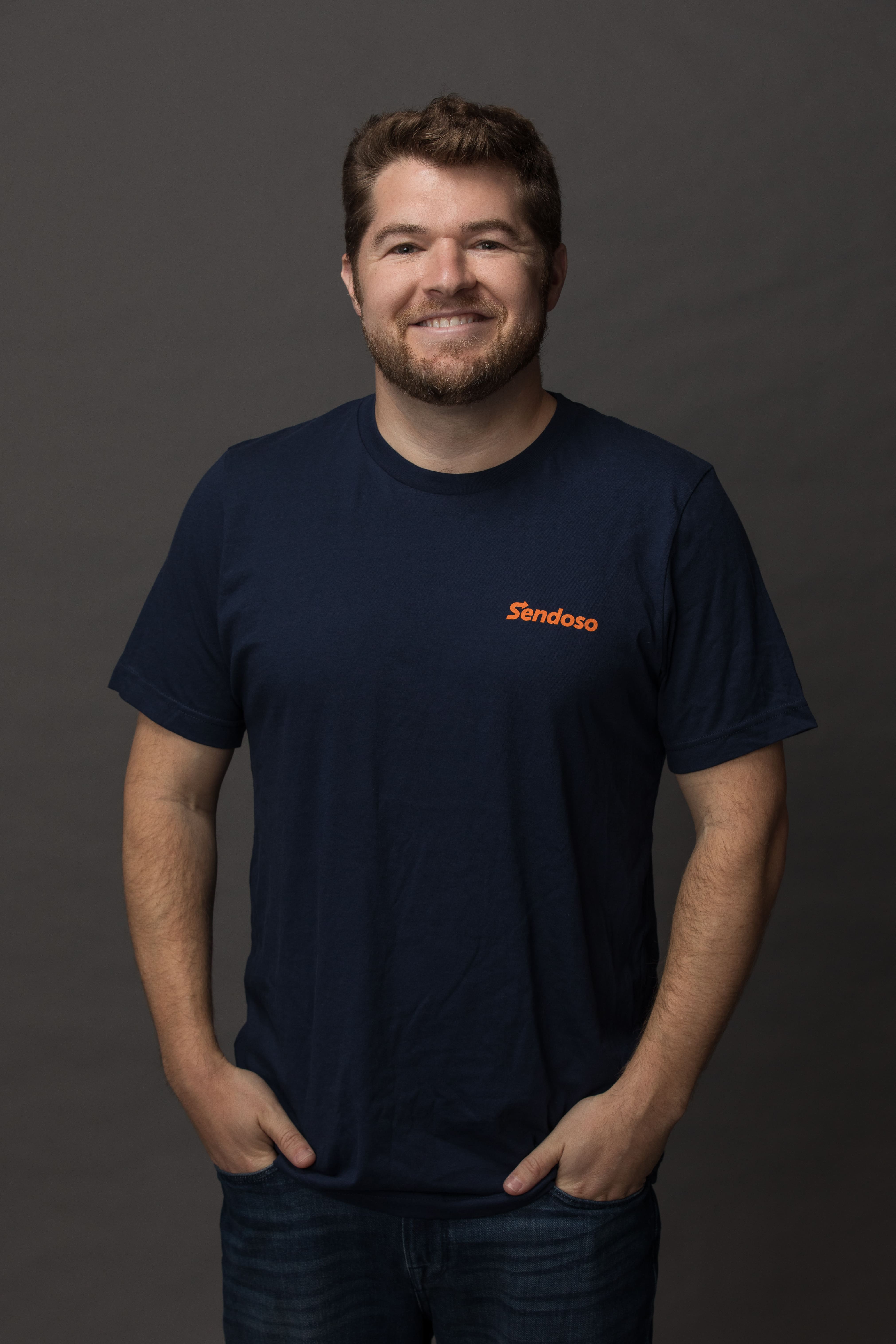
Co-CEO
Kris Rudeegraap is the Co-Founder and Co-CEO of Sendoso, the leading Direct Mail and Gifting Platform. Kris has more than two decades of Go-To-Market expertise. Kris started Sendoso in 2016 out of a problem he faced first hand. Sendoso is backed by $150M+ in venture funding, has seen $3000M+ spent on the platform globally, resulting in over $2B in pipeline influenced, and has acquired 2 competitors in the past 2 years. Kris is a California native and currently resides in the San Francisco Bay Area.