The Power of 'Yes': How Saying Yes Can Transform Your Leadership and Life
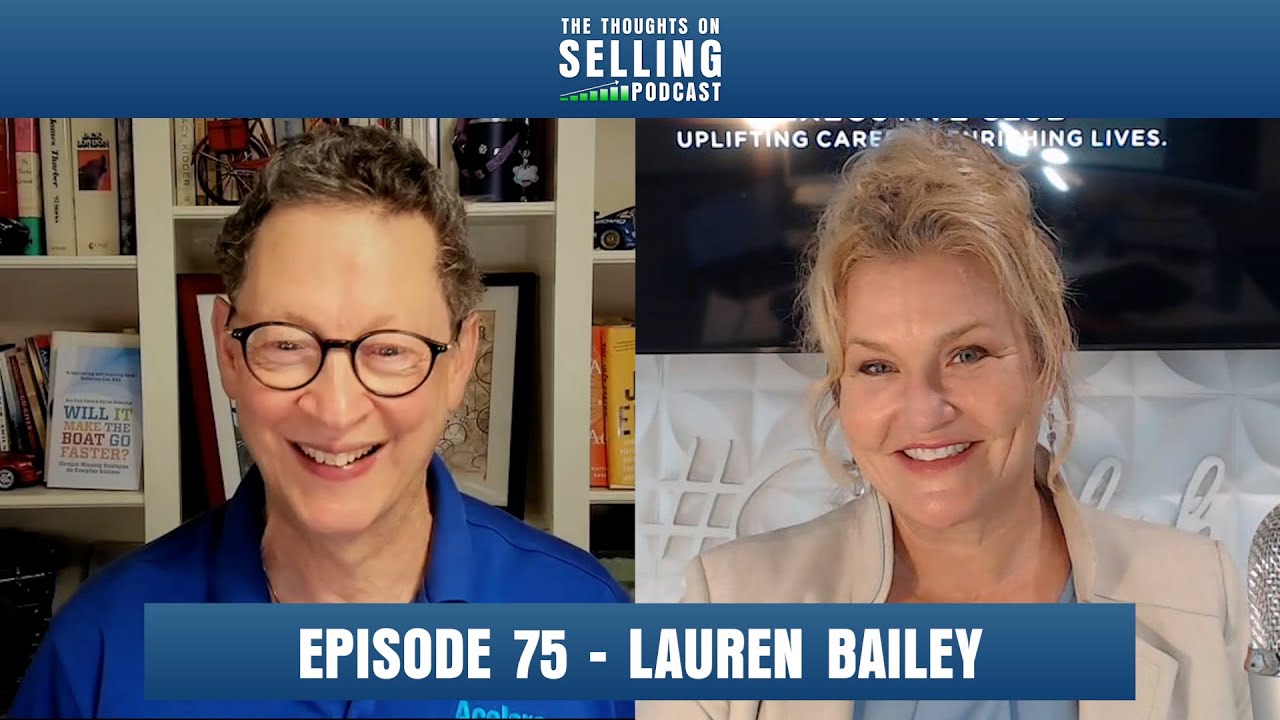
Welcome back to the blog, everyone! In this week's episode of the podcast, we had an absolutely electrifying conversation with the incredible Lauren Bailey. Her core principle, "Show Up and Say Yes," resonated so deeply with me, and I knew immediately that it needed its own dedicated deep dive right here. In this post, we'll be unpacking the profound impact of embracing opportunities, even when they feel a little intimidating. We'll explore how a simple, yet powerful, 'yes' can unlock new pathways in leadership, revolutionize your approach to sales, and foster incredible personal growth. This isn't just about a one-time decision; it's about cultivating a foundational habit that can reshape your entire trajectory. If you haven't had a chance to listen yet, you can catch the full episode here: 75. Show Up and Say Yes — Leadership, Legacy, and Living Authentically. So, grab your favorite beverage, settle in, and let's explore the transformative magic of saying 'yes'!
Lauren Bailey's Core Principle: Show Up and Say Yes
Lauren Bailey is a force of nature in the world of sales leadership. As the founder of Factor 8, #GirlsClub, and Legacy VIP, she’s built empires on principles that are both timeless and incredibly relevant today. During our chat, one phrase that kept echoing was the seemingly simple yet profoundly impactful mantra: "Show up and say yes." This isn't just a catchy slogan; it's a guiding philosophy that underpins success in every aspect of life, from professional endeavors to personal fulfillment. What does it truly mean to "show up and say yes"? It means being present, engaged, and open to whatever comes your way. It means moving beyond the comfort zone of what's known and embracing the potential of the unknown. It’s about recognizing that often, the greatest opportunities lie just beyond the edge of our current capabilities or expectations.
In essence, "showing up" is about intention. It's about deciding to be a participant, not just an observer. It's about bringing your full self to the table, ready to engage, contribute, and learn. And "saying yes" is the action that follows this intention. It’s the commitment to engage with the opportunity that arises, to step into the challenge, to explore the new path. This simple act of saying "yes" is often the catalyst that shifts momentum, opens doors, and propels us forward in ways we might never have anticipated. It's about cultivating a mindset where we don't shy away from potential, but rather lean into it with curiosity and courage.
Transforming Leadership Through Openness
Leadership is often perceived as a position of command and control, but Lauren Bailey's philosophy paints a different, more vibrant picture. When leaders consistently "show up and say yes," they foster an environment of trust, innovation, and psychological safety. Think about it: if a leader is always open to new ideas, willing to explore uncharted territories, and embraces challenges as learning opportunities, what kind of team do you think they'll cultivate? It's a team that feels empowered, valued, and inspired to bring their best selves to work. This openness creates a fertile ground for creativity to flourish. Instead of stifling nascent ideas with immediate objections or skepticism, a leader who says "yes" (even tentatively) invites further exploration. This doesn't mean blindly agreeing to every proposal, but rather approaching suggestions with a curious and collaborative spirit. It's about asking "how can we make this work?" rather than "why won't this work?".
This commitment to openness also translates into increased resilience. When a leader has modeled the behavior of embracing challenges, their team is more likely to approach obstacles with a problem-solving mindset. Instead of viewing setbacks as failures, they are seen as opportunities to learn, adapt, and grow. This fosters a culture where experimentation is encouraged, and learning from mistakes is an integral part of the process. Furthermore, a leader who says "yes" to new development opportunities, whether for themselves or their team, demonstrates a commitment to continuous improvement. This not only enhances individual skills but also elevates the collective capability of the organization. The ripple effect of a leader's openness is profound, creating a dynamic and adaptive organization that is better equipped to navigate the complexities of today's business landscape.
Expanding Horizons in Sales with a 'Yes' Attitude
In the realm of sales, the word "no" is an all-too-familiar sound. Prospects are bombarded with offers, and sales professionals often have to navigate objections and rejections. However, a "yes" attitude can fundamentally change this dynamic. Lauren Bailey's approach emphasizes that saying "yes" in sales isn't about being overly agreeable or pushy. Instead, it's about embracing the prospect's needs and challenges with a genuine desire to find a solution. It's about saying "yes" to understanding their world, "yes" to exploring how your product or service can genuinely add value, and "yes" to building a relationship based on trust and mutual benefit.
Consider the power of asking open-ended questions and actively listening. When a salesperson truly shows up to understand a client's pain points, they are essentially saying "yes" to the client's experience. This receptiveness can disarm skepticism and open the door for a more productive dialogue. Instead of focusing on closing the deal, the focus shifts to solving the problem. This shift in perspective can lead to deeper connections and more sustainable customer relationships. Furthermore, a "yes" attitude in sales can extend to embracing new sales techniques or technologies. Instead of resisting change, a salesperson who is willing to say "yes" to learning and adapting will undoubtedly stay ahead of the curve. This could involve saying "yes" to a new CRM system, "yes" to attending a training workshop, or "yes" to experimenting with a new social selling approach. In essence, cultivating a "yes" attitude in sales is about adopting a proactive, solution-oriented, and client-centric approach that transforms transactional interactions into valuable partnerships.
Personal Growth: The Ripple Effect of Saying Yes
The impact of consistently saying "yes" extends far beyond our professional lives; it's a powerful engine for personal growth. Every "yes" to a new experience, a new challenge, or a new connection is a step outside of our comfort zone. This is where true growth occurs. When we say "yes" to trying a new hobby, even if we're not immediately good at it, we open ourselves up to learning new skills, meeting new people, and discovering hidden talents. When we say "yes" to attending a networking event, even if we feel shy, we expand our social circle and potential opportunities. When we say "yes" to having a difficult conversation, even if it feels uncomfortable, we strengthen our communication skills and deepen our relationships.
The beauty of saying "yes" is its cumulative effect. Each positive "yes" builds confidence and momentum, making it easier to say "yes" to the next opportunity. It's like a positive feedback loop. This consistent engagement with new experiences fosters a greater sense of self-awareness. We learn what energizes us, what challenges us, and what truly matters to us. This self-discovery is the bedrock of authentic personal growth. Moreover, saying "yes" often involves vulnerability. Stepping into the unknown inherently requires a degree of courage and a willingness to be imperfect. It's in these moments of vulnerability that we often connect most deeply with ourselves and with others. The ripple effect of saying "yes" is a life lived more fully, more richly, and with a greater sense of purpose and fulfillment. It's about actively participating in the unfolding of our own lives, rather than passively observing them.
The Foundation of a 'Yes' Habit
Making "saying yes" a habit isn't about becoming a doormat or agreeing to everything under the sun. It's about building a conscious practice of openness and intentional engagement. The first step in building this habit is self-awareness. Understand your current patterns. Do you tend to default to "no" out of habit, fear, or a desire to protect your time? Identifying these tendencies is crucial. Once you're aware, you can begin to intentionally reframe your initial reactions. Instead of immediately thinking of reasons why something won't work, try asking yourself, "What if this could work?" or "What might I learn from this?".
Another key element of building a "yes" habit is to define your boundaries and priorities. Saying "yes" to one thing often means saying "no" to something else. This is where discernment comes in. It’s about choosing which opportunities align with your values and goals. It’s about understanding your capacity and not overcommitting to the point of burnout. Lauren Bailey touches upon the importance of being impeccable with your word, which ties directly into this. A true "yes" is a commitment. So, before you say yes, take a moment to assess if you can realistically follow through. This might involve a brief internal check: "Do I have the time, resources, and energy for this?"
Practice making small "yeses" to low-stakes opportunities. Say "yes" to grabbing coffee with a new colleague, "yes" to attending a brief online webinar, "yes" to trying a new recipe. These small wins build confidence and demonstrate to yourself that you are capable of embracing new experiences. Over time, these small "yeses" will pave the way for you to confidently say "yes" to larger, more impactful opportunities. It's a gradual, intentional process of rewiring your default responses and cultivating a mindset that embraces possibility.
Beyond 'Yes': Key Takeaways from Lauren Bailey
While "Show Up and Say Yes" is a powerful guiding principle, our conversation with Lauren Bailey offered a wealth of other invaluable insights that complement this core idea. She beautifully articulates that true authenticity trumps perfectionism. In a world often obsessed with presenting a flawless facade, Lauren encourages us to embrace our imperfections. Perfectionism can be paralyzing, leading to inaction and fear of judgment. Authenticity, on the other hand, builds genuine connection and confidence. By being real and vulnerable, we allow others to connect with us on a deeper level.
Another crucial takeaway is the importance of celebrating "fears, failures, and f-ups." This might sound counterintuitive, but Lauren highlights how embracing these aspects of our journey can actually accelerate confidence. When we can acknowledge our fears, learn from our mistakes, and laugh at our missteps, we become more resilient and self-assured. This vulnerability is a powerful tool for building trust, both with ourselves and with others. Furthermore, Lauren emphasizes that leadership is a "we" sport. Great leaders don't hoard opportunities or knowledge; they create space for others to shine and grow. This collaborative spirit is essential for fostering a thriving team and a positive organizational culture. The ability to be coachable, to be curious, and to be willing to learn is paramount, not just for individual success but for the collective advancement of any team or endeavor. These interwoven principles create a robust framework for not just saying "yes" to opportunities, but for thriving within them.
Conclusion: Unleashing Your Potential by Saying Yes
As we wrap up this exploration, it's clear that Lauren Bailey's philosophy of "Show Up and Say Yes" is far more than just a catchy phrase. It's a profound call to action that can fundamentally transform our leadership, our sales careers, and our lives. By consciously choosing to be present and open to new experiences, we unlock a cascade of benefits that fuel personal and professional growth. This journey begins with a simple, yet powerful, act of saying "yes." It’s about stepping beyond the familiar, embracing challenges, and cultivating a mindset of possibility.
Remember, the incredible insights shared by Lauren Bailey in episode 75 of our podcast provide a rich tapestry of wisdom that expands upon this theme. Her emphasis on authenticity, vulnerability, and collaborative leadership further solidifies the idea that embracing opportunities with an open heart and mind is the key to unlocking our true potential. So, I encourage you all to revisit our conversation and reflect on how you can integrate the power of "yes" into your daily lives. Start small, be intentional, and watch as the doors of opportunity begin to swing wide open. Thank you for joining me on this exploration, and I look forward to continuing this journey of growth with you.