Automating Sales Coaching with AI: Real-time Feedback for Your Team
Introduction: The Evolving Landscape of Sales Coaching
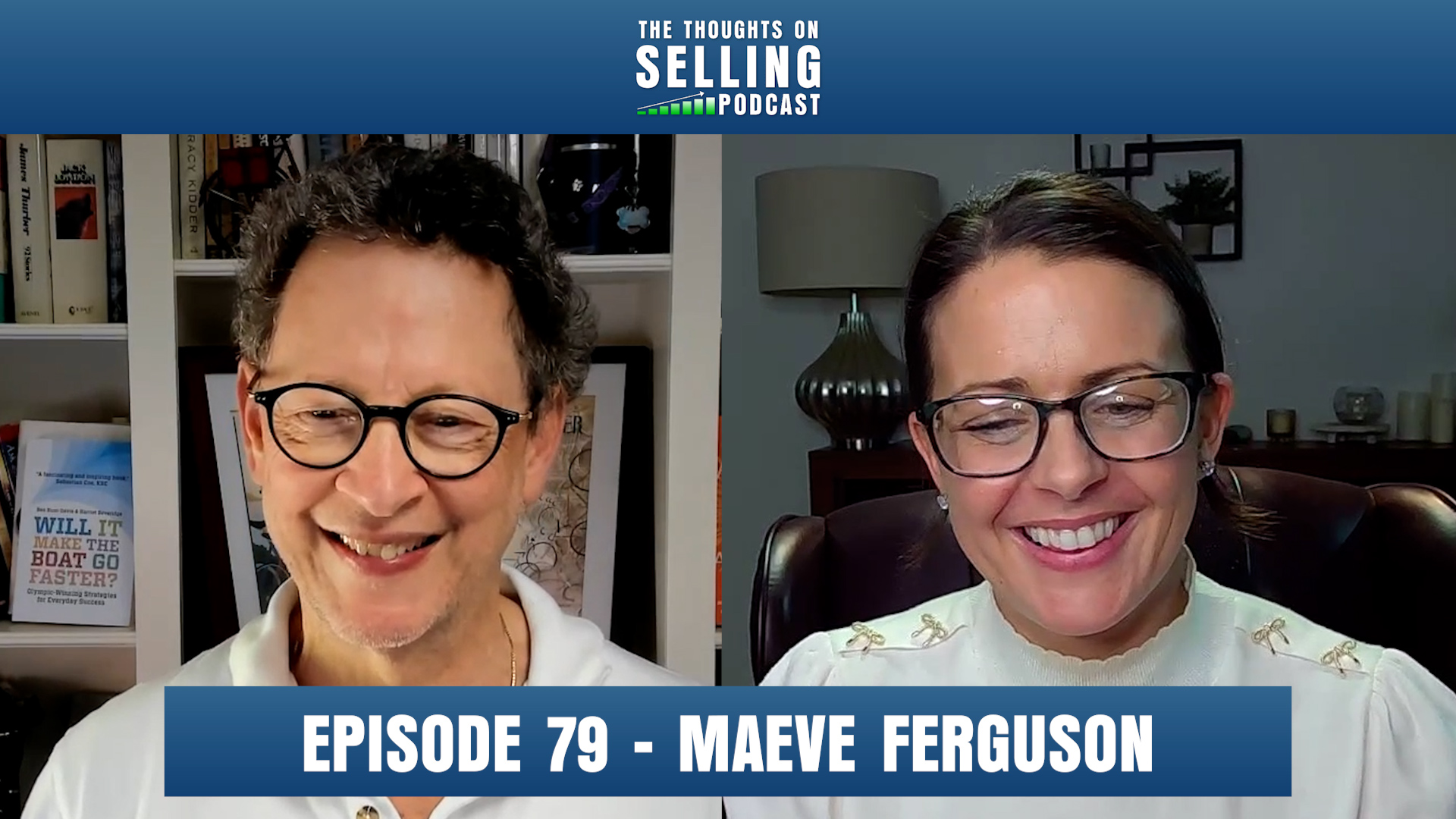
Welcome back to the blog, listeners and readers! In this latest episode, we’re diving headfirst into a topic that’s rapidly transforming the sales landscape: the integration of Artificial Intelligence into sales coaching. We’re not just talking about theoretical advancements; we’re exploring the very real, practical applications of AI agents that can analyze sales conversations in real-time, offer immediate, contextual feedback, and ultimately, help your sales team reach new heights. This blog post expands on the core themes discussed in our episode, 79. From Steeplechase Jockey to Data Geek: Mastering Sales with Diagnostics & Agentic AI with Maeve Ferguson. In that conversation, we explored the power of diagnostics and the revolutionary potential of what’s known as “Agentic AI” with our incredible guest, Maeve Ferguson. Today, we’ll unpack how these concepts translate into tangible benefits for sales coaching. For years, sales coaching has been a cornerstone of effective sales team management. It’s that crucial process of guiding, mentoring, and developing sales professionals to improve their skills, boost their confidence, and ultimately, drive better results. Traditionally, this has involved one-on-one sessions with sales managers, call reviews (often retrospectively and with a significant time lag), role-playing exercises, and classroom-style training. While these methods have their merits and have been the bedrock of sales success for decades, they often face limitations. They can be time-consuming, require significant managerial bandwidth, and may not always provide the most immediate or personalized feedback. The sheer volume of sales interactions, the complexity of modern sales processes, and the need for continuous improvement in a fast-paced market have created a demand for more efficient and effective coaching solutions. Enter AI.
Beyond Traditional Coaching: Why AI is a Game-Changer
The emergence of AI in sales coaching isn't about replacing human managers; it's about augmenting their capabilities and providing a level of support that was previously unimaginable. Think of it as giving your sales team a personal, always-on coach that can analyze every interaction and offer insights tailored to their specific performance. This is where the concept of "Agentic AI," which we touched on in our episode with Maeve, really comes into play. Agentic AI refers to AI systems that can not only process information but also act on it autonomously, making decisions and performing tasks without constant human intervention. In the context of sales coaching, this means AI agents that can listen to, read, and understand sales conversations, then provide actionable feedback. The traditional coaching model, while valuable, often suffers from several inherent challenges. Managers, even the most dedicated ones, have limited time. Reviewing every single sales call for every rep is often an impossible task. This means feedback can be delayed, infrequent, or focused only on a select few interactions. Furthermore, human biases can sometimes creep into coaching sessions. The nuances of a particular deal, the specific emotional state of the salesperson at that moment, or the subtle shifts in a prospect's tone might be missed or misinterpreted. AI, on the other hand, can process vast amounts of data objectively and consistently. It can identify patterns and trends that a human might overlook, providing a data-driven approach to coaching that complements the human element. The goal is not to create a depersonalized sales environment, but rather to equip sales reps with the tools and insights they need to perform at their absolute best, allowing managers to focus on higher-level strategy and mentorship.
How AI Agents Analyze Sales Transcripts: The Technology Explained
At its core, the AI’s ability to provide sales coaching stems from its sophisticated understanding of language and context. This is powered by advancements in Natural Language Processing (NLP) and Machine Learning (ML). When a sales call or a video meeting concludes, it’s not just a recording; it’s a rich dataset. This data is first converted into a transcript, often with remarkable accuracy, thanks to sophisticated speech-to-text algorithms. Once we have the transcript, the AI agents get to work. They employ a variety of NLP techniques to dissect the conversation. This includes: * **Sentiment Analysis:** The AI can detect the emotional tone of both the salesperson and the prospect throughout the conversation. Is the prospect engaged, hesitant, frustrated, or excited? Is the salesperson confident, empathetic, or struggling? * **Intent Recognition:** AI can identify the underlying goals and intentions of each party. What is the prospect trying to achieve? What is the salesperson aiming to convey or elicit? * **Keyword and Phrase Extraction:** Specific keywords and phrases that are indicative of good sales practices (e.g., discovery questions, value propositions, objection handling) or missed opportunities are identified. * **Topic Modeling:** The AI can understand the different subjects discussed during the call, allowing it to track the flow of the conversation and identify when it deviates from objectives. * **Pattern Recognition:** Perhaps most crucially, AI can be trained on vast datasets of successful and unsuccessful sales calls. This allows it to recognize patterns associated with winning deals versus lost ones. It can identify specific question sequences, objection-handling techniques, or closing strategies that correlate with positive outcomes. Think of it like a highly attentive listener who not only hears every word but also understands the unspoken subtext, the subtle shifts in tone, and the overall trajectory of the conversation, all while comparing it against millions of other conversations to identify best practices and common pitfalls. This analytical power is what allows AI to move beyond simple keyword spotting and delve into the qualitative aspects of a sales interaction.
Real-Time, Contextual Feedback: What It Looks Like for Sales Reps
This is where the magic truly happens. Instead of waiting days or even weeks for a manager to review a call, sales reps can receive feedback almost instantaneously, and more importantly, it’s contextual. Imagine a sales rep finishing a call. Within minutes, they might receive a notification: * "Great job on asking about [Prospect's Pain Point] at the 5-minute mark. This opened up a key area for discussion." * "You could have explored the prospect's concern about [Specific Feature] further. Consider asking, 'What specifically about that feature concerns you the most?'" * "Your transition from discussing pricing to value proposition was a bit abrupt. Perhaps weaving in the ROI earlier would have been more effective." * "The prospect expressed hesitation regarding implementation. You could have proactively addressed this by explaining our onboarding process and support structures." This feedback is delivered directly to the sales rep, often integrated into their CRM or sales enablement platform. It's not generic advice; it's tied to specific moments in *their* conversation. This contextual relevance makes the feedback far more impactful and actionable. The AI can highlight the exact timestamp where a particular point was made or missed, allowing the rep to revisit that segment of the call and truly internalize the learning. This immediacy and specificity accelerate the learning curve dramatically. A rep can correct a behavior or reinforce a successful tactic in their very next interaction, rather than having to wait for the next coaching session to discuss a call from last week. This continuous loop of performance, feedback, and refinement is the holy grail of sales development.
Celebrating Wins and Flagging Missed Opportunities: The Dual Power of AI Coaching
The power of AI coaching lies in its balanced approach. It’s not just about pointing out where a salesperson went wrong; it’s equally adept at recognizing and reinforcing what they did right. This dual function is crucial for motivation and skill development. On the one hand, AI can be programmed to identify and celebrate specific successes. For instance, it might note: * "Excellent use of the 'assumption-reversal' technique when handling the budget objection. This effectively reframed the prospect's concern." * "Your ability to connect the product's benefits to the prospect's stated business goals was exceptional. This is a key driver for closing." * "You successfully navigated a complex technical question by clearly explaining [Product Feature]. Well done." Recognizing these wins is incredibly important for a salesperson's morale and confidence. It reinforces positive behaviors and shows them what’s working, allowing them to replicate these successes. It’s like having a tireless cheerleader that also happens to be a data scientist, able to quantify and acknowledge their achievements. On the other hand, the AI’s ability to flag missed opportunities or areas for improvement is where the real learning happens. This could include: * "The prospect mentioned a key competitor. You had an opportunity to differentiate our solution but didn't capitalize on it." * "You spent a significant amount of time on product features without fully understanding the prospect's core business needs. Consider asking more discovery questions upfront." * "The call ended without a clear next step. It would be beneficial to always aim for a defined call-to-action." * "You didn't probe deeply enough into the prospect's current challenges with [Specific Area]. Further exploration here could uncover greater needs." This balanced feedback – acknowledging strengths while providing constructive criticism – creates a more holistic and effective coaching experience. It ensures that reps aren't just discouraged by their mistakes but are also empowered by their successes, creating a positive and growth-oriented mindset.
Connecting AI Coaching to Deeper Sales Strategies (The 'Delulu' Factor and Diagnostics)
The true potential of AI coaching, particularly Agentic AI, extends far beyond just correcting minor conversational stumbles. It starts to connect with the deeper strategic aspects of sales, much like the diagnostic approach Maeve discussed in our episode. Maeve highlighted the "delulu" factor – that gap between how business owners perceive their reality and what the data actually shows. This concept is incredibly relevant to sales coaching. AI can act as a diagnostic tool for the salesperson. By analyzing a rep’s performance across multiple calls, the AI can identify systemic issues. For example: * **Discovery Deficiencies:** If the AI consistently flags that a rep isn't asking enough probing questions, it indicates a need for better discovery skills training. * **Value Proposition Weakness:** If calls frequently end without the prospect fully understanding the value, the AI can point to a need to refine how the value proposition is articulated. * **Objection Handling Gaps:** Recurring instances where objections are not effectively addressed can signal a need for dedicated objection-handling practice. * **Closing Struggles:** If calls frequently go cold after the initial pitch without a clear next step, it might suggest issues with call structure and closing techniques. This is where Agentic AI can be truly transformative. It’s not just about providing feedback on one call; it’s about analyzing trends across dozens or hundreds of calls from a single rep, or even an entire team. This data can then inform more targeted training programs, identify coaching priorities for managers, and even help optimize sales playbooks. The AI can identify that "Rep A" consistently struggles with objection X, and automatically assign them a micro-learning module on how to handle it, or flag it for their manager to address in their next one-on-one. This proactive, data-driven approach to identifying and addressing skill gaps is a significant leap beyond traditional, often reactive, coaching methods. It helps peel back the layers of perceived performance and uncover the true underlying strengths and weaknesses, much like a good diagnostic assessment.
The Impact of Agentic AI on Sales Performance and Lead Quality
The implications of integrating Agentic AI into sales coaching are profound, impacting not only individual sales rep performance but also the overall quality of leads and, consequently, the business's bottom line. Firstly, **enhanced sales performance** is an obvious outcome. When sales reps receive consistent, contextual, and actionable feedback, their skill development accelerates. They learn faster, adapt more quickly to prospect needs, and become more effective communicators. This leads to higher conversion rates, shorter sales cycles, and increased deal sizes. Imagine a sales team that is constantly optimizing its approach, guided by intelligent insights derived from every interaction. This leads to a more professional, polished, and persuasive sales force. Secondly, Agentic AI can significantly **improve lead quality**. How? By analyzing which conversations and which sales approaches lead to higher-value customers. If the AI identifies that reps who effectively uncover specific pain points early in the conversation are more likely to close deals with higher lifetime value, it can train other reps to adopt those practices. It can also help identify when a prospect might not be a good fit, saving valuable sales time and resources. This aligns directly with Maeve's discussion on diagnostic funnels, where understanding the prospect's true needs and investment ability from the outset is paramount. Agentic AI can help replicate this filtering and qualification process within the sales conversation itself. Furthermore, this technology can lead to **better forecasting and resource allocation**. By understanding the typical success rates for different types of interactions or sales methodologies, sales leaders can make more accurate predictions about future revenue and allocate resources more effectively. If the AI shows that a particular product feature is frequently misunderstood, it can signal a need for better marketing collateral or product training. Finally, it contributes to **higher sales team morale and retention**. Sales reps who feel supported, coached, and empowered to succeed are more likely to be engaged and stay with the company. The immediate feedback loop and clear path for improvement provided by AI can be incredibly motivating, reducing frustration and increasing job satisfaction. It shifts the perception of coaching from a potentially punitive review process to a continuous growth opportunity.
Conclusion: Embracing the Future of Sales Coaching with AI
The integration of AI into sales coaching is not a distant future; it's a present reality that’s rapidly evolving. As we've explored, AI agents offer an unprecedented opportunity to provide real-time, contextual feedback, celebrate successes, and pinpoint areas for improvement in sales interactions. This technology has the power to democratize high-quality coaching, making it accessible to every sales rep, every day. It moves us beyond the limitations of traditional methods, offering a data-driven, objective, and scalable approach to sales development. The insights shared in our latest episode, 79. From Steeplechase Jockey to Data Geek: Mastering Sales with Diagnostics & Agentic AI with Maeve Ferguson, underscore this shift. Maeve's expertise in diagnostics and Agentic AI highlights how understanding data can revolutionize sales funnels and lead quality. By applying these principles to coaching, we can ensure our sales teams are not only performing at their best but also engaging with the right prospects and articulating value effectively. The "delulu" factor – the often-unseen gap between perception and reality – can be addressed directly through the objective lens of AI analysis. As this technology continues to mature, we can expect even more sophisticated applications, further enhancing sales performance, lead quality, and ultimately, business success. Embracing these advancements isn't just about staying competitive; it's about equipping your sales team with the tools they need to thrive in the modern, data-driven sales environment. The future of sales coaching is here, and it's intelligent.