Why Your Sales Training is Incomplete: The Missing Piece of Negotiation
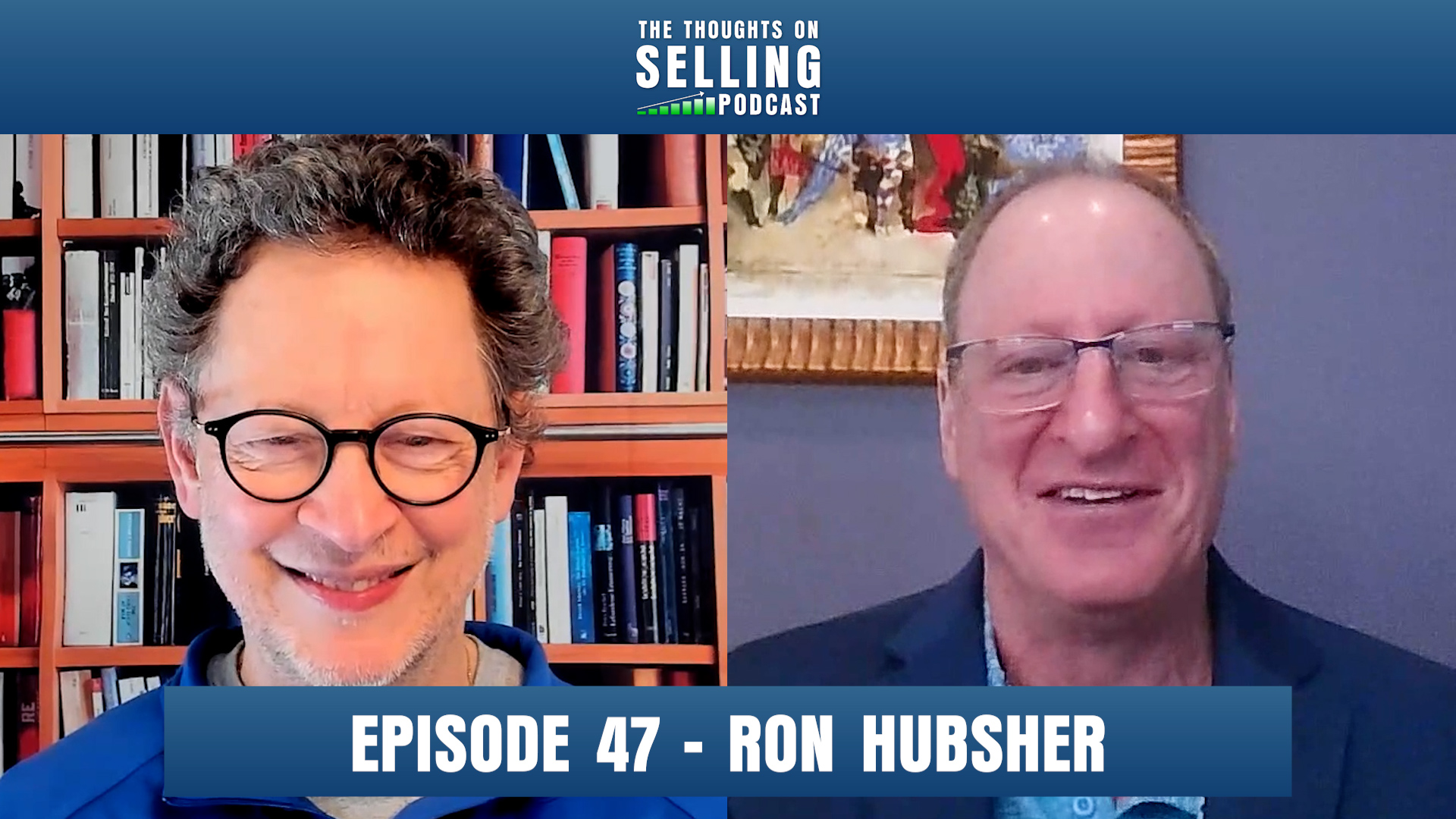
Welcome back to the blog for "Thoughts on Selling"! In our latest episode, we had a truly insightful conversation with Ron Hubsher that really hit home for me. We delved into a topic that, while often discussed, is rarely given the dedicated attention it deserves in sales professional development: negotiation. This post is all about expanding on Ron's keen observation that most sales training, while valuable, often leaves out a crucial element, leaving sales professionals ill-equipped for the critical final stages of any deal. If you're looking to truly elevate your sales game, understanding this missing piece is paramount. To hear the full discussion, be sure to check out Episode 47: Mastering the Art of Sales: Negotiation, Relationships, and Risk Management.
Ron Hubsher's Observation: The Neglected Skill of Negotiation
Ron Hubsher, with his unique background applying engineering principles to sales, brings a rigorous, systematic approach to everything he discusses. And in our conversation, he highlighted a glaring discrepancy he sees in the professional development landscape of sales. While countless hours and resources are poured into product knowledge, CRM management, prospecting techniques, and even the fundamentals of closing, dedicated, in-depth training specifically on negotiation is remarkably scarce. It’s as if we’re meticulously teaching someone how to build a car, explaining every component and assembly line process, but never actually teaching them how to drive it on the open road, navigate traffic, or handle unexpected detours. The sales process, in its entirety, is a journey, and negotiation is a critical, often high-stakes, part of that journey. When this phase is approached with inadequate preparation or a lack of specialized skill, the entire expedition can falter, even after the most promising start.
Think about it: how many sales professionals have attended seminars on "closing techniques" that essentially boil down to asking for the business? How many have been trained on handling objections, which, while important, are often a precursor to negotiation rather than the negotiation itself? Ron's point is that negotiation is not merely an extension of objection handling or a final hurdle to overcome. It's a distinct discipline with its own set of strategies, tactics, and psychological underpinnings. When this specialized skill is underdeveloped, sales professionals are left to improvise, often leading to suboptimal outcomes, leaving value on the table, or even losing deals they should have won.
This observation isn't about criticizing existing sales training; it's about identifying an area for significant improvement. The complexity of modern business transactions demands a more nuanced approach to how we equip our sales forces. The stakes are too high, and the competitive landscape too fierce, to rely on a "wing it" mentality when it comes to negotiation.
Why Negotiation Isn't Just 'Sales Talk': A Mathematical Analogy
To truly grasp why negotiation is a distinct skill, Ron uses a compelling analogy comparing it to different levels of mathematical complexity. He suggests that basic sales interactions, like understanding product features or identifying customer needs, might be akin to basic arithmetic. You learn the rules, you apply them, and you get a predictable result. Objection handling, in this analogy, might be like simple algebra – solving for an unknown variable with a defined set of operations. You understand the problem, you have tools to address it, and you can usually arrive at a solution.
However, negotiation, according to Ron's framework, is more akin to calculus. It involves understanding dynamic variables, predicting future outcomes based on complex interactions, and applying abstract principles to achieve an optimal result in a constantly shifting landscape. It's not about a single, fixed answer, but about finding the most favorable path through a multitude of possibilities. In calculus, you're not just adding or subtracting; you're dealing with rates of change, optimization, and understanding the subtle interplay of continuous variables. Similarly, in negotiation, you're not just presenting a price; you're navigating underlying interests, power dynamics, perceived value, and risk. Each party brings their own set of complex calculations, and the skilled negotiator understands how to model and influence these variables.
This analogy is powerful because it highlights that negotiation requires a different kind of thinking, a different toolkit, and a different level of cognitive engagement than many of the earlier stages of the sales process. Simply being good at explaining a product or building rapport doesn't automatically translate into being an effective negotiator. It's like expecting someone who can add and subtract proficiently to instantly understand advanced calculus; it requires dedicated learning, practice, and a fundamentally different way of approaching problems.
The Distinction: Negotiation vs. Conflict Resolution vs. Transactional Talks
It's crucial to understand that negotiation is not synonymous with conflict resolution or simple transactional talks, although there are overlaps. Ron's perspective emphasizes these differences, which are vital for effective sales training.
Conflict Resolution often focuses on de-escalating tension and finding common ground when parties are already in disagreement or at odds. The primary goal is to restore harmony and prevent further damage. While negotiation can be a tool within conflict resolution, the driving force is often the avoidance or mitigation of negative outcomes. In sales, while conflict can arise, the proactive goal of negotiation is typically to secure a mutually beneficial agreement, not just to end a dispute.
Transactional Talks, on the other hand, are often characterized by a clear buyer and seller with specific, pre-defined items to exchange. Think of buying a loaf of bread or a standardized service. The terms are generally straightforward, and the focus is on the immediate exchange. While some elements of negotiation might be present (e.g., asking for a discount on a bulk purchase), the complexity and the depth of underlying interests are usually minimal. The stakes are relatively low, and the relationship aspect is often secondary to the transaction itself.
Negotiation, particularly in a complex sales environment, is far more nuanced. It involves exploring underlying interests, understanding motivations beyond the stated requirements, managing expectations, and creatively structuring deals. It’s about more than just agreeing on a price; it’s about defining terms, responsibilities, timelines, and ensuring that both parties feel they have achieved a desirable outcome. Ron's point is that sales professionals often find themselves in situations that require genuine negotiation skills, yet they are trained primarily in transactional approaches or basic conflict management.
This distinction is critical. If you approach a complex sales negotiation as if you're just resolving a minor disagreement or completing a simple transaction, you'll likely miss opportunities to create greater value, build stronger relationships, and secure more favorable terms. You'll be underprepared for the intricate dance of give-and-take that defines a truly successful negotiation.
The Foundation: What Happens When Negotiation is Ignored in Sales
When dedicated negotiation training is absent from a sales professional's development, the consequences can be significant, rippling through the entire sales cycle and impacting the long-term success of both the individual and the organization. Ron's observation points to a foundational issue: everything that is omitted or glossed over in the earlier stages of the sales process has a tendency to resurface, often in a more acute and challenging form, during the negotiation phase.
Imagine a salesperson who hasn't thoroughly understood the client's core business pain, their strategic objectives, or their budgetary constraints during the discovery phase. When they reach the negotiation table, the client will likely bring up these unaddressed issues as leverage, demanding concessions that erode profitability. The salesperson, lacking the strategic framework of negotiation, might resort to emotional appeals or arbitrary price cuts, neither of which addresses the root cause of the client's concerns.
This often leads to what we call "last-minute concessions." The deal is almost done, but at the very end, the client asks for something significant – a deeper discount, extended payment terms, additional services thrown in – and the unprepared salesperson feels pressured to agree, often without fully understanding the impact on margins or the long-term value of the deal. They might rationalize it as "just getting the deal done," but in reality, they are sacrificing value that could have been secured earlier through better negotiation strategy. This can lead to lower profitability, devalued products or services, and a precedent for future negotiations where clients expect similar concessions.
Furthermore, an absence of negotiation skill can damage relationships. When a salesperson appears ill-equipped to discuss terms rationally and strategically, it can undermine the client's confidence in their professionalism and the organization's ability to deliver. The client might perceive the salesperson as inflexible, untrustworthy, or simply lacking in business acumen. This can turn what should be a collaborative partnership into an adversarial tug-of-war, jeopardizing future business and referrals.
Building Bridges: Integrating Negotiation into Every Stage of Sales
The solution, as hinted at by Ron's perspective and reinforced in our discussion, isn't to tack on a one-day negotiation workshop at the end of a sales program. Instead, it's about integrating the principles and mindset of negotiation into every single stage of the sales process. This starts with the fundamental idea of "starting with the end in mind," a concept borrowed from Stephen Covey, but with a specific application to sales.
From the very first discovery call, a skilled negotiator is already thinking about the eventual terms of the agreement. This means asking questions not just about the client's current problems, but about their desired future state, their success metrics, their risk tolerance, and their internal decision-making processes. These insights are not just for understanding needs; they are crucial pieces of information that will inform the negotiation strategy later on.
During the proposal stage, negotiation isn't just about presenting a price and a list of features. It’s about constructing a value proposition that anticipates potential negotiation points. This involves clearly articulating the ROI, the unique benefits, and the consequences of *not* acting. It's about pre-empting objections by addressing them proactively within the proposal itself. For example, if you know that payment terms are often a sticking point, you might offer tiered payment options or clearly justify your standard terms with the value delivered.
Throughout the entire sales cycle, building trust and rapport should not be seen as separate from negotiation. In fact, a strong relationship is the bedrock of effective negotiation. When a client trusts you, they are more likely to be transparent about their needs and constraints, and more willing to work collaboratively towards a solution. This relational aspect is key to moving beyond a purely price-driven discussion and into a realm of mutual benefit.
By weaving negotiation thinking into every touchpoint, sales professionals can transform what is often a tense, last-minute scramble into a continuous, value-driven dialogue. This proactive, integrated approach ensures that by the time the formal negotiation phase arrives, many of the potential sticking points have already been addressed, smoothed over, or strategically positioned, leading to more favorable outcomes and stronger, more enduring client relationships.
The Power of Preparation: Anticipating Negotiation from the Outset
One of the most significant takeaways from Ron's insights is the immense power of preparation, particularly in anticipating the negotiation phase long before it formally begins. He likens the sales process to a well-engineered system, where each step is designed to lead logically and efficiently to the next. If this design is flawed, especially in its foresight for negotiation, the entire system breaks down under pressure.
This means that during the crucial discovery phase, a salesperson armed with negotiation awareness isn't just asking "What do you need?" but "What does success look like for you, and what risks are you trying to mitigate to achieve that success?" They are gathering intelligence not just about the problem, but about the client's motivations, priorities, and potential deal-breakers. This information is gold for negotiation. Knowing that a client is particularly risk-averse, for instance, allows the salesperson to frame their proposal not just around benefits, but around de-risking the client's investment. This proactive approach shifts the negotiation from a battle of wills to a collaborative problem-solving session.
Consider the impact of understanding the client's internal decision-making process. Who are the stakeholders? What are their individual agendas and concerns? A well-prepared negotiator will have gathered this information and can use it to tailor their approach, addressing the specific needs and anxieties of each party involved. This level of preparation prevents the common scenario where a deal stalls because an unexpected stakeholder emerges with a new set of demands.
Furthermore, anticipating negotiation means understanding your own walk-away points and your ideal outcomes *before* you're in the heat of the moment. This self-awareness, coupled with deep client intelligence, allows for a more confident and strategic approach. It moves the salesperson from a reactive, defensive posture to a proactive, assertive one. When negotiation is treated as an integral part of the sales journey, rather than an unfortunate inevitability, it becomes an opportunity to solidify value, build trust, and achieve truly win-win outcomes.
Beyond Business: Understanding Personal Agendas and Reducing Buyer Risk
Ron's emphasis on understanding both the business impact and the personal stakes for the buyer is a profound insight that elevates negotiation from a purely transactional exchange to a relationship-driven endeavor. In many sales scenarios, especially those involving significant investments or strategic shifts, the buyer's decision is influenced not only by rational business considerations but also by their personal career aspirations, fears, and motivations.
A buyer might be looking for a solution that not only solves a business problem but also makes them look good within their organization. They might be concerned about the personal risk of choosing the "wrong" vendor – the potential for project failure to damage their reputation or career prospects. A skilled negotiator who understands these underlying personal agendas can tailor their approach to address these concerns directly. This might involve providing extensive case studies of successful implementations, offering robust support and training, or highlighting the vendor's track record of reliability and client satisfaction.
By focusing on reducing buyer risk, both business and personal, the salesperson shifts the dynamic from convincing someone to buy, to helping them make a wise and secure decision. This builds immense trust. When a buyer perceives that you genuinely care about their success and are actively working to minimize their potential downsides, they are far more likely to be open, honest, and collaborative during negotiations.
This understanding allows for more creative deal structuring. Instead of simply negotiating on price, you can explore options like performance-based clauses, extended warranties, or phased implementations. These solutions not only address business needs but can also alleviate personal anxieties for the buyer. Ultimately, recognizing and addressing the full spectrum of a buyer's concerns – both the tangible business outcomes and the intangible personal motivations – is what transforms a good sales interaction into a great negotiation, fostering deeper partnerships and long-term loyalty.
The Relational Advantage: Negotiation as a Partnership, Not a Price War
The ultimate aim of sophisticated negotiation, as highlighted in our episode, is to foster a sense of partnership rather than engaging in a zero-sum price war. When negotiation is approached as a collaborative effort to achieve mutual benefit, it transcends the typical adversarial nature often associated with the term. This relational advantage is where the true power of well-honed negotiation skills lies.
A partnership-oriented negotiation views the entire process as an opportunity to align interests and create shared value. It's about understanding that the buyer's success is intrinsically linked to the seller's success. This means moving beyond a simple transaction and delving into the underlying needs and objectives of both parties. When you achieve this understanding, you can identify opportunities for creative solutions that might not be apparent in a purely price-focused discussion. Perhaps you can offer a service component that addresses a critical operational need for the client, or adjust delivery schedules to align with their project timelines, thereby adding value that transcends a simple discount.
This approach is built on trust and open communication. Instead of withholding information or employing manipulative tactics, negotiators in a partnership model are transparent and forthright. They aim to understand the "why" behind each party's requests, not just the "what." This deep dive into motivations allows for the identification of win-win scenarios that benefit both sides significantly. The outcome isn't just a deal signed, but a stronger foundation for ongoing business and a client who feels valued and understood.
When negotiation is viewed as a partnership, it naturally leads to a more positive and productive client relationship. It reinforces the idea that the salesperson is not just a vendor, but a trusted advisor invested in the client's long-term success. This relational advantage is invaluable, leading to repeat business, referrals, and a more resilient and profitable sales pipeline. It’s about building bridges, not erecting walls, and ensuring that the outcome of the negotiation strengthens, rather than strains, the relationship.
Conclusion: Elevating Your Sales Game with Dedicated Negotiation Skills
As we wrap up this deep dive, it's clear that Ron Hubsher's observation about the lack of dedicated negotiation training in sales is a critical point for any professional looking to excel. In Episode 47, "Mastering the Art of Sales: Negotiation, Relationships, and Risk Management," we explored how negotiation is far more than just a final step in the sales process; it's a distinct discipline requiring specialized skills, much like advanced mathematics demands a different understanding than basic arithmetic. When we neglect this vital area, we leave ourselves vulnerable to leaving value on the table, damaging client relationships, and failing to secure optimal outcomes.
The key takeaway is that negotiation is not merely conflict resolution or a simple transaction. It's a nuanced art that requires proactive preparation, an understanding of both business and personal agendas, and a commitment to building genuine partnerships. By integrating negotiation thinking into every stage of the sales cycle, from discovery to proposal, we can transform the way we approach deals. We can move beyond price wars and adversarial exchanges to create mutually beneficial agreements that foster trust and long-term success. If you're ready to stop improvising and start mastering the art of the deal, investing in dedicated negotiation training and adopting a strategic, relationship-focused approach is not just beneficial – it's essential.