Unlocking Your Sales Potential: The Power of Mindset
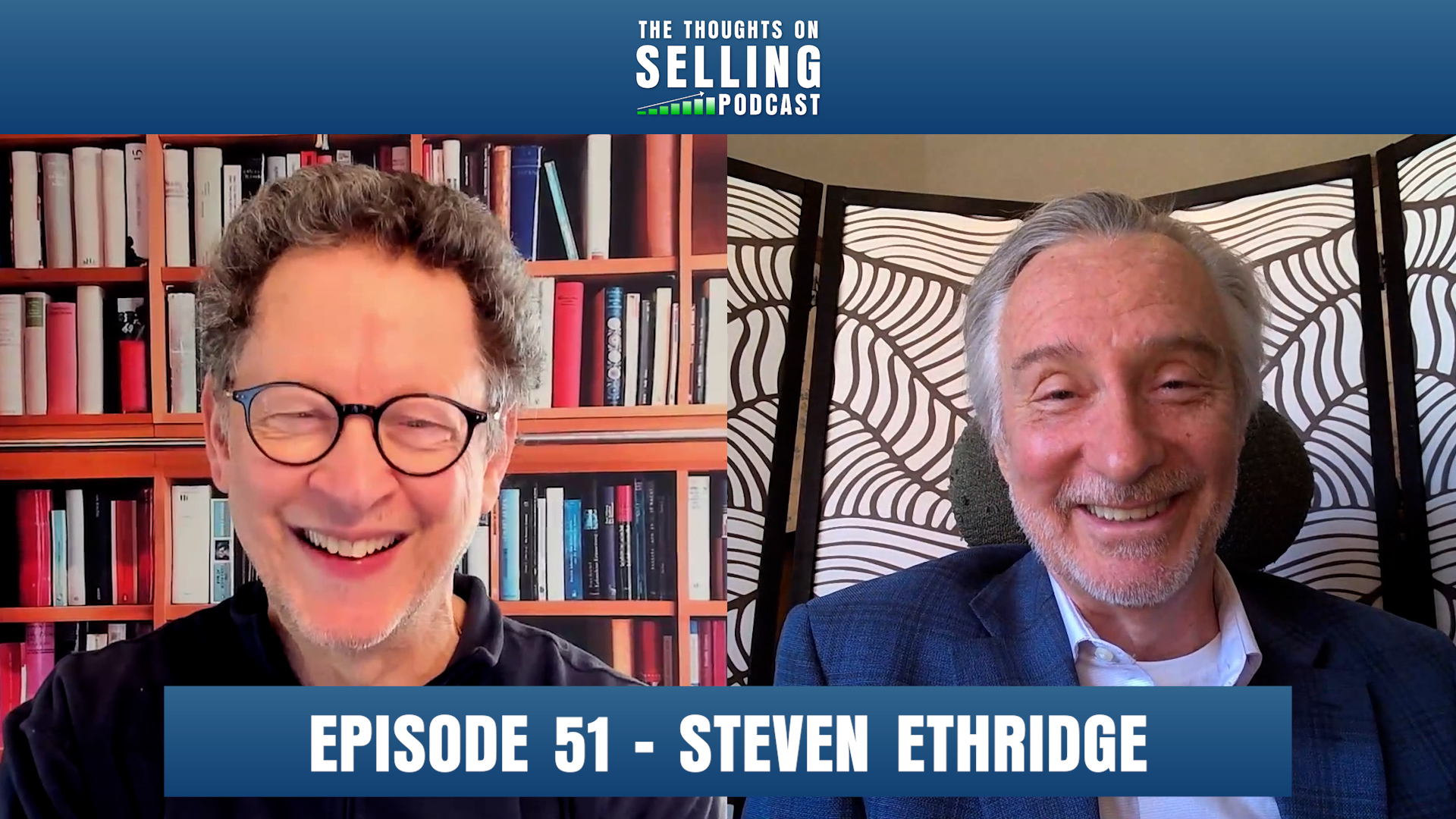
Welcome back to the blog, where we dive deeper into the conversations that fuel your sales success! In our latest episode, episode 51: Sales Mindset Transformation with Steven Ethridge, we explored the profound impact of our internal beliefs on our external sales performance. This blog post expands on those crucial concepts, providing you with actionable insights to identify, challenge, and ultimately reshape your sales mindset for consistent, remarkable results.
The Unseen Engine of Sales Success
Think about the most successful salespeople you know. What sets them apart? Is it solely their product knowledge or their closing techniques? While those are undoubtedly important, there's an underlying force that often separates the good from the exceptional: their mindset. It’s the invisible engine that powers their persistence, their ability to handle rejection, and their unwavering belief in the value they bring. Your mindset isn't just a fleeting feeling; it's a deeply ingrained system of beliefs, assumptions, and internal narratives that dictates how you perceive yourself, your prospects, and the entire sales process. It influences your actions, your reactions, and ultimately, your outcomes. If you believe you're destined to fail, you're likely to sabotage yourself before you even begin. Conversely, if you approach every interaction with confidence and a belief in your ability to help, you create an entirely different trajectory for success.
In the fast-paced world of sales, it's easy to get caught up in the day-to-day tactics – the scripts, the follow-ups, the closing lines. But these are merely the external manifestations of a much deeper internal state. Without a solid foundation of positive and empowering beliefs, even the most polished techniques will eventually falter. This is where the true power of a well-cultivated sales mindset comes into play. It's the bedrock upon which all effective sales strategies are built. It’s the resilience in the face of a 'no,' the creativity in overcoming objections, and the genuine enthusiasm that infects your prospects with your belief in the solution you offer. It’s the internal dialogue that says, "I can do this," even when the external circumstances suggest otherwise. It’s about understanding that sales isn't just about convincing someone to buy something; it's about building relationships, understanding needs, and providing solutions that genuinely improve their situation. And that understanding begins within.
The Mindset-Performance Connection: What Steven Ethridge Taught Us
Our recent conversation with Steven Ethridge on episode 51: Sales Mindset Transformation with Steven Ethridge was a masterclass in understanding this vital connection. Steven, with his deep expertise in Neuro-Linguistic Programming (NLP), brilliantly articulated how our internal belief systems directly shape our external performance. He highlighted that a salesperson's ingrained assumptions about their abilities, the nature of sales itself, and the value of their offering act as powerful filters. If a salesperson believes they are not good at handling objections, they will unconsciously avoid situations where objections might arise or, when faced with one, they will falter because their belief system has already predicted that outcome. Conversely, someone who believes they are adept at problem-solving will actively seek out objections as opportunities to demonstrate their value and find solutions.
Steven's two-part methodology, which emphasizes Sales Mindset Self-Mastery as the crucial first step, underscores this point. Before diving into any sales process, he advocates for the internal work – the self-reflection and reprogramming of limiting beliefs. This is not a superficial exercise; it's about deconstructing the narratives that have been unconsciously built over time, often stemming from past experiences, societal conditioning, or even self-doubt. He explained how these deeply held beliefs, whether conscious or subconscious, create a self-fulfilling prophecy. If you believe selling is inherently manipulative, you might approach your conversations with a sense of guilt or hesitation, which your prospect will inevitably pick up on, leading to a less effective interaction. On the other hand, if you genuinely believe that you are offering a valuable service or product that will benefit your prospect, that belief will radiate through your communication and build trust.
The show notes from the episode eloquently summarize this: "Steven explains how reshaping internal narratives and removing limiting beliefs can dramatically enhance sales performance." This is the core of what we discussed. It's not about learning more tricks or memorizing more scripts; it's about fundamentally altering the internal landscape from which your sales activities emerge. This self-mastery is the foundation upon which all other sales skills are built. Without it, even the most sophisticated strategies will lack the authentic conviction needed to truly connect with and persuade prospects. It’s the quiet confidence that allows you to be present, to listen deeply, and to truly understand the needs of your potential clients. It's the engine that drives genuine connection and, ultimately, sustainable success.
Identifying Your Limiting Beliefs: The First Step to Transformation
The journey to unlocking your sales potential begins with self-awareness. Before you can reshape your mindset, you must first understand what beliefs are holding you back. Limiting beliefs are those deeply ingrained assumptions and ideas that we hold about ourselves, others, or the world that restrict our potential. They often masquerade as truths but are, in reality, self-imposed limitations. In sales, these can manifest in numerous ways. Perhaps you believe that "sales is a zero-sum game," where for you to win, the customer must lose. Or maybe you tell yourself, "I'm not a natural salesperson," or "People don't like being sold to." These internal statements, if left unchallenged, become self-fulfilling prophecies.
To identify these limiting beliefs, you need to engage in honest introspection. Ask yourself specific questions. What are your immediate thoughts when you hear the word "sales"? What are your biggest fears about making a sales call? What internal objections do you have to your own product or service? Pay attention to the language you use when talking about sales, both to yourself and to others. Are you using phrases like "I have to make this sale" (implying pressure and obligation) versus "I get to help this person solve their problem" (implying opportunity and value)? Journaling can be an incredibly powerful tool here. Write down your thoughts and feelings after sales interactions, especially those that didn't go as planned. Look for recurring patterns in your internal dialogue. Are there specific situations that consistently trigger feelings of doubt or inadequacy? These are often indicators of underlying limiting beliefs.
Another effective method is to consider what you *avoid* in your sales process. Do you shy away from making follow-up calls? Do you dread asking for the business? Do you find yourself making excuses for not reaching out to your ideal clients? These avoidance behaviors are often rooted in a fear, which in turn is usually linked to a limiting belief. For instance, avoiding follow-up calls might stem from a belief that you're bothering people, or that they aren't interested. Recognizing these patterns is the critical first step. It's about shining a light on the unconscious programs that are running your sales performance. This process isn't always comfortable; it requires courage and a willingness to confront your own perceived shortcomings. But it is absolutely essential for true transformation. Without this foundational understanding, any attempts to improve your sales skills will be like trying to build a house on quicksand.
Practical Strategies for Mindset Reshaping
Once you've identified your limiting beliefs, the next crucial step is to actively reshape your mindset. This isn't a passive process; it requires consistent effort and the implementation of specific strategies. One of the most powerful techniques, heavily influenced by NLP as discussed with Steven Ethridge, is affirmation and reframing. Affirmations are positive statements designed to challenge and overwrite negative self-talk. Instead of saying, "I'm terrible at closing," you might replace it with, "I am skilled at guiding clients to confident decisions." The key is to make these affirmations believable and to repeat them regularly, ideally aloud and with conviction. It’s not just about saying the words; it’s about feeling the truth of them.
Reframing involves looking at situations from a different perspective. If you receive a rejection, instead of seeing it as a personal failure, reframe it as valuable feedback. What can you learn from this interaction that will make you stronger for the next one? If a prospect expresses concerns, instead of viewing them as obstacles, see them as opportunities to understand their needs more deeply and demonstrate how your offering addresses them. This shift in perspective can transform a perceived setback into a stepping stone. Visualization is another potent tool. Spend time vividly imagining yourself succeeding in your sales interactions. See yourself confidently engaging with prospects, effectively addressing their concerns, and successfully closing deals. Engage all your senses in this visualization – what do you see, hear, feel, and even smell? The more real you can make it in your mind, the more your subconscious mind will begin to believe it as a possibility.
Another highly effective strategy is to surround yourself with positive influences. This can include mentors, coaches, or even colleagues who embody the mindset you aspire to. Engage in continuous learning through books, podcasts (like this one!), and training programs that focus on personal development and sales excellence. Reading success stories and learning from those who have overcome similar challenges can be incredibly inspiring and provide practical strategies. Finally, practice self-compassion. Mindset shifts don't happen overnight. There will be days when old beliefs resurface. On those days, be kind to yourself. Acknowledge the challenge, gently redirect your thoughts, and recommit to your practice. Consistency, rather than perfection, is the key to lasting change. By actively employing these strategies, you begin to rewire your brain, creating new neural pathways that support a more positive, empowering, and ultimately, more successful sales approach.
Beyond Beliefs: Intentional Communication and Rapport Building
While a powerful sales mindset is the foundation, effective communication and strong rapport are the conduits through which your value is delivered. As Steven Ethridge emphasized in our podcast, intentional communication is paramount. This means being conscious of not just what you say, but how you say it, and how you are perceived. Rapport is the sense of trust and mutual understanding that develops between you and your prospect. It's the feeling that you're on the same wavelength, which makes them more open to listening to what you have to say.
Building rapport isn't about being overly friendly or using generic pleasantries. It's about genuine connection. This involves active listening, which means paying full attention to what the other person is saying, both verbally and non-verbally, without interrupting or formulating your response in your head. It’s about asking insightful questions that show you are genuinely interested in their situation and needs. Steven highlighted the importance of mirroring – subtly matching your prospect’s body language, tone of voice, and pace of speech. This isn’t about imitation but about creating a subconscious sense of familiarity and connection. When you are in sync with someone, they naturally feel more comfortable and receptive.
Beyond mirroring, truly understanding your prospect's communication style is crucial. This leads us to the concept of VAK, which we touched upon briefly in the episode and will explore further now. By adapting your language to match their preferred sensory modality, you significantly increase your chances of being understood and connecting on a deeper level. This intentional approach to communication transforms a potentially transactional interaction into a collaborative experience, where the focus is on mutual understanding and problem-solving, rather than just a sale.
Tailoring Your Message: Understanding Communication Styles (VAK)
The VAK model – Visual, Auditory, and Kinesthetic – provides a powerful framework for understanding how people process information and communicate. Recognizing your prospect's preferred style allows you to tailor your message for maximum impact and connection. Visual communicators tend to use words related to sight. They might say things like "I see what you mean," "Can you picture this?" or "Let's get a clear picture of the situation." They respond well to charts, graphs, presentations, and demonstrations. When communicating with a visual person, use descriptive language that appeals to their sense of sight, and provide visual aids whenever possible.
Auditory communicators, on the other hand, tend to use words related to hearing. They might say "I hear you," "That sounds good," or "Tell me more about it." They respond well to conversations, explanations, and verbal descriptions. When speaking with an auditory person, use clear, well-structured explanations, ask for their thoughts, and be mindful of the tone and rhythm of your voice. They often appreciate a good story or anecdote that illustrates your point.
Kinesthetic communicators tend to use words related to feeling, touch, and action. They might say "I feel that," "Let me get a handle on this," or "That makes sense." They learn best through hands-on experience, role-playing, and direct involvement. When interacting with a kinesthetic person, encourage them to touch, hold, or interact with your product or service. Use language that evokes a sense of feeling or experience. You might even use analogies that relate to physical sensations or actions. Observing which words and phrases your prospect uses most frequently is the key to identifying their primary VAK preference. By consciously adapting your communication style to match theirs, you demonstrate that you understand them on their level, fostering a deeper connection and making your message more resonant and persuasive. This isn't about manipulation; it's about effective, empathetic communication.
From Limiting Beliefs to Lasting Success: Key Takeaways
As we've explored in this post, the journey to unlocking your sales potential is deeply intertwined with your internal state. The key takeaways from our discussion and the insights from episode 51: Sales Mindset Transformation with Steven Ethridge are clear and actionable:
- Mindset is the Foundation: Your beliefs about yourself, sales, and your offering are the bedrock of your performance. A positive, empowering mindset is not a luxury; it's a necessity for sustainable sales success.
- Identify and Challenge: Actively seek out your limiting beliefs. Shine a light on the internal narratives that hold you back and commit to challenging their validity.
- Reprogram for Growth: Utilize strategies like affirmations, reframing, and visualization to actively cultivate a more empowering mindset. Consistency is key.
- Communicate Intentionally: Beyond your beliefs, your ability to build rapport and communicate effectively is crucial. Active listening and understanding communication styles (VAK) are vital skills.
- Tailor Your Approach: Adapt your language and delivery to match your prospect's preferred sensory modality to foster deeper connection and understanding.
- Embrace the Process: Sales is a journey of continuous learning and self-improvement. Be patient with yourself, celebrate small wins, and view challenges as opportunities for growth.
By integrating these principles into your daily sales practice, you can move beyond simply performing sales tasks to truly transforming your approach and achieving remarkable results. It’s about shifting from a reactive, fear-based mindset to a proactive, value-driven one.
Conclusion: Your Mindset is Your Greatest Sales Asset
In this extended exploration, we’ve journeyed from the foundational power of mindset to the practical application of intentional communication, all inspired by our insightful conversation on episode 51: Sales Mindset Transformation with Steven Ethridge. We’ve seen how your internal beliefs act as the unseen engine driving your sales performance, shaping your actions, reactions, and ultimately, your outcomes. The ability to identify and dismantle limiting beliefs is not just a personal development exercise; it's a critical strategic advantage in the competitive world of sales. By actively reshaping your internal narrative, you unlock a reservoir of confidence, resilience, and genuine belief in the value you bring.
Furthermore, we’ve delved into the art of intentional communication, understanding that building rapport and tailoring your message to your prospect's preferred communication style (VAK) are essential complements to a strong mindset. When your internal beliefs are aligned with your external communication, you create a powerful synergy that fosters trust, builds genuine connections, and paves the way for mutually beneficial outcomes. Remember, your mindset isn't just a part of your sales toolkit; it is your greatest sales asset. Invest in it, nurture it, and watch your sales potential unlock in ways you never thought possible. Thank you for joining me on this deeper dive, and I encourage you to revisit the episode for even more practical wisdom. Until next time, keep selling with purpose and conviction!