The "Unicorn Playbook" is Dead: Why Intelligent Scaling Trumps Headcount Growth
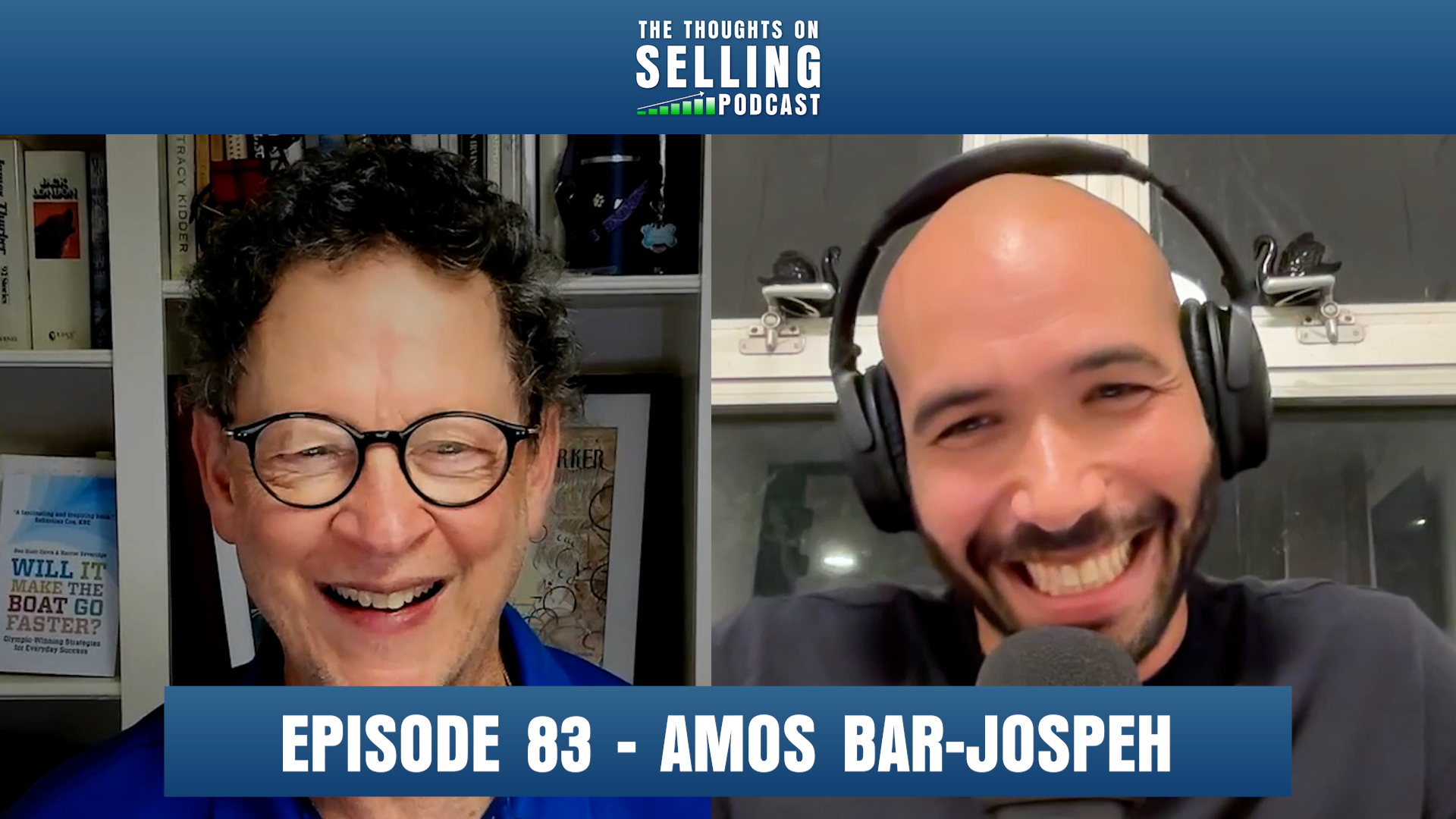
Welcome back to the blog, everyone! In our latest episode, we sat down with the incredibly insightful Amos Bar-Jospeh for a conversation that truly challenged conventional wisdom in the startup world. Titled "Scaling with Intelligence rather than Headcount," episode 83 is a deep dive into a paradigm shift that I believe is not just timely, but absolutely essential for any business looking to thrive in the modern landscape. This blog post aims to expand on the core tenets of our discussion, exploring Amos's compelling argument that the old "grow at all costs" unicorn playbook is, quite frankly, dead. We'll be dissecting why simply hiring more people isn't the path to sustainable success anymore, and instead, how focusing on intelligent scaling, particularly through the strategic leverage of AI, is the key to unlocking true growth and efficiency. You can catch the full episode here: 83. Scaling with Intelligence rather than Headcount, with Amos Bar-Jospeh.
The End of the 'Unicorn Playbook'
For years, the narrative in the startup ecosystem has been dominated by the "unicorn playbook." This strategy, often fueled by venture capital, prioritized rapid growth and market share above all else. The idea was simple: raise a massive amount of money, hire aggressively, expand quickly, and hope to achieve a billion-dollar valuation. It's a seductive model, promising meteoric rises and immense success. However, as Amos powerfully articulated in our episode, this playbook is showing its age, and for many, it's becoming increasingly unsustainable and even counterproductive. The pressure to constantly grow headcount, often before a business has truly solidified its product-market fit or developed robust operational efficiencies, can lead to bloated organizations, diluted focus, and ultimately, financial instability. The economic realities and the evolving technological landscape are forcing a re-evaluation of what it truly means to build a successful, scalable business.
Why the 'Grow at All Costs' Model is Broken
The inherent flaw in the "grow at all costs" approach lies in its fundamental disregard for efficiency and profitability in the early stages. The focus is on expansion, not necessarily on building a lean, adaptable, and customer-centric organization. This often translates to hiring more salespeople to chase more deals, more engineers to build more features, and more support staff to manage the growing customer base, all without a clear understanding of the underlying unit economics or the true drivers of customer value. As Amos put it, the goal becomes about "raising a shit ton of money and hiring 40 people before revenue." This creates a dependency on continuous funding rounds, a frantic race against time to achieve hyper-growth, and a culture where headcount becomes a vanity metric rather than a strategic asset. When the market shifts, or funding dries up, these heavily overstaffed organizations often struggle to adapt, leading to painful layoffs and a loss of institutional knowledge. Furthermore, this model can lead to a dilution of innovation. When everyone is focused on simply executing more of the same, there's less room for the creative thinking and strategic foresight that truly sets a company apart.
Introducing Intelligent Scaling: The Autonomous Business
This is where Amos's concept of "intelligent scaling" and the "Autonomous Business" comes into play. Instead of focusing on simply adding more people, the emphasis shifts to maximizing the impact and efficiency of the existing team. This isn't about doing less; it's about doing more, smarter. The Autonomous Business is designed from the ground up to scale with intelligence, leveraging technology to amplify human potential rather than just consume resources. It's about building systems that are self-optimizing, learning, and adapting. The core idea is to identify the "100x version" of each employee by augmenting their capabilities with smart tools and processes. This means freeing them from mundane, repetitive tasks and allowing them to focus on high-value, strategic work that truly drives innovation and customer satisfaction. It’s a fundamental shift in perspective – from a focus on input (headcount) to a focus on output and impact.
The Role of AI in Amplifying Human Potential (Not Replacing It)
A critical component of intelligent scaling is the strategic integration of Artificial Intelligence. However, and this is a crucial distinction Amos emphasizes, AI's role is not to replace human workers, but to enhance them. Think of it as a powerful co-pilot, an intelligent assistant that handles the routine, the data-intensive, and the time-consuming, thereby freeing up humans to operate within their "zone of genius." This means automating tasks like data entry, initial customer outreach, basic report generation, and even preliminary analysis. By offloading these responsibilities to AI, individuals can dedicate more time and cognitive energy to complex problem-solving, strategic planning, building genuine customer relationships, and creative innovation. The goal is to turn each person on the team into their 100X version of themselves, unlocking a level of productivity and effectiveness that simply isn't possible with traditional methods alone. It’s about creating a synergistic relationship where AI handles the mechanics, and humans provide the strategy, creativity, and empathy.
Sales as a Zero-Sum Game: The Need for Differentiation
Amos also brought up a provocative point about sales: it's a zero-sum game of attention and budget. In today's crowded marketplace, simply being "better" at selling isn't enough. If every company is employing the same AI-powered tools to reach out to the same potential buyers with similar messages, the noise level increases, and the effectiveness of those efforts diminishes for everyone. True success in sales, and indeed in business, comes from differentiation. This requires human creativity, understanding the nuances of customer needs, and crafting unique value propositions. Relying solely on automated, generic outreach will lead to being ignored. Intelligent scaling, in this context, means using AI to identify and understand potential customers at a deeper level, but then leveraging human insight and creativity to craft personalized, impactful interactions. It's about being memorable and relevant in a sea of sameness, and that’s where the human element, augmented by AI, truly shines.
The Evolution of Software: From Static Tools to Adaptive Systems
The way we interact with software is also undergoing a profound transformation, a point that Amos highlighted with great clarity. For decades, software, particularly in the realm of business, has been largely static. Think of traditional Customer Relationship Management (CRM) systems. They were designed to "record and report," forcing users to adapt their workflows to fit the software's structure, often creating significant administrative burdens. This resulted in what Amos termed "system interactions to zero" becoming the ideal for sales, as the ideal was to spend 100% of time on buyer interactions. However, these systems often became a reporting burden, taking away valuable selling time. The future, as Amos envisions it and as we see emerging, lies in adaptive software. These are systems that learn your specific habits, your feedback loops, and the unique contours of your workflow. They don't just store data; they evolve with you, re-tailoring themselves to your needs on a daily basis. This is a paradigm shift from "more features" to "more intelligent adaptation," creating software that truly works for you, rather than the other way around.
Achieving Zero System Interactions for Maximum Buyer Engagement
This evolution in software directly supports the goal of minimizing system interactions. The ultimate aim, especially in sales and customer-facing roles, is to achieve "zero system interactions" during a buyer engagement. This doesn't mean abandoning systems altogether; rather, it means having systems so intelligent and integrated that they require no conscious effort or manual input from the user during a critical interaction. Imagine an AI that seamlessly pulls up relevant customer data, suggests talking points, and even pre-fills follow-up tasks, all without the salesperson having to navigate multiple screens or input data manually. This frees the salesperson to be fully present, attentive, and focused on building rapport and understanding the customer's needs. When software truly adapts to the user and the task at hand, the friction points disappear, allowing for a more fluid, effective, and human-centric interaction. This is the promise of intelligent scaling realized in practice.
The Future Belongs to Human-AI Collaboration
Ultimately, the overarching theme of our conversation with Amos, and the core of this blog post, is the undeniable truth that the future belongs to organizations that master Human-AI Collaboration. This isn't a future where AI replaces humans, but one where AI augments human capabilities to an unprecedented degree. It's about creating sophisticated feedback loops where AI handles the mundane and repetitive, learns from human input and outcomes, and continuously refines its assistance. This allows humans to operate at a higher strategic level, focusing on creativity, critical thinking, empathy, and building meaningful relationships. The companies that will thrive are those that embrace this symbiotic relationship, using AI not as a cost-cutting measure, but as a force multiplier for innovation, efficiency, and ultimately, sustainable growth. As Amos so aptly put it, "The future belongs to organizations that... turn each person on the team into their 100X version of themselves." This is the new paradigm of scaling, and it's a paradigm worth embracing.
Conclusion: Embracing the New Paradigm of Scaling
Our discussion with Amos Bar-Jospeh in episode 83 of Thoughts on Selling was a powerful reminder that the old ways of doing business are no longer sufficient. The "unicorn playbook" of relentless headcount growth is proving to be an unsustainable and often inefficient path. Instead, the future of business lies in intelligent scaling, where businesses leverage the power of AI and adaptive systems to amplify human potential and create autonomous, efficient operations. This means focusing on maximizing the impact of each individual, freeing them from drudgery to focus on high-value strategic work. It’s about building systems that adapt to us, rather than us having to adapt to them. As we've explored in this post, the era of simply adding more bodies is over; the era of intelligent collaboration between humans and AI has begun. Embracing this new paradigm is not just an option; it's a necessity for any business aiming for long-term success and resilience. I highly encourage you to listen to the full episode, 83. Scaling with Intelligence rather than Headcount, with Amos Bar-Jospeh, to gain even deeper insights from Amos's remarkable perspective. Let's build the future of scaling, intelligently.