The True Goal of Selling: Shifting Your Focus from Selling to Helping Customers Buy
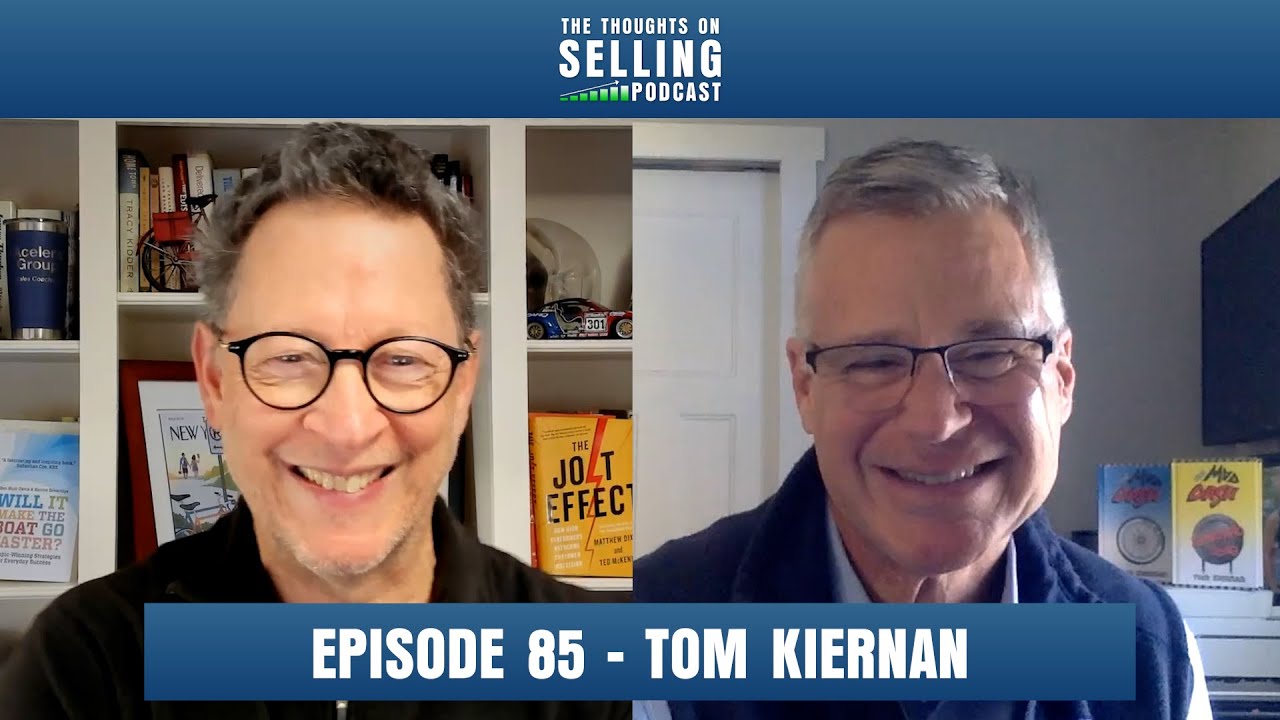
Welcome back to the blog, where we dive deeper into the conversations we have on the Thoughts on Selling podcast. In our latest episode, episode 85, titled "Training versus Enabling: The Reticular Activator, The "T-Word" and Lumpy Bones with Tom Kiernan," we had a truly eye-opening discussion with sales enablement veteran Tom Kiernan. We explored some fascinating concepts that, when put into practice, can fundamentally transform how we approach sales. This blog post is an expansion on one of the core themes that emerged from that conversation: the critical shift from a mindset of "selling" to one of "helping customers buy." It’s a subtle distinction, but one with profound implications for building genuine trust, fostering long-term relationships, and ultimately, achieving better outcomes for everyone involved. If you haven't had a chance to listen yet, I highly encourage you to check out episode 85. The insights shared there, especially regarding the "T-word" (training) versus enablement and the power of the Reticular Activating System, lay the groundwork for understanding why this shift in focus is so vital.
Why 'Selling' Isn't the Goal: Embracing the 'Helping Customers Buy' Mindset
For far too long, the traditional sales paradigm has been obsessed with the act of "selling." We've been conditioned to think that our success is measured by how effectively we can push a product or service onto a customer. This often leads to a transactional, pushy, and ultimately, a less effective approach. It's a mindset that can create friction, build resistance, and leave both the salesperson and the customer feeling unsatisfied. The core issue here is a misaligned objective. When the primary goal is to "sell," the salesperson's focus is on their own agenda, their commission, and their quota. The customer, on the other hand, has a problem to solve, a need to fulfill, or a goal to achieve. These two objectives are not inherently the same.
The real objective, as we discussed in episode 85 and will elaborate on here, is to facilitate the customer's buying journey. It’s about understanding their needs, their challenges, and their aspirations, and then guiding them towards a solution that genuinely benefits them. When you shift your motive from "I need to sell this" to "How can I help this customer buy the right solution for them?", everything changes. Your energy shifts, your language changes, and your entire approach becomes more collaborative and customer-centric. This isn't just a philosophical rebranding; it's a fundamental recalibration of intent that leads to tangible results. It’s about empowering the customer to make an informed decision that is best for their situation, rather than convincing them to take a particular action dictated by your sales targets.
The Power of 'Other-Centered Selling' and the Reticular Activating System
One of the most compelling concepts Tom Kiernan brought to our attention in episode 85 was the idea of "Other-Centered Selling" and its connection to the Reticular Activating System (RAS). Our RAS is a neurological filter in our brain that helps us prioritize information. It's what allows you to tune out the general hum of a busy restaurant but instantly pick up on your name being called. In the context of sales, traditional selling often fails to engage the buyer's RAS because it's too focused on the seller's product or company. It's noise to the buyer.
However, when you adopt an "Other-Centered Selling" approach, you speak directly to the buyer's world. You talk about their challenges, their goals, their industry, and their specific pain points. This is incredibly powerful because it bypasses the noise and directly engages their RAS. When a salesperson starts talking about the customer's problems and aspirations, it’s like hearing their name in a crowded room. They stop, they listen, and they become engaged because the message is relevant and important to *them*. This is the essence of truly effective communication in sales. It's not about what you're selling; it's about understanding what the customer is trying to achieve and how you can help them get there. This requires empathy, deep listening, and a genuine curiosity about their situation. The RAS is, in essence, a gatekeeper to attention, and "Other-Centered Selling" is the key that unlocks that gate.
Training vs. Enablement: The Importance of Process and Practice
In our discussion in episode 85, Tom Kiernan made a crucial distinction between "training" and "enablement." He argued that training is often viewed as a one-off event, a singular session where information is delivered. Enablement, on the other hand, is a continuous process. It’s about building capabilities, reinforcing skills, and ensuring that sales professionals have the tools, knowledge, and practice they need to succeed in real-time interactions with customers.
This distinction is vital when we consider the goal of helping customers buy. To effectively help someone buy, a salesperson needs to be equipped with more than just product knowledge. They need to understand the customer's buying journey, how to ask insightful questions, how to listen effectively, and how to present solutions in a way that resonates with the customer's needs. This requires ongoing reinforcement and practice, not just a single training session. Tom highlighted lessons from the "Toyota Way," a philosophy that emphasizes continuous improvement and rigorous process management. Similarly, at American Power Conversion (APC), a company known for its sales excellence, the focus was on embedding robust processes that enabled consistent performance. When you have a defined process, you have something to practice. Without a clear process, practice becomes aimless and ineffective. True enablement provides the framework for consistent, high-quality customer interactions, which is essential for facilitating their buying decisions.
The Transparency of Motive: Why Genuine Helpfulness Wins Trust
One of the most candid and impactful statements Tom Kiernan made in episode 85, which resonates deeply with the theme of this blog post, is that "Motive is transparent. It's written right up on that yellow sticky that [is] slapped up onto your forehead." This is a stark reminder that customers can sense insincerity from a mile away. If your primary motive is to make a commission, and that's the driving force behind your interactions, it will be palpable. Customers are not looking to be "sold to"; they are looking for solutions and trusted advisors.
Genuine helpfulness, on the other hand, builds trust. When a customer perceives that your intention is truly to help them solve a problem or achieve a goal, they are more likely to engage, to be open, and to ultimately make a purchase from you. This requires a fundamental shift in mindset. It means prioritizing the customer's needs above your own immediate gain. It means being willing to walk away from a deal if it's not the right fit for the customer, even if it means a lost commission. This integrity is what builds long-term relationships and a strong reputation. In a world where information is readily available, customers can do their own research. What they can't easily replicate is the trust and expertise of a salesperson who is genuinely invested in their success. This transparency of motive is not just ethical; it's a powerful competitive advantage.
Lessons from Industry Leaders: Toyota and APC
The principles we're discussing aren't just theoretical. They are embodied by some of the most successful organizations in the world. Tom Kiernan, drawing from his experiences, pointed to companies like Toyota and American Power Conversion (APC) as prime examples of how a focus on process, continuous improvement, and customer enablement leads to exceptional results. The "Toyota Way," for instance, is built on a foundation of respect for people and continuous improvement (kaizen). This philosophy permeates every aspect of their operations, from manufacturing to customer service, and it’s a direct manifestation of a system designed to deliver value consistently.
APC, under Tom's guidance, also cultivated a culture that emphasized rigorous processes and a deep understanding of customer needs. This wasn't about simply training reps on product features; it was about enabling them with the skills and understanding to effectively guide customers through complex purchasing decisions. By creating robust processes, they established a clear framework for how to engage with customers, understand their challenges, and offer appropriate solutions. This emphasis on process management and continuous refinement is what allows organizations to scale success and build a reputation for reliability and customer satisfaction. These companies understood that the goal wasn't just to sell, but to build systems and processes that made it easy and beneficial for customers to buy the right solutions.
The Practice Deficit in Sales: Learning from Professional Athletes
Another striking point raised in episode 85 was the stark contrast between the preparation of professional athletes and the typical approach in sales. Professional athletes, whether in the NFL or on a Broadway stage, dedicate countless hours to deliberate practice. They refine their skills, simulate game scenarios, and work tirelessly to perfect their craft. They understand that repetition and focused practice are essential for peak performance.
In contrast, the sales world often suffers from a "practice deficit." Sales professionals might attend a training session and then immediately be expected to perform at a high level in client interactions. The gap between learning a concept and consistently executing it in a high-pressure sales environment is often left unaddressed. As Tom pointed out, "If you don't have a defined process, there's nothing to practice." This underscores the importance of enablement. Enablement provides the structure, the scenarios, and the feedback mechanisms necessary for sales professionals to engage in meaningful practice. It's about creating opportunities for reps to hone their skills in a safe environment, to make mistakes, and to learn from them before they impact a real customer interaction. This practice, when aligned with a clear process, is what allows sales professionals to become truly adept at helping customers buy, rather than just trying to sell.
Beyond Sales: Tom Kiernan's 'Lumpy Bones' and Giving Back
The conversation in episode 85 also extended beyond the realm of sales enablement to a deeply personal and inspiring project of Tom Kiernan's: "Lumpy Bones." This initiative, a "Books as a Service" non-profit, is dedicated to getting children's books into classrooms that address difficult topics like cancer through humor and adventure. It’s a powerful example of what it means to be "other-centered" in its purest form.
Tom's passion for Lumpy Bones highlights a broader principle that resonates with the idea of helping customers buy. It's about understanding a need, developing a solution, and acting with genuine intent to improve the lives of others. This altruistic drive, when translated into the sales world, can be incredibly transformative. It shifts the focus from personal gain to collective benefit. By contributing to Lumpy Bones, Tom is not only sharing valuable stories with children but also fostering empathy and resilience. This is the same spirit that should guide our approach to sales – a genuine desire to make a positive impact on our customers' businesses and lives. It’s about leaving a legacy of helpfulness and trust, whether that's through facilitating a successful purchase or through initiatives that uplift and support others.
Conclusion: Building Trust and Better Outcomes by Facilitating Buying
The core message that emerged from our compelling conversation with Tom Kiernan in episode 85, and one that we've expanded upon here, is the fundamental shift required in the sales profession. The goal is no longer simply to "sell," but to become an invaluable partner who helps customers successfully navigate their buying journey. This shift from a seller-centric to a buyer-centric approach, powered by "Other-Centered Selling" and an understanding of the Reticular Activating System, allows us to cut through the noise and establish genuine connections. It's about moving beyond transactional interactions and embracing enablement as a continuous process, fostering a culture of practice, and, most importantly, demonstrating a transparent motive of genuine helpfulness.
By embracing these principles, sales professionals can build stronger, more trusting relationships with their customers, leading to better outcomes for everyone involved. When you focus on facilitating the customer's buying process, you don't just make a sale; you create a loyal advocate. The lessons from industry leaders like Toyota and APC, the insights into the power of practice, and the inspiring example of initiatives like Lumpy Bones all point to the same conclusion: true success in sales comes from a genuine desire to help others achieve their goals. I encourage you to revisit episode 85, "Training versus Enabling: The Reticular Activator, The "T-Word" and Lumpy Bones with Tom Kiernan," to further immerse yourself in these transformative ideas. Until next time, keep focusing on helping your customers buy!