The 'Scope' Stumble: Turning a Moment of Uncertainty into a Sales Learning Opportunity
Introduction: The Unexpected Curveball in Sales
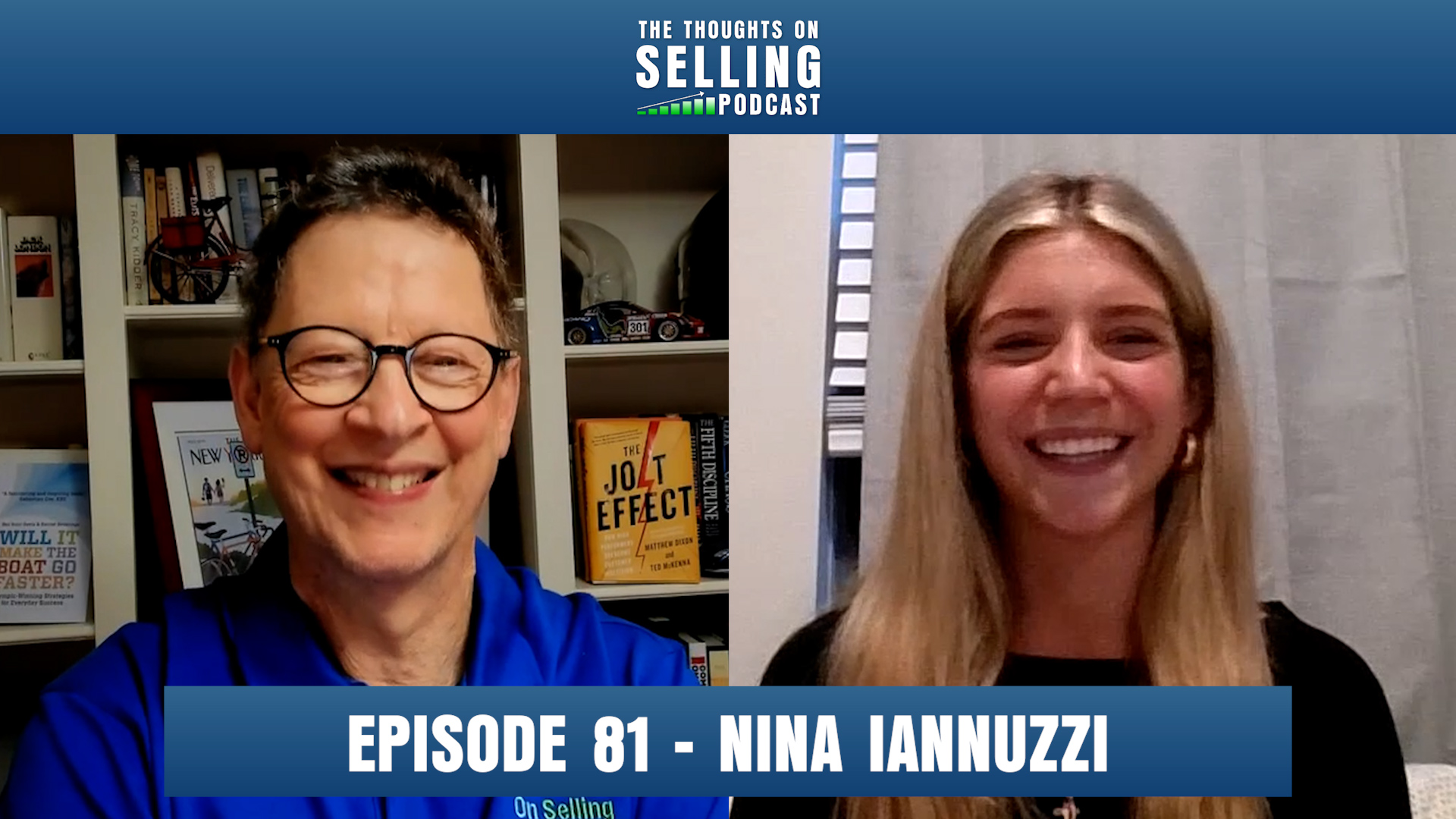
Welcome back to the blog, fellow sales enthusiasts! Today, we're diving deeper into a topic that’s incredibly close to my heart and was a pivotal moment in a recent podcast episode. In episode 81, titled "The Future of Sales is Looking Bright: Meet NISC Finalist and Super Star Nina Iannuzzi!", we had the immense pleasure of speaking with Nina Iannuzzi, a truly remarkable talent in the sales world. Nina’s journey, from selling slime in elementary school to excelling in high-stakes collegiate sales competitions, is nothing short of inspiring. During our conversation, Nina candidly shared a story that perfectly encapsulates a universal challenge in sales: facing a question you don’t immediately have an answer to. This blog post is a retrospective exploration of that "scope" stumble, dissecting how Nina navigated it and, more importantly, the invaluable lessons it offers for all of us in the sales profession. We'll explore the power of admitting what you don't know, the art of turning uncertainty into opportunity through clarifying questions, and how to prepare for any curveball thrown your way.
The 'Scope' Stumble: A Real-Life Sales Scenario
Nina recounted a specific moment during a crucial sales pitch where she was faced with an unfamiliar term – "scope." In the heat of the moment, with a potential client’s attention squarely on her, this unexpected query threw her for a loop. The pressure to perform, to project confidence and expertise, is immense in sales. When a buyer, particularly a sophisticated one like a CFO, asks a question, there’s an implicit expectation that the salesperson will have the answer at their fingertips. For Nina, this wasn't a matter of lack of preparation in general, but a specific jargon or concept that hadn't surfaced in her prior practice or research for this particular scenario. This moment of uncertainty, while fleeting, is a relatable experience for anyone who has ever been on the front lines of a sales conversation. It’s in these instances that our true sales mettle is tested, not by our perfect deliveries, but by our ability to adapt and respond with integrity. The "scope" stumble, as Nina termed it, wasn't a sign of failure, but a potent reminder of the dynamic and often unpredictable nature of client interactions. It highlighted that even with thorough preparation, the human element of sales can always introduce an unexpected variable.
The Power of Admitting What You Don't Know
This is perhaps the most profound lesson to emerge from Nina's experience. In a profession that often glorifies the "always be closing" mentality and the image of the unflappable salesperson, admitting ignorance can feel counterintuitive, even risky. However, Nina’s retrospective analysis reveals the immense power in this act. Instead of attempting to bluff or feign understanding, which can lead to further complications and erode trust, Nina wisely chose a path of transparency. The instinct to "fake it till you make it" is strong, but in professional sales, especially with complex solutions or discerning clients, this can backfire spectacularly. Acknowledge the lack of immediate knowledge not as a weakness, but as an opening for deeper engagement. It signals to the client that you are honest, that you value accuracy, and that you are committed to providing them with the correct information. This vulnerability, paradoxically, can build stronger rapport and a more authentic connection. It shifts the dynamic from a performance to a collaborative problem-solving session. When you admit you don't know something, you create an opportunity for the client to educate you, or for you to collaboratively seek the answer, which often leads to a more robust understanding of their needs and the problem at hand. This is far more valuable than a superficial answer that might be incorrect.
Turning Uncertainty into Opportunity: The Art of Clarifying Questions
Nina didn't just admit she didn't know; she strategically leveraged the situation by asking a clarifying question. This is where the real magic of her approach lies. Instead of leaving the client hanging or ending the conversation on a note of confusion, she turned the question back in a constructive way. For instance, she might have asked, "That's a great point about the 'scope.' To ensure I'm addressing your needs precisely, could you elaborate a bit on what aspects of the scope are most critical for your team's success?" This simple yet effective tactic serves multiple purposes: * **Gains Time:** It buys you precious seconds to formulate a more thoughtful response or even to discreetly look up information if the context allows. * **Deepens Understanding:** It prompts the client to provide more context, revealing their specific priorities and concerns related to "scope." This information is gold for tailoring your pitch. * **Demonstrates Engagement:** It shows that you are actively listening and genuinely interested in understanding their perspective, rather than just reciting pre-rehearsed lines. * **Shifts the Burden (Slightly):** It empowers the client to guide the conversation in a direction that is most relevant to them, making them feel heard and valued. * **Educates the Client:** Sometimes, asking a clarifying question can help the client articulate their own needs more clearly, which can be a powerful part of the sales process itself. The ability to pivot from uncertainty to a proactive, information-gathering stance is a hallmark of skilled sales professionals. It’s not about having all the answers, but about knowing how to find them and how to use the interaction to your advantage. This approach transforms a potential stumble into a strategic advantage, demonstrating adaptability and a commitment to client success.
Beyond 'Scope': Handling Any Curveball in a Sales Pitch
The lesson of the "scope" stumble extends far beyond a single unfamiliar term. In the realm of sales, curveballs are not exceptions; they are the norm. Clients will ask about competitor features you haven't fully researched, operational implications you haven't considered, or technical specifications that are outside your immediate purview. The principles Nina demonstrated are universally applicable: * **Preparation is Key, but Incomplete:** While thorough research and practice are non-negotiable, you cannot anticipate every single question. Embrace this reality. * **Active Listening is Paramount:** Pay close attention to what the client is saying, and more importantly, what they are implying. This will help you identify potential areas of confusion or unfamiliarity. * **Develop a Toolkit of Response Strategies:** Have a few go-to phrases for when you encounter the unknown. Examples include: * "That's an excellent question, and to give you the most accurate information, I'd like to take a moment to confirm those details with our product specialist." * "I want to ensure I'm providing you with the most up-to-date information. Can you tell me more about what specific challenges you're facing that this particular aspect of 'scope' relates to?" * "That's an area that requires a nuanced understanding. Let me get back to you with a definitive answer by [timeframe] to ensure I'm not misrepresenting anything." * **Follow Through with Action:** The crucial element is always following up. If you promise to get back to someone, do it promptly and with the correct information. This reinforces your credibility and commitment. * **Learn from Every Interaction:** Every curveball is a learning opportunity. After the pitch, debrief yourself. What could you have researched better? How can you incorporate the unexpected question into your future preparation? By mastering these strategies, sales professionals can transform potentially awkward moments into demonstrations of their professionalism, resourcefulness, and dedication to client satisfaction.
Lessons from the Rink: The Hockey Player's Sales Mindset
Nina's background as a dedicated hockey player for 16 years offers a powerful analogy for her sales approach. In hockey, like in sales, you train relentlessly, you understand the game's intricacies, and you prepare for every possible scenario. But when the puck drops, the game unfolds in real-time, and the unexpected happens. A turnover, a breakaway, a penalty – these are all moments that require immediate, decisive action. Nina likens entering a sales room to a puck drop. You know your objective, you've practiced your plays, and you're ready to execute. The "scope" stumble, in this context, is like a sudden defensive breakdown – it requires quick thinking and adaptation. The hockey player’s mindset of staying calm under pressure, focusing on the next play, and maintaining a strong defensive stance (which translates to protecting your integrity and the client's best interests) is invaluable. The "defense wins championships" mentality applies perfectly: building a solid foundation of trust and understanding, even in the face of unexpected challenges, is what ultimately leads to a successful outcome. This resilience and focus on execution, honed on the ice, translates seamlessly to the sales arena.
From Slime Sales to Enterprise Pitches: Nina's Sales Journey
It's fascinating to trace Nina's sales journey, as highlighted in our podcast episode. Her entrepreneurial spirit ignited at a young age, starting with the seemingly simple act of selling slime and gum to her classmates in fifth grade. This early foray into commerce taught fundamental lessons about understanding customer desires, pricing, and perhaps even the art of persuasion. These foundational experiences, though seemingly small, build an intuitive understanding of sales dynamics. Transitioning from these informal beginnings to the complex world of enterprise sales, as Nina is now poised to do, is a testament to her growth and adaptability. The core principles of connecting with people, understanding their needs, and offering solutions remain consistent, regardless of the product or the scale of the transaction. Her ability to draw parallels between these diverse experiences – from elementary school commerce to collegiate sales competitions and ultimately to enterprise-level engagements – underscores a powerful truth: effective salesmanship is built on a combination of learned skills and innate drive, fueled by a willingness to learn and adapt at every stage.
The Importance of Boldness: 'Always Be Closing' with Confidence
The mantra "Always Be Closing" (ABC) is often misunderstood. It doesn't mean being pushy or aggressive. Instead, it embodies a proactive mindset, a commitment to moving the sales process forward with confidence and purpose. Nina exemplifies this with her "contract slide" move, a bold strategy to physically present the contract at the four-minute mark of a pitch. This isn't about desperation; it's about signaling conviction and clarity about the value proposition. When you’ve done your homework, understood the client’s needs, and believe in your solution, taking a bold step to move towards the close is essential. The "scope" stumble didn't deter Nina from this core principle. Instead, her ability to recover and still convey confidence speaks volumes. It’s about projecting belief in your product and your ability to solve the client's problems, and gracefully navigating any bumps along the road. This confidence, combined with strategic boldness, is what differentiates exceptional salespeople. It's about creating momentum and guiding the client towards a decision that benefits them.
Embracing the Hustle: The 'Suck It Up, Buttercup' Mentality
Nina’s coach’s advice, "Suck it up, buttercup," is a memorable and powerful distillation of the resilience required in sales. This isn't about enduring hardship without complaint; it's about a pragmatic approach to challenges. In sports, as in sales, things go wrong. Equipment breaks, strategies falter, opponents score. The athlete or salesperson who wilts under pressure or seeks immediate rescue is unlikely to succeed. Instead, they assess the situation, fix what they can, and keep moving forward. This mentality is crucial for dealing with rejections, unexpected objections, or moments of uncertainty like the "scope" stumble. It’s about owning your role, taking responsibility for finding solutions, and maintaining momentum. This "hustle" mentality, coupled with strategic thinking, allows you to overcome obstacles and push deals forward, demonstrating a commitment that clients can appreciate and rely on. It’s the willingness to put in the extra effort, to learn from mistakes, and to keep driving towards the goal.
Conclusion: The Future of Sales is Bright (and Bold)
Nina Iannuzzi is a shining example of the future of sales. Her candor, her resilience, and her willingness to embrace challenges – like the "scope" stumble we discussed – are precisely what the modern sales landscape demands. In episode 81 of our podcast, we explored these very qualities, seeing how Nina’s experiences, from playing hockey to navigating collegiate competitions, have forged a salesperson with an incredible blend of grit and strategic thinking. Her ability to turn a moment of uncertainty into a learning opportunity, by admitting what she didn’t know and asking clarifying questions, is a masterclass for us all. As we’ve delved into today, this approach of transparency, coupled with a proactive mindset and a touch of boldness, is not just a way to survive in sales, but to truly thrive. The future of sales is indeed bright, and it's being shaped by individuals like Nina who understand that true success lies in continuous learning, unwavering integrity, and the courage to face any curveball with confidence. So, let’s all take a page from Nina’s playbook: be bold, be transparent, and always be ready to turn a stumble into a step forward.