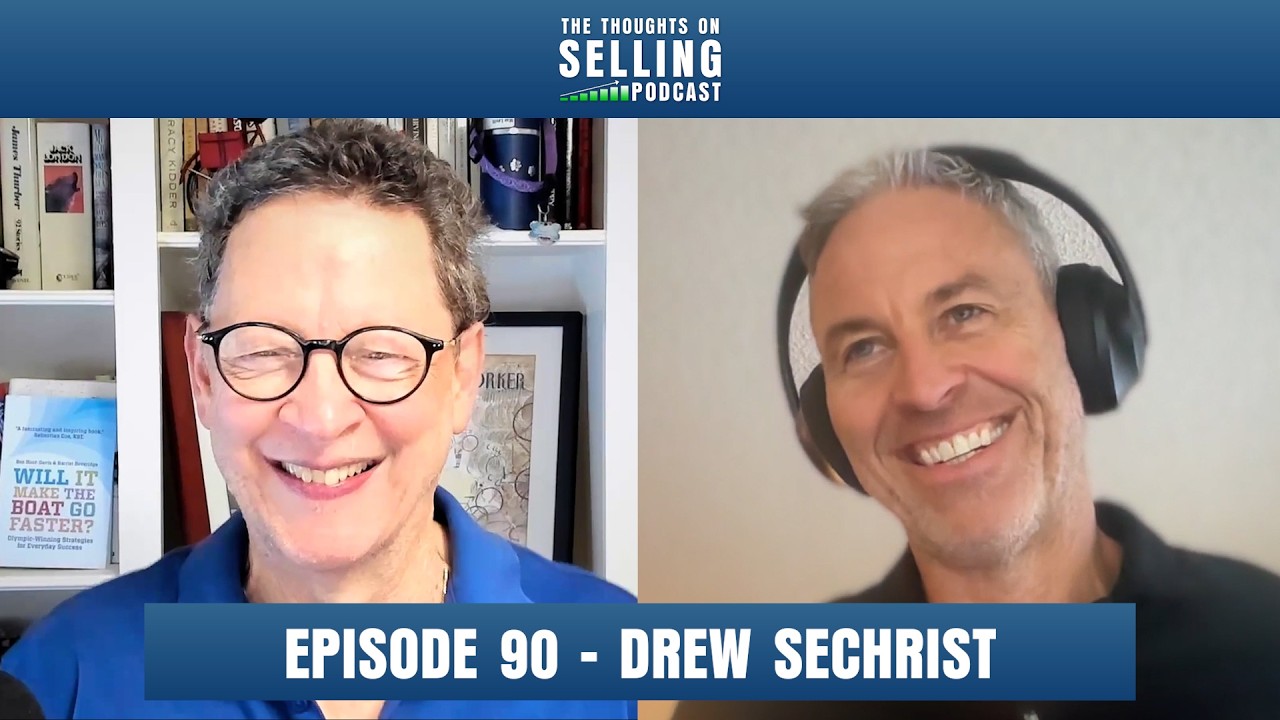
The Osmosis Deficit: Why Remote Sales Teams Need a New Approach to Mentorship
Welcome back to the blog! In our latest episode of [Podcast Name], we had a truly eye-opening conversation with Drew Sechrist about the evolving landscape of sales, particularly in the age of remote work and burgeoning AI. Drew, a veteran who helped propel Salesforce to incredible heights, brought to light a concept that’s been simmering beneath the surface for many sales leaders: the ‘Osmosis Deficit.’ This blog post will dive deeper into this crucial topic, exploring what it means for junior sales professionals and, more importantly, how seasoned leaders can proactively address it. If you haven't had a chance to listen to the full episode, you can catch it here: The Future of Sales: Trust, AI, and Relationship Capital with Drew Sechrist. The sales world has transformed at an unprecedented pace. For decades, the traditional office environment provided a fertile ground for new talent to learn and grow. Junior salespeople were immersed in a culture, constantly absorbing knowledge through observation, casual conversations, and a general sense of being present. But as the shift towards remote and hybrid models accelerated, a critical element of this organic learning process has been lost. This is the essence of the 'Osmosis Deficit' – the silent killer of remote sales talent.
Introducing the 'Osmosis Deficit': The Silent Killer of Remote Sales Talent
Imagine walking into a busy sales office. You see senior reps confidently navigating client calls, strategizing with managers in huddles, and even just engaging in casual banter around the water cooler. Even if you’re not directly involved in these interactions, you’re absorbing information. You’re picking up on tone, understanding negotiation tactics by overhearing conversations, learning about the company culture, and building a rapport with colleagues. This passive, informal learning is what Drew Sechrist calls ‘osmosis.’ It's the natural, often subconscious, absorption of knowledge and best practices that used to be an inherent part of a sales professional’s development. In a remote setting, these organic learning opportunities are significantly diminished. Junior salespeople often find themselves isolated, interacting primarily through scheduled video calls. The spontaneous moments where learning could occur are few and far between. This lack of ambient knowledge transfer creates a vacuum, a deficit, that can stunt the growth of new talent and ultimately impact the overall effectiveness of a remote sales team. The ‘osmosis deficit’ is not just about missing out on sales tips; it's about missing out on the nuanced understanding of how to navigate the complex social dynamics of selling, build genuine relationships, and embody the culture of a winning sales organization.
What is Osmosis in Sales and Why Remote Teams Are Missing It
Osmosis, in the context of sales, refers to the passive absorption of knowledge, skills, and cultural norms that occurs through constant exposure and observation. Think of it as learning by osmosis – soaking it all in without explicit instruction. This can include: * **Observational Learning:** Watching senior colleagues handle objections, negotiate, or present solutions. * **Informal Coaching:** Overhearing advice given to a peer or receiving unsolicited, but valuable, tips during a casual chat. * **Cultural Immersion:** Understanding the unwritten rules, the company's values, and the overall vibe of the sales floor through daily presence. * **Relationship Building:** Developing a natural rapport with colleagues and managers, which fosters trust and makes seeking advice easier. * **Problem-Solving Exposure:** Witnessing how experienced team members tackle unexpected challenges and finding solutions. In a traditional office environment, these opportunities were abundant. Junior reps would naturally gravitate towards seasoned professionals, eavesdropping on calls, participating in impromptu strategy sessions, and benefiting from the collective wisdom of the team. This constant exposure created a fertile ground for rapid skill development and cultural assimilation. Remote work, while offering flexibility and global reach, fundamentally alters this dynamic. Scheduled Zoom calls, while functional for specific tasks, rarely replicate the serendipitous learning moments of an office. The informal hallway conversations, the quick desk-side advice, the overheard strategy sessions – these are the building blocks of osmotic learning that are largely absent in a remote setup. Without intentional effort, junior remote salespeople are being deprived of a crucial developmental pathway, leading to the ‘osmosis deficit.’
The Impact: How the Lack of Passive Learning Affects Junior Sales Professionals
The consequences of the osmosis deficit are far-reaching and can manifest in several detrimental ways for junior sales professionals: * **Slower Skill Development:** Without the constant, informal reinforcement of best practices, junior reps may take longer to master core sales skills like objection handling, active listening, and effective closing techniques. Their learning curve becomes steeper and more reliant on formal training, which often lacks the real-world context of osmosis. * **Reduced Confidence:** The lack of observable success and easy access to guidance can lead to feelings of isolation and self-doubt. When you don't see how others succeed or have readily available support, it's harder to build the confidence needed to tackle challenging sales scenarios. * **Weaker Cultural Integration:** Osmosis is also about understanding the DNA of a successful sales team. Without consistent exposure to the team's dynamics and values, remote junior reps may struggle to feel fully integrated, impacting their buy-in and commitment. * **Difficulty in Handling Nuanced Situations:** Many sales scenarios require more than just technical knowledge; they involve emotional intelligence, understanding subtle cues, and navigating complex interpersonal dynamics. These are precisely the skills that are best honed through observation and experience, which are curtailed by the osmosis deficit. * **Increased Attrition:** Ultimately, if junior talent feels unsupported, stagnant, or disconnected, they are more likely to seek opportunities elsewhere. The osmosis deficit can contribute to higher turnover rates, as promising individuals don't receive the nurturing environment they need to thrive. Drew Sechrist shared a poignant thought in the episode: "I wouldn't want to start my career now... I survived because of osmosis." This statement powerfully encapsulates the challenge. For those who learned the ropes in an office environment, osmosis was the silent mentor. For those starting out remotely, this vital support system is often missing, leaving them to navigate a complex field with fewer natural advantages.
Recreating the 'Hallway Moments': Strategies for Leaders
The good news is that this deficit is not insurmountable. Leaders can, and must, proactively design experiences that foster the kind of learning that osmosis once provided. This requires intention, creativity, and a commitment to replicating those invaluable "hallway moments."
Beyond Zoom: Why In-Person Interaction Still Matters for High-Stakes Sales
While Zoom has been a lifesaver for remote communication, it has limitations, especially when it comes to building deep trust and closing significant deals. As Drew highlighted, "You can't close enterprise deals over Zoom." High-stakes sales, often involving multi-million dollar contracts, require a level of personal connection and rapport that is difficult to establish through a screen alone. In-person meetings allow for: * **Reading Body Language:** Understanding non-verbal cues that convey sincerity, hesitation, or enthusiasm is crucial for nuanced negotiation and building rapport. * **Shared Experiences:** Even small things like sharing a meal or a coffee break can build camaraderie and strengthen relationships in a way that virtual interactions cannot replicate. * **Uninterrupted Focus:** In a face-to-face setting, there are fewer distractions than in a remote environment, allowing for deeper engagement and more meaningful conversations. * **Demonstrating Commitment:** The investment of time and resources for in-person meetings signals a serious commitment to the relationship and the deal, which can be a powerful trust-building mechanism. Therefore, for critical sales engagements, leaders should advocate for and facilitate in-person interactions. This isn't just about closing deals; it's about providing junior team members with opportunities to observe and participate in these high-value exchanges, thereby contributing to their osmotic learning.
Building Real Relationships: The 'Deposit/Withdrawal Ratio' of Networking
Drew introduced the concept of the "Deposit/Withdrawal Ratio" in networking, emphasizing a 99:1 ratio of giving help to asking for favors. This is a critical lesson for both junior and senior salespeople, and it directly combats the transactional nature that can sometimes creep into remote interactions. In a remote setting, it's easy to fall into the trap of only reaching out when you need something. This can make networking feel transactional and ultimately deplete your network's value. The core idea is to consistently provide value to your network *before* you ever need to ask for something in return. This could involve: * **Making Introductions:** Connecting people who could benefit from knowing each other. * **Sharing Resources:** Forwarding relevant articles, insights, or opportunities. * **Offering Support:** Checking in on contacts and offering assistance without expecting immediate reciprocation. * **Providing Feedback:** Offering constructive insights on their work or ideas. For junior salespeople, learning this principle and practicing it can be a game-changer. It teaches them to build genuine connections based on mutual respect and value, rather than just focusing on immediate personal gain. This is a skill that can be taught and practiced, even remotely, and it’s a vital component of replicating the trust and rapport that osmosis used to foster.
The Future-Proof Seller: Navigating AI and Leveraging Your Network
As AI continues to advance, the nature of sales is shifting. Drew’s insights on AI are particularly relevant here. He noted, "If you are just an information kiosk, AI will replace you." This means that the skills that AI can easily replicate – data retrieval, basic communication – will become less valuable. The future-proof seller will be the one who excels in areas that AI cannot: * **Deep Empathy and Emotional Intelligence:** Understanding and responding to human emotions. * **Strategic Thinking and Problem Solving:** Developing creative solutions to complex client needs. * **Relationship Building and Trust:** Fostering genuine connections and becoming a trusted advisor. * **Navigating Complexity:** Understanding the nuances of human interaction and organizational dynamics. And as Drew puts it, "your network is the only moat you have left against AI." A strong, well-cultivated network provides access to insights, opportunities, and support that AI cannot replicate. This is why investing in relationship capital is more critical than ever. Leaders have a responsibility to guide their teams in understanding this, and to actively foster environments where these higher-level skills can be developed.
Actionable Steps: Mapping Your Network and Fostering Mentorship
So, how can leaders translate these concepts into tangible actions to combat the osmosis deficit?