The Mirror Test: Why Your "Sales DNA" is Costing You Deals
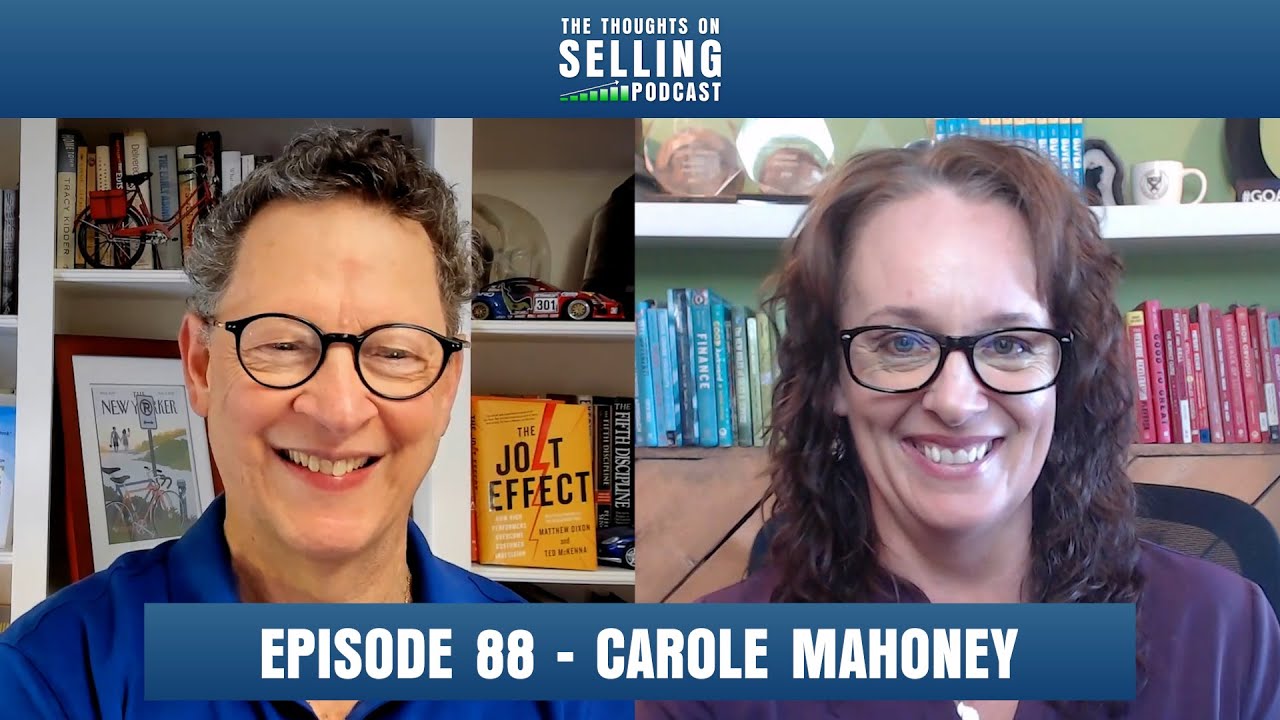
We have all heard the advice: “Know your customer.” But according to Carole Mahoney, author of Buyer First, the person you really need to know is the one looking back at you in the mirror

.In our recent conversation on the Thoughts on Selling podcast, Carole shared a story that perfectly illustrates why so many deals stall -- not because of the buyer, but because of the seller’s own psychology.
The Car Salesman Who Talked Himself Out of a Commission
Last year, Carole decided to buy a new car. She is a decisive buyer; she did her research online, found the exact make and model she wanted, and drove to the dealership ready to sign.
She test-drove the car. She liked it. She told the salesperson, “I’m pretty sure this is what I want to do.”
Then, something baffling happened. The salesperson looked at her and said, “I’m sure you want to go home and think about this.”
Carole corrected him: “No, I’m pretty sure.”
He insisted: “No, no, no. I understand this is a big purchase and you want to go home and think about it.”
He literally talked her out of buying the car. Carole left, drove to another dealership, found the same car, and bought it from them instead.
How You Buy is How You Sell
Why would a salesperson sabotage a sure thing? Carole calls this the “Cognitive Behavioral” side of sales: “If you buy that way as a salesperson, you will sell that way as a salesperson.”
That salesperson likely needs time to “think it over” before making a big purchase. Because that is his reality, he projected it onto Carole, assuming she must feel the same way.
This is part of what Carole calls your “Sales DNA.” It includes hidden weaknesses like:
Need for Approval: The deep-seated need to be liked, which prevents you from asking tough questions or saying “no” to a bad-fit prospect.
Money Discomfort: As Carole notes, people would rather talk about religion, sex, or politics than money. If you are uncomfortable discussing budget in your own life, you will choke when asking a prospect for theirs.
Non-Supportive Buy Cycles: If you are a bargain hunter who always needs to “shop around,” you will inevitably accept those same excuses from your prospects.

Coaching the DNA Shift
For sales leaders and enablement professionals, fixing this requires more than just telling a rep to “be more confident.”
You cannot inspect quality into a product, and you cannot demand confidence from a rep who is wired to seek approval.
Here is how Carole suggests coaching this behavior out of your team:
Inspect the Thought Process, Not Just the Outcome: Don’t just tell a rep what they did wrong. When you review a call where a rep missed a buying signal or caved on a discount, ask diagnostic questions: “What was going on in your head when you said that?” or “Where does that reaction come from for you?”. You have to make them conscious of the subconscious belief driving the action.
Role Play “Saying No”: If your reps struggle with Need for Approval, they are likely “happy ears” sellers who can’t disqualify bad leads. Run role-play exercises where the only goal is to say “no” to a manager or a prospect. If they can’t set boundaries in practice, they won’t do it in a live deal.
Check Your Own Mindset: Carole’s data shows that managers with negative beliefs about sales are 355% more likely to pass those limitations onto their team. If you are a manager who fears conflict, you are likely coaching your reps to avoid it too!
The Fix
The bad news is that you can’t out-train your Sales DNA with new scripts or CRM hacks. The good news is that these are learned behaviors, which means they can be unlearned.
Carole’s advice is simple but challenging: Start changing how you make decisions in your own life. Practice saying “no” to small requests to get over your need for approval. Stop agonizing over small purchases.
So, the next time a deal stalls, don’t just look at the pipeline. Look in the mirror. Are they really “thinking it over,” or are you just waiting for them to do what you would do?

Sales Leader & Enablement Action Items
Here are three high-impact action items specifically for Sales Leaders and Enablement professionals to implement immediately.
1. The “80/20” Onboarding Audit (Enablement Focus)
The Problem: Most onboarding programs are backwards -- they focus heavily on product features, internal processes, and systems, with the buyer tacked on as an afterthought.
The Action: Audit your current onboarding curriculum. Shift the balance so that 80% of the content is focused on “Buyer Immersion” -- understanding their world, their problems, and their psychology.
The Goal: Equip new hires to have a meaningful business conversation by the end of their first week, rather than just knowing how to demo the product.
2. Implement “Sales DNA” Assessments for Hiring (Leadership Focus)
The Problem: Hiring managers often rely on “industry experience” or the new hire’s rolodex, which are not predictors of success.
The Action: incorporate a sales-specific assessment that screens for “Sales DNA” traits -- specifically Need for Approval, Money Tolerance, and Emotional Control. (Many savvy sales leaders use specific tools like those from the Objective Management Group to catalog skills and attitudes of their successful sales people and then build predictive hiring profiles to ensure high quality recruiting. When I engaged them for my own team I was quite surprised at the level of detail in the hiring profile!)
The Twist: Don’t be afraid to look outside the industry. Consider candidates with “hospitality DNA” (like waiters) who have naturally high empathy, curiosity, and the ability to read a room.
3. Train Managers on “Cognitive Behavioral” Coaching (Leadership Focus)
The Problem: Most managers confuse “coaching” with “telling.” They tell reps what they did wrong (the outcome) rather than exploring why they did it (the belief).
The Action: Train your managers to stop asking “Why did you lose that deal?” and start asking diagnostic questions like “What was going on in your head when you hesitated to ask for the budget?”
The Goal: Fix the root cause (the belief system) rather than just treating the symptom (the behavior). Managers who master this supportive coaching style are 1,000% more likely to build high-performing teams.
Yes, this is a different way of selling, and your leadership, management, coaching and enablement activities must change to fully deliver bigger results.
I’ve been selling, managing, coaching and enabling this way for twenty years. In large companies and small. For big deals and smaller transactions. It works.
Want to discuss your operational issues? Grab an hour for us to talk. I guarantee you it will be time well spent!