The Invisible Chains: Identifying and Overcoming Limiting Beliefs in Sales
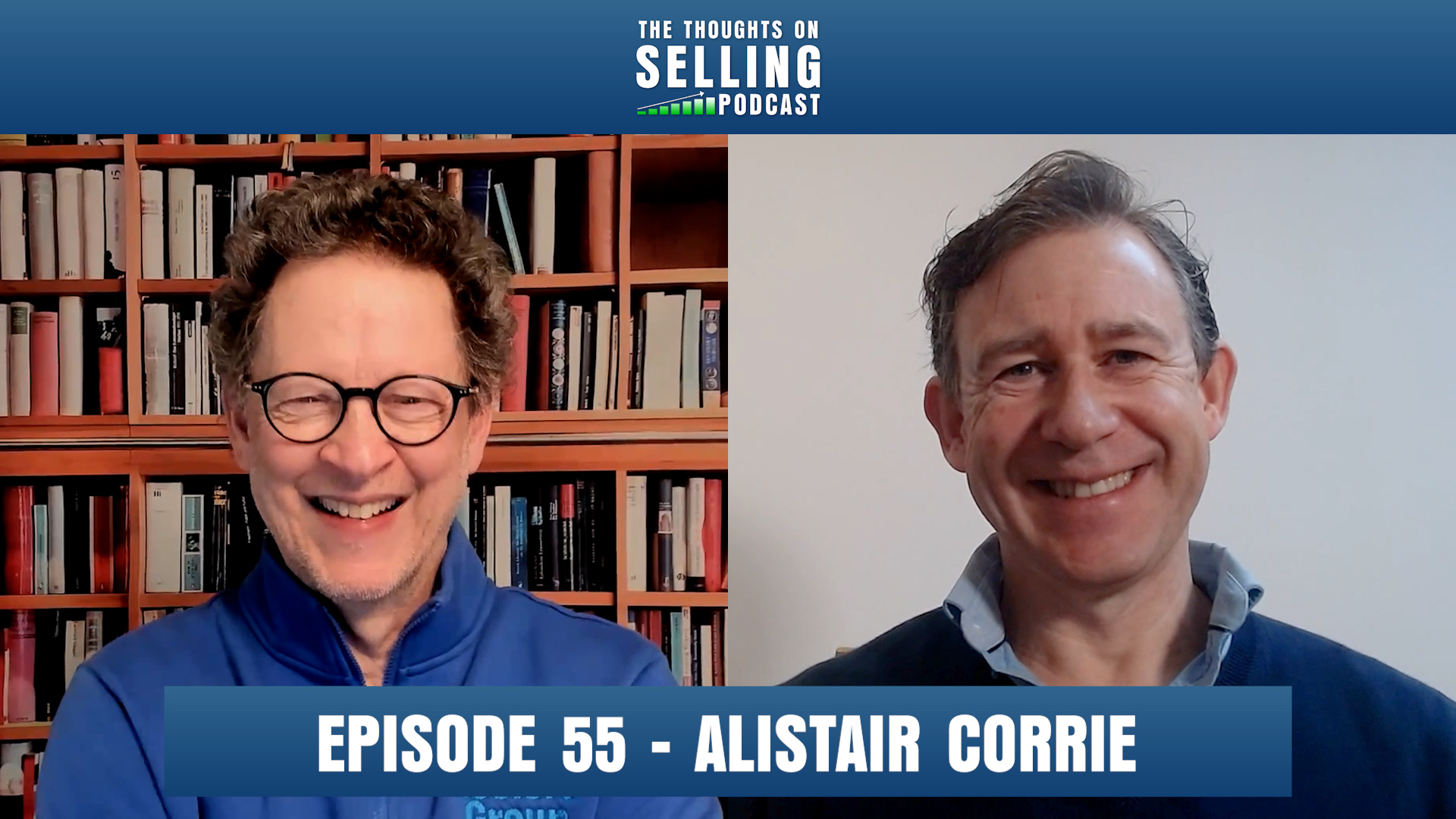
Welcome back to the blog, fellow adventurers in the world of sales! In our latest podcast episode, "Curiosity, Flow and the Paradox of Effortless Selling," my esteemed guest Alistair Corrie and I delved into the fascinating territory of mindset, mastery, and the subtle ways we can sabotage our own success. While we touched upon many powerful concepts, one area that warrants a deeper exploration, and is the focus of today’s post, is the pervasive and often invisible nature of limiting beliefs in sales. These are the invisible chains that, if left unchecked, can shackle our potential and keep us from achieving the extraordinary results we're truly capable of. Join me as we unpack what these beliefs are, how they take root, and most importantly, how to break free and forge a path to more effortless and fulfilling selling.
What are Limiting Beliefs and Why They Matter
At its core, a limiting belief is a deeply ingrained idea or assumption that we hold to be true about ourselves, others, or the world around us, which restricts our ability to achieve our goals. In the realm of sales, these beliefs can manifest in countless ways. Think about common phrases we might hear, or perhaps even tell ourselves:
- "I'm not naturally a 'salesperson'."
- "People don't like being sold to."
- "I'm not good enough to close this deal."
- "My product is too expensive."
- "It's too competitive in this market."
- "I'm too old/young/inexperienced to succeed."
- "Asking for the business is pushy."
These aren't just fleeting thoughts; they are foundational narratives that shape our behavior, influence our decision-making, and ultimately, dictate our outcomes. When we operate from a place of limiting beliefs, our actions become self-fulfilling prophecies. If we believe we're not good at something, we'll unconsciously avoid situations that challenge that belief, or we'll approach them with hesitation and a lack of confidence, thus ensuring we don't succeed. In sales, this translates to missed opportunities, hesitant pitches, a reluctance to ask for the sale, and a general feeling of being stuck or overwhelmed.
The stakes are incredibly high. Limiting beliefs don't just affect our performance; they impact our emotional well-being, our confidence, and our overall sense of self-worth. They create an unnecessary barrier between where we are and where we want to be, turning what could be an empowering and rewarding profession into a constant uphill battle.
The Invisible Chains: How We Develop Limiting Beliefs
So, where do these insidious beliefs come from? They are rarely born overnight. Instead, they are often the cumulative result of various experiences and influences throughout our lives:
- Childhood Experiences: Our formative years are crucial. Messages we received from parents, teachers, and peers about our abilities, our worth, and the nature of success can lay the groundwork for limiting beliefs. If we were consistently told we weren't good at math, for instance, we might carry that into adulthood, impacting our comfort with financial discussions in sales.
- Past Failures and Rejections: A significant rejection or a string of failures can be powerful breeding grounds for limiting beliefs. If a sales pitch goes poorly, and we internalize that as a reflection of our inherent inadequacy rather than a learning opportunity, the belief "I'm not a good salesperson" can take hold.
- Societal Conditioning and Cultural Norms: The broader messages we receive from society about what is possible, who is successful, and how one should behave can also contribute. If the prevailing narrative is that sales is a "shady" profession, or that only a certain type of person thrives in it, those who don't fit that mold might develop limiting beliefs about their own suitability.
- Comparisons to Others: In our hyper-connected world, it's easy to fall into the trap of comparing ourselves to others, especially on social media. Seeing others' perceived successes without understanding their struggles can lead to beliefs like "They're naturally gifted, and I'm not."
- Negative Self-Talk: This is a crucial component. Once a limiting belief is formed, our internal dialogue can reinforce it. We might replay negative interactions, focus on perceived flaws, and constantly tell ourselves why we can't achieve something, solidifying the belief into an unshakeable truth.
The insidious part is that these beliefs often operate on a subconscious level. We don't actively choose to believe them; they become part of our mental architecture, influencing our thoughts and actions without us even realizing it. They are the subtle whispers that steer us away from risk, from challenge, and ultimately, from growth.
Recognizing the Signs: Identifying Your Own Limiting Beliefs
The first and arguably most critical step in breaking free from limiting beliefs is to recognize them. This requires a degree of introspection and a willingness to be honest with yourself. Here are some common indicators that you might be operating under the influence of limiting beliefs:
- Chronic Procrastination: Do you find yourself putting off important sales tasks, especially those that feel challenging or require you to step outside your comfort zone? This could be a sign that a belief like "I'm not capable of doing this well" is holding you back.
- Fear of Rejection or Failure: While some level of apprehension is normal, an overwhelming fear that paralyzes you from taking action, asking for the business, or pursuing larger opportunities often stems from a belief that rejection will be catastrophic and confirm your inadequacy.
- Self-Sabotage: This is when you unconsciously undermine your own efforts. You might prepare for a crucial meeting but then find yourself distracted or unable to focus. Or you might get close to a deal and then find a reason to back off. This is often the subconscious mind trying to prove its limiting belief true.
- Negative Self-Talk and Internal Critic: Pay attention to the voice in your head. Is it constantly pointing out your flaws, your mistakes, or reminding you of past failures? This inner critic is often the direct voice of your limiting beliefs.
- Avoidance of Challenges: Do you consistently stick to what you know and avoid situations that push your boundaries? If you're always choosing the "safe" option, it might be because a belief like "I can't handle difficult situations" is at play.
- Comparisons Leading to Discouragement: While inspiration from others is valuable, if observing others' success consistently makes you feel inadequate or defeated, it suggests a limiting belief about your own potential relative to theirs.
- A Persistent Feeling of Being "Stuck": If you feel like you're constantly hitting a wall, unable to move forward despite your efforts, it's a strong indicator that underlying limiting beliefs are acting as invisible barriers.
To uncover these beliefs, try journaling about your sales experiences. When you encounter a setback or feel resistance, ask yourself: "What am I telling myself about this situation?" or "What belief might be driving my hesitation?" Challenge the automatic thoughts that arise.
Drawing Inspiration from Viktor Frankl and Logotherapy
Our conversation with Alistair brought to mind the profound work of Viktor Frankl, a psychiatrist and Holocaust survivor. Frankl's logotherapy, a form of existential analysis, centers on the idea that the primary motivational force in human beings is the search for meaning. Even in the most horrific circumstances, Frankl observed that those who found a sense of purpose were more likely to endure. This is incredibly relevant to overcoming limiting beliefs.
Frankl’s philosophy suggests that while we may not always be able to control our circumstances, we always have the freedom to choose our attitude towards them. Limiting beliefs, in this context, are often rooted in a lack of perceived meaning or purpose. When we believe "I'm not good enough," we are fundamentally questioning our worth and our capacity to contribute meaningfully.
Logotherapy encourages us to ask:
- "What is the meaning I can find in this situation, even if it's challenging?"
- "What is the unique contribution I can make?"
- "What values can I uphold?"
By shifting our focus from what we lack (as dictated by our limiting beliefs) to what we can contribute and the meaning we can create, we begin to dismantle the power of those beliefs. If our limiting belief is "I'm not persuasive," we can reframe it through a logotherapeutic lens as "How can I genuinely help this client solve their problem?" The focus shifts from an innate personal failing to a purposeful action of service. This shift in perspective is a powerful antidote to the despair that limiting beliefs can foster.
Alistair's Insights: Mastery, Flow, and Letting Go
Alistair's perspective, drawing from sources like "The Inner Game of Tennis" and Zen philosophy, beautifully complements Frankl's ideas. He emphasizes that mastery isn't about accumulating more techniques or knowledge, but often about letting go of the mental clutter that obstructs our natural abilities. This is where the concept of "flow" comes into play – that state of effortless engagement where performance feels natural and intuitive.
Alistair highlights the Japanese concept of Shu-Ha-Ri-Kokoro. In essence:
- Shu is about learning the fundamentals, adhering to the rules and traditions.
- Ha is about breaking away from the traditions, understanding the underlying principles, and adapting.
- Ri is about transcending the rules, becoming one with the art, and acting spontaneously.
- Kokoro adds the dimension of the heart, the spirit, the deeper intention and intuition behind the action.
Limiting beliefs often keep us stuck in the "Shu" phase, rigidly adhering to self-imposed rules derived from past experiences and fears. They prevent us from moving into "Ha," where we can truly understand and adapt, and certainly from reaching "Ri" and "Kokoro," where effortless mastery and authentic connection occur. Alistair suggests that to achieve flow and true mastery in sales, we need to let go of the need to control, the fear of not knowing, and the very limiting beliefs that tell us we're not enough. It's about trusting our instincts, being present, and allowing our skills to emerge naturally.
This "letting go" is the antithesis of holding onto limiting beliefs. It's about releasing the narrative that says "I can't" and embracing the possibility that "I can allow myself to perform at my best."
Practical Strategies to Break Free from Limiting Beliefs
Understanding the problem is one thing; enacting change is another. Here are actionable strategies to begin dismantling those invisible chains:
- Identify and Articulate the Belief: As discussed earlier, the first step is awareness. Write down the specific limiting belief you suspect is holding you back. Be as precise as possible. For example, instead of "I'm bad at sales," try "I believe I'm not good at handling objections."
- Challenge the Evidence: Once identified, rigorously challenge the belief. Where is the actual, objective evidence for this belief? Is it truly a universal truth, or is it based on a few isolated incidents or interpretations? Look for evidence that contradicts the belief. Remember past successes, positive feedback, or times when you overcame similar challenges.
- Reframe the Belief: Transform the limiting belief into an empowering one. For "I believe I'm not good at handling objections," a reframe could be: "I am developing my skills in handling objections, and each one is an opportunity to learn and better serve my client." Or even more powerfully, focus on the client: "My goal is to understand my client's concerns so I can address them effectively."
- Practice Positive Affirmations (with Intention): Affirmations work best when they are specific, positive, and believable. Instead of a generic "I am successful," try "I am confident in my ability to communicate value and find solutions for my clients." Repeat them regularly, but also pair them with actions that move you towards that affirmation.
- Visualize Success: Spend time visualizing yourself successfully navigating sales scenarios, confidently handling objections, and closing deals. Imagine the positive feelings associated with these successes. This mental rehearsal primes your brain for optimal performance.
- Seek Out Supporting Beliefs: Actively look for and adopt beliefs that support your goals. For instance, if you want to be a top performer, adopt beliefs like: "I am committed to continuous learning and improvement," "I believe in the value of my product/service," and "I am capable of achieving my targets."
- Seek Feedback and Coaching: A trusted mentor, coach, or colleague can offer invaluable insights into your blind spots and help you identify limiting beliefs you might not see yourself. They can also provide encouragement and accountability.
- Embrace Deliberate Practice: Focus on specific skills that are challenged by your limiting beliefs. If you fear objections, deliberately practice your objection-handling techniques with colleagues or in role-playing scenarios. The goal is consistent, focused improvement.
- Mindfulness and Present Moment Awareness: Limiting beliefs often stem from dwelling on past failures or worrying about future outcomes. Practicing mindfulness helps you stay grounded in the present, where you have the power to act and influence.
- Celebrate Small Wins: Acknowledge and celebrate every step forward, no matter how small. This reinforces positive behaviors and builds momentum, counteracting the negative reinforcement of limiting beliefs.
The Power of Curiosity and Shifting Your Perspective
Ultimately, breaking free from limiting beliefs is deeply connected to adopting a mindset of curiosity, as we explored in our podcast. When we approach sales conversations with genuine curiosity about the client's world, their challenges, and their aspirations, we naturally shift the focus away from our own perceived inadequacies. Instead of worrying if we have the "right" answers or if we are "good enough," we become engaged learners, seeking to understand.
This shift in perspective is profound. It moves us from a self-centered, fear-based approach to a client-centered, value-driven one. Curiosity acts as a natural solvent for limiting beliefs. It encourages us to ask questions rather than make assumptions, to explore rather than retreat. When we are curious, we are less likely to be paralyzed by the fear of not knowing, because the process of discovery becomes the primary objective.
Imagine shifting from the belief "I'm not good enough to sell this complex solution" to a curious approach: "I'm curious about how this client's business operates and what their biggest challenges are. How can I learn more to see if my solution could genuinely help them?" This simple shift in internal dialogue opens up possibilities and dissolves the rigid walls of limiting beliefs.
By embracing curiosity, we align with the principles of flow and effortless selling. We allow ourselves to be present, to connect authentically, and to trust that by focusing on understanding and serving, the "selling" part will naturally unfold as a consequence of providing value.
In conclusion, the invisible chains of limiting beliefs are a formidable obstacle for many in sales. They whisper doubts, sow seeds of inadequacy, and steer us away from our true potential. However, by understanding their origins, recognizing their signs, and drawing inspiration from profound philosophies like logotherapy and the insights of mastery discussed with Alistair, we can begin to dismantle these internal barriers. The journey to breaking free is not always easy, but it is undeniably one of the most rewarding paths to personal growth and professional success. By cultivating curiosity, consciously challenging our assumptions, and adopting empowering narratives, we can forge a future of more effortless selling, deeper client relationships, and a profound sense of accomplishment.