The Core of Sales: Unpacking Gerhard Gschwandtner's 'Who Are You?' Question
The Core of Sales: Unpacking Gerhard Gschwandtner's 'Who Are You?' Question
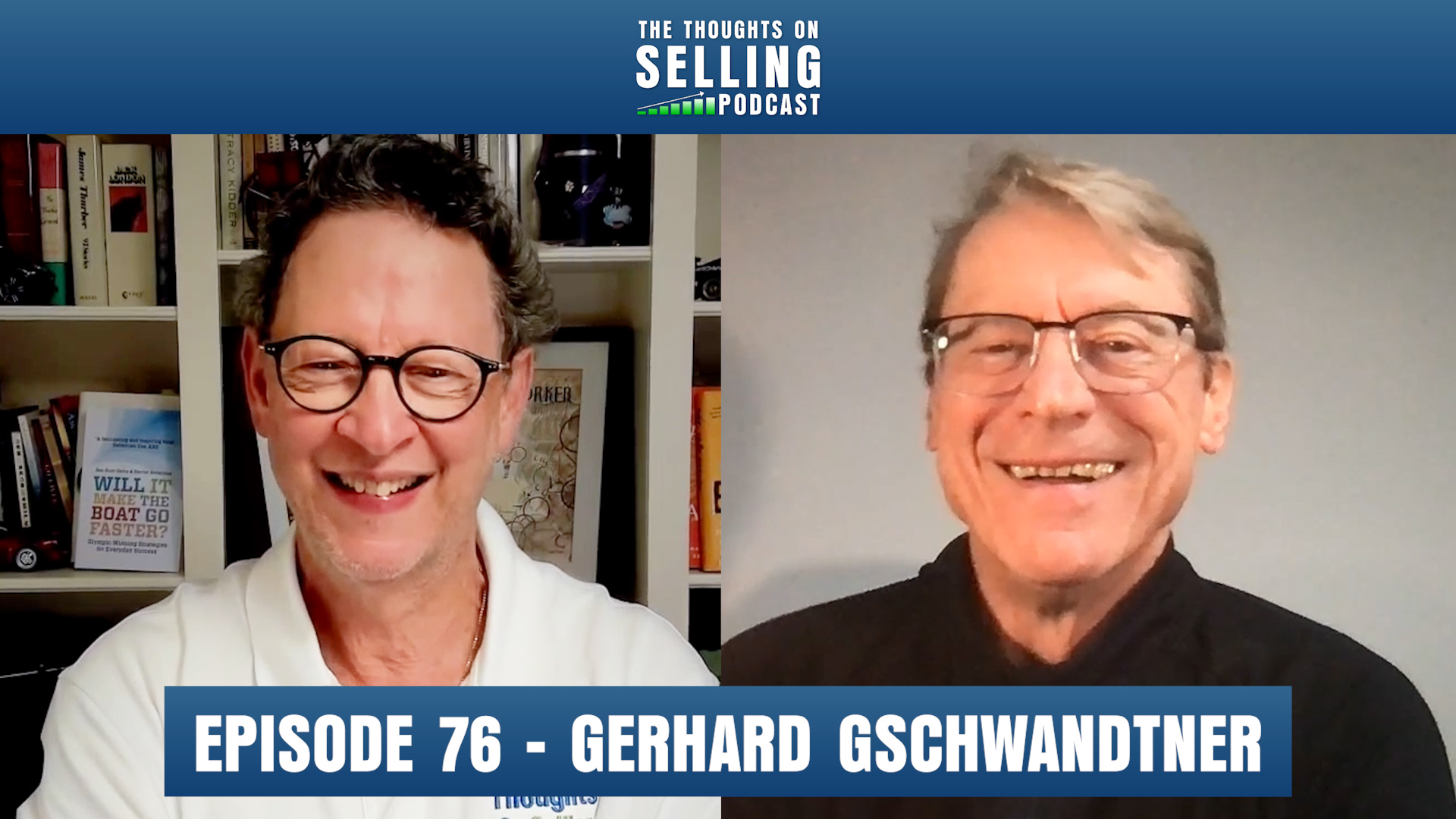
Welcome back to the blog, where we dive deeper into the conversations that shape our podcast. In our latest episode, we had the immense pleasure of speaking with a true legend in the sales world, Gerhard Gschwandtner. His insights are not just about closing deals, but about cultivating a profoundly authentic approach to selling. This post unpacks the central theme of our discussion: the pivotal, yet often overlooked, question of "Who are you?" It’s a question that forms the bedrock of genuine connection and, ultimately, lasting success in sales. If you haven't had a chance to listen yet, I highly encourage you to check out the episode 76. Who Are You? The Most Important Question in Sales!. This blog post will expand on the key takeaways and offer a more detailed exploration of Gerhard's wisdom.
Gerhard Gschwandtner: A Pioneer's Journey in Sales
Before we delve into the heart of the "Who Are You?" question, it’s crucial to understand the remarkable journey of the man who champions it. Gerhard Gschwandtner is not just another voice in sales; he's a foundational architect. From his early days in Austria, where he stumbled into his first sales role, to becoming the visionary founder of Selling Power Magazine, Gerhard has been at the forefront of sales evolution for decades. He coined the term 'sales enablement' long before it became a buzzword and software category, demonstrating an innate understanding of what truly empowers salespeople. His career has been a continuous exploration of what makes sales effective, ethical, and, most importantly, human. He's interviewed icons like Mary Kay, Zig Ziglar, and even engaged in thought experiments with historical figures. This rich tapestry of experience lends immense weight to his assertion that the most critical question in sales isn't about the product or the prospect, but about the seller themselves.
The 'Who Are You?' Question: The Foundation of Authentic Selling
At its core, Gerhard’s central thesis is deceptively simple: you cannot effectively sell something to someone else if you don't understand who you are. This isn't about having a perfectly defined personal brand or a flawless elevator pitch. It's about a deep, introspective understanding of your values, your beliefs, your motivations, and your strengths. In the realm of sales, this self-awareness is the linchpin of authenticity. When you know yourself, you can connect with others on a genuine level. You're not faking enthusiasm or adopting a persona that doesn't fit. Instead, you are presenting your true self, which fosters trust and rapport far more effectively than any polished sales script. This genuine connection allows you to understand your prospect's needs not just superficially, but from a place of empathetic understanding, because you are grounded in your own humanity. Without this self-understanding, sales can become a hollow performance, a series of transactions devoid of meaning and connection. The 'Who Are You?' question forces a pause, a moment of reflection that is crucial for transforming sales from a transactional activity into a relational endeavor.
Understanding Your Mindset: Implanted, Imprinted, and Inspired
Gerhard beautifully articulates that our sense of self is not static; it's shaped by various influences, which he categorizes into three distinct mindsets: implanted, imprinted, and inspired. Understanding these categories is vital to grasping why the "Who Are You?" question is so transformative. The implanted mindset refers to the beliefs and values that have been directly taught to us, often by parents, teachers, or societal norms. These are the explicit messages we receive about how the world works and how we should behave. The imprinted mindset, on the other hand, encompasses the beliefs and behaviors we absorb through observation and experience, often subconsciously. This includes the lessons learned from our environment, our peers, and our past successes and failures. Finally, the inspired mindset is where true growth and self-discovery happen. This is the mindset that arises from introspection, curiosity, and a willingness to challenge existing beliefs and assumptions. It’s about actively seeking to understand your own potential and aligning your actions with your deepest values and aspirations. In sales, an implanted or imprinted mindset can lead to rote selling, adhering to techniques that may be outdated or inauthentic. The inspired mindset, however, is where true innovation, empathy, and genuine connection are born. It's the mindset that asks "why" not just about the product, but about your own role and purpose in the interaction. By consciously examining these layers of our thinking, we can begin to identify the ingrained beliefs that may be hindering our authentic sales approach and consciously cultivate an inspired perspective.
From Curiosity to Courage: Traits of a Great Salesperson
Gerhard emphasizes that the journey of self-discovery inherent in asking "Who are you?" cultivates essential traits for any successful salesperson. At the forefront is curiosity. When you are genuinely curious about yourself, you naturally become more curious about others. This inquisitiveness drives you to ask better questions, listen more intently, and uncover the true needs and motivations of your prospects. Coupled with curiosity is creativity. Answering the "Who Are You?" question opens up new perspectives and allows you to approach sales challenges with fresh ideas and innovative solutions. You're less likely to be constrained by conventional wisdom and more inclined to find unique ways to add value. Perhaps most importantly, this process fosters courage. It takes courage to be vulnerable, to admit what you don't know, and to present your authentic self. It takes courage to challenge the status quo, both within yourself and in your sales approach. This courage is what allows you to have difficult conversations, to offer genuine feedback, and to build relationships based on trust rather than pretense. These aren't just "nice-to-have" qualities; they are the fundamental building blocks of a salesperson who can navigate the complexities of modern business with integrity and effectiveness.
The Evolution of Sales Enablement: Beyond the Software
Gerhard’s pioneering work in sales enablement, long before it was a software category, highlights a critical point: true enablement is about empowering the salesperson's mind and spirit, not just providing tools. His early innovations – customer tours, training vignettes, and user groups – were designed to foster understanding, skill development, and community. This approach underscores that software and technology, while valuable, are merely enablers of human potential. They are tools that should augment, not replace, the salesperson's ability to connect, empathize, and problem-solve. In today's environment, with the proliferation of sales tech, it's easy to get lost in features and functionalities. However, Gerhard's legacy reminds us that the core of sales enablement lies in nurturing the salesperson’s internal capabilities. It's about ensuring they have the knowledge, the mindset, and the confidence to excel. The "Who Are You?" question is the ultimate piece of sales enablement because it equips the salesperson with the most powerful tool of all: themselves.
Authenticity: The Key to Building Lasting Trust
In an era often characterized by rapid transactions and fleeting connections, authenticity stands out as a beacon of trust. Gerhard's philosophy is clear: telling the truth, even when it's uncomfortable, is the fastest way to build lasting relationships. When a salesperson is authentic, they are perceived as reliable and genuine. This fosters a level of trust that transcends the immediate sale. Customers become advocates, not just buyers. They feel seen, heard, and understood, not manipulated or pressured. This authentic approach creates a ripple effect, leading to repeat business, referrals, and a strong reputation. It’s a paradigm shift from a transactional mindset to a relational one, where the focus is on creating long-term value for both parties. The "Who Are You?" question is the starting point for this authenticity. When you are comfortable with your own identity, you can be open and honest with others, laying the foundation for unwavering trust.
AI in Sales: A Tool, Not a Crutch
The rapid advancement of Artificial Intelligence has brought new tools and capabilities to the sales landscape. Gerhard views AI as a powerful gift, but also recognizes its potential pitfalls. When used wisely, AI can significantly enhance preparation, provide data-driven insights, and automate tedious tasks, freeing up salespeople to focus on higher-value activities like building relationships and strategic thinking. However, he warns against allowing AI to replace critical thinking and genuine human interaction. If AI is used as a crutch, it can lead to a depersonalized sales experience, where generic responses and data-driven tactics overshadow the nuanced understanding of individual customer needs. The "Who Are You?" question is particularly relevant in the age of AI. It serves as a crucial reminder that while AI can provide information, it cannot replicate genuine empathy, intuition, or the authentic human connection that is at the heart of successful sales. AI should augment the salesperson’s abilities, not diminish their humanity.
The Power of Your 'Why'
Ultimately, the journey of discovering "Who Are You?" inevitably leads to understanding your "Why." Gerhard highlights that the bigger your "why," the greater your motivation and the more resilient you become in the face of challenges. This "why" is your purpose, your driving force, the reason you do what you do. In sales, a strong "why" fuels persistence, resilience, and a commitment to delivering genuine value. It’s the intrinsic motivation that propels you forward, even when facing rejection or setbacks. When you understand your purpose, your sales efforts become infused with meaning, making them more impactful and fulfilling. This understanding of purpose is intrinsically linked to self-awareness. It’s a deeper layer of the "Who Are You?" question that connects your identity to your actions and your aspirations. A clear "why" makes the "how" – the actual act of selling – significantly easier and more effective because it's rooted in a fundamental sense of purpose.
Conclusion: Becoming a Better Human, Becoming a Better Salesperson
Our conversation with Gerhard Gschwandtner in episode 76. Who Are You? The Most Important Question in Sales! was a profound reminder that the essence of successful selling lies not in mastering complex techniques, but in understanding oneself. This blog post has explored how the simple yet powerful question, "Who are you?", serves as the foundation for authenticity, trust, and genuine connection in the sales world. We've seen how understanding your own mindset, cultivating curiosity and courage, and recognizing the true evolution of sales enablement are all intrinsically linked to self-awareness. In an era of AI and rapidly changing technologies, Gerhard's timeless wisdom reminds us that the most potent sales tool is a salesperson who is grounded in their own identity and driven by a clear purpose. Ultimately, becoming a better salesperson is a journey of becoming a better human. By investing in self-understanding, we unlock our potential to connect, to serve, and to thrive. Thank you for joining me on this exploration, and I hope this deep dive encourages you to ask yourself, "Who am I?" today.