The Astonishing Truth: 73% of Your Revenue Comes From Who You Already Know
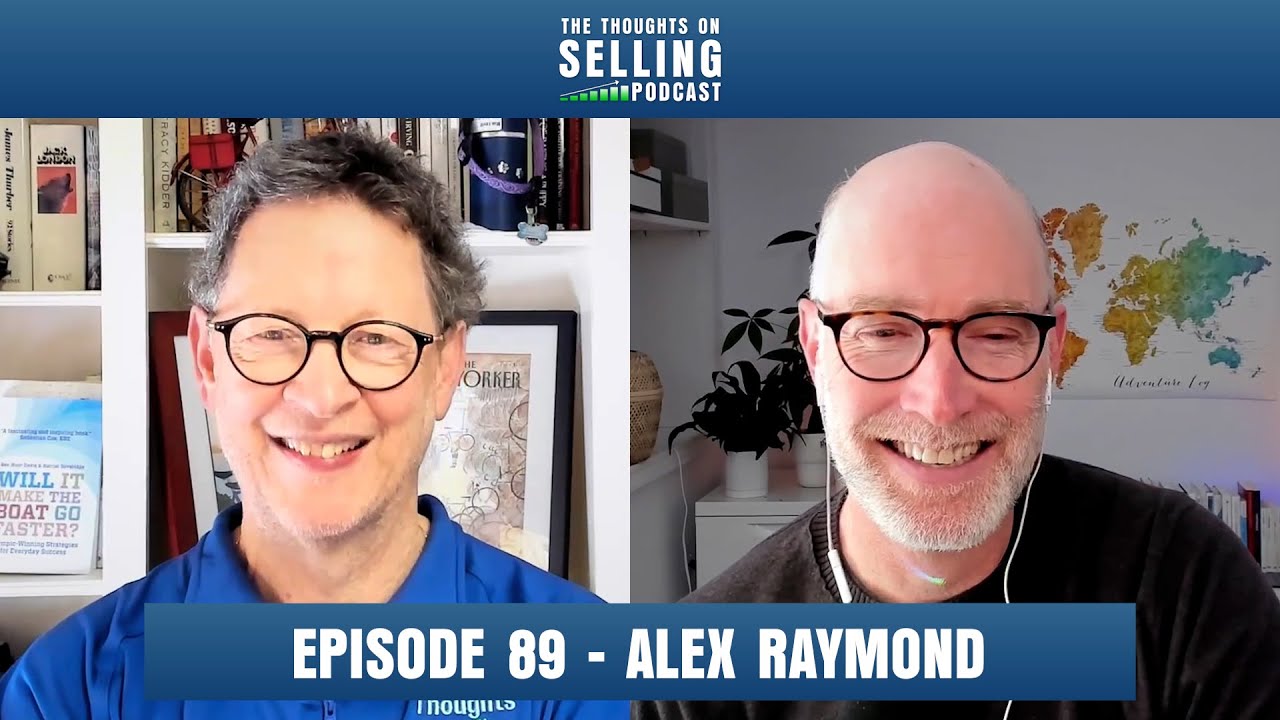
We sat down with the brilliant Alex Raymond, a true authority on customer growth and revenue generation. We delved into a topic that, frankly, should be at the forefront of every business leader's mind, yet often seems to be relegated to the sidelines: the immense, often untapped, power of your existing customer base. Alex dropped some absolutely staggering statistics, and today, we’re going to unpack them and explore why focusing on retention and expansion isn't just a good idea, it's the bedrock of sustainable, profitable growth. If you missed the episode, you can catch up right here: Alex Raymond on Why Your Existing Customers Are Your Biggest Growth Engine.
The Astonishing Statistics: 73% Revenue from Who You Already Know
Let's just start with the headline number, because it’s the one that should make every sales leader, every CEO, every investor sit up and take notice. According to Forrester data, a mind-blowing 73% of your revenue comes from customers you already have. Think about that. Seventy-three percent. That’s not a small margin; that’s the overwhelming majority. And it gets even more compelling. Ebsta's 2024 data reveals that 52% of *net new revenue* — the revenue that drives growth and expands your business — also comes from existing customers. This isn't about holding steady; this is about actively growing your business, and the primary engine for that growth is already in your customer list.
Now, contrast this with the typical allocation of resources and attention in many businesses. We pour immense energy, budget, and brainpower into acquiring new customers. We build elaborate marketing campaigns, hire large sales teams, and chase every shiny new lead with relentless vigor. And while acquiring new customers is undoubtedly important, it's often at the expense of nurturing and growing the relationships that are already generating the bulk of our income. It’s like having a thriving garden and spending all your time trying to find new plots of land to cultivate, while letting the prize-winning vegetables in your current garden wither.
This data point isn't just an interesting statistic; it's a fundamental truth about how businesses succeed in the long run. The cost of acquiring a new customer is, on average, significantly higher than the cost of retaining and growing an existing one. And when you consider that over half of your *new* revenue is also coming from these existing relationships, the business case for prioritizing them becomes undeniable.
Why 'Recurring Revenue' is a Dangerous Myth
This is where things get particularly interesting, and frankly, a little alarming. Many businesses, especially those with subscription-based models, operate under the assumption that their revenue is "recurring." It's in the name, right? It just keeps coming back, month after month, year after year. Alex Raymond argues, and I wholeheartedly agree, that this is a dangerous myth. Just because a customer signs up for a subscription doesn't mean the revenue is guaranteed. It's not an automatic deposit that will continue indefinitely without effort.
This belief in automatic recurring revenue can lead to a critical underinvestment in the teams and processes responsible for ensuring that revenue continues to flow. If you believe the revenue will just "recur," why invest heavily in customer success managers, account managers, or post-sales support? Why hire experienced professionals for these roles when you can fill them with less experienced, lower-cost individuals? The logic, however flawed, is that the heavy lifting has already been done by sales, and the product will pretty much sell itself.
But here's the reality: customers churn. They churn because their needs change, because a competitor offers a better solution, because they don't see the value, or simply because they aren't actively engaged and supported. The "recurring" nature of revenue is entirely dependent on the customer's continued satisfaction and perceived value. It's not a passive stream; it's an actively maintained channel that requires constant attention, nurturing, and a deep understanding of the customer's evolving needs and goals.
When we treat recurring revenue as a given, we create a vacuum in our revenue-generating functions. We fail to recognize that the post-sales experience is just as, if not more, critical than the sales process. This is where the myth truly bites us, leading to neglect and ultimately, revenue erosion.
The 'JV Squad' of Post-Sales: Underinvestment and Its Consequences
Alex uses a powerful analogy to describe the state of post-sales teams in many organizations: they are treated like the "JV squad." Think about it: ratty uniforms, half a coach, a smelly locker room. This isn't just a colorful description; it's a poignant metaphor for the underinvestment and undervaluation that many customer success and account management teams face. They are often seen as secondary to the "varsity" sales team, equipped with fewer resources, less experienced personnel, and a lower strategic profile.
This underinvestment has profound consequences. Firstly, it impacts the quality of the customer experience. If your account managers are under-resourced, they can't provide the proactive support, strategic guidance, and deep engagement that customers need to truly succeed with your product or service. This leads to dissatisfaction, a lack of perceived value, and ultimately, an increased risk of churn.
Secondly, it stifles growth opportunities. Existing customers represent the largest pool of potential for expansion revenue, whether through upselling, cross-selling, or uncovering new use cases. However, if your post-sales teams are understaffed and undertrained, they simply don't have the capacity or the expertise to identify and capitalize on these opportunities. They are too busy putting out fires to identify new avenues for growth.
Furthermore, this underinvestment can create a vicious cycle. When post-sales teams are perceived as less critical, they struggle to attract and retain top talent. This leads to higher turnover, a loss of institutional knowledge, and further degradation of the customer experience. The "JV squad" remains the JV squad, and the revenue potential of your existing customer base goes unrealized.
The data from Alex's conversation highlights this stark reality: nearly 100% of profit is generated post-sale. Some companies even need to generate *more than 100%* of their profit from existing customers just to offset the losses incurred in acquiring new ones. This means that while sales teams are crucial for bringing in new logos, the true profitability and long-term sustainability of the business rest squarely on the shoulders of the post-sales functions. Treating them as anything less than the "varsity" team is a strategic misstep of the highest order.
The Friction-Filled Handoff: Where Sales Meets Account Management
One of the most critical points of failure in the customer journey, and a significant source of churn and lost opportunity, is the handoff from the sales team to the account management or customer success team. Alex vividly describes this as a point where "deals go to die." Imagine the scenario: a customer has spent weeks or months in a sales cycle, building rapport with their sales representative, carefully explaining their needs, challenges, and goals. Then, the deal closes. The salesperson, eager to move on to the next prospect, sends a generic CRM link and says, "Good luck."
The customer is then handed off to a new point of contact, the account manager or CSM. This new person is often uninformed about the specifics of the pre-contract conversations. The customer has to repeat everything they’ve already shared, often multiple times. The CSM, lacking context, may ask leading questions that feel disingenuous, or worse, entirely miss the mark on the customer's strategic objectives. This lack of a smooth, informed transition is not just a minor inconvenience; it’s a fundamental breakdown in professionalism and a recipe for early customer dissatisfaction.
This friction isn't just about an unpleasant onboarding experience. It’s about missed opportunities to set the stage for long-term success. A well-informed CSM, brought into the conversation earlier, can understand the customer's true business drivers, their internal political landscape, their change management requirements, and the specific metrics they are trying to impact. Without this insight, the CSM is essentially flying blind, making it impossible to truly partner with the customer and ensure they achieve their desired outcomes.
The consequences of this friction are severe. Customers can become disengaged from the outset, feeling like they are just another number. This can lead to a reduced adoption rate, a failure to realize the full value of the product or service, and ultimately, an increased likelihood of churn. It's a self-inflicted wound that many companies inflict upon themselves through poor process design.
Alex Raymond's 'Keep, Grow, No Surprises' Framework
To combat these issues, Alex Raymond offers a refreshingly simple yet profoundly effective framework for account management: 'Keep, Grow, No Surprises.' This framework provides a clear roadmap for how account management teams should operate and what their primary objectives should be.
First, 'Keep'. The foundational role of account management is to ensure that the customers brought in by the sales team remain customers. This involves proactive engagement, excellent service, and ensuring that customers are deriving consistent value from the product or service. It’s about building strong, lasting relationships that are resilient to competitive pressures and market shifts.
Second, 'Grow'. Once a customer is retained, the focus shifts to expanding the relationship. This involves identifying opportunities for upselling, cross-selling, and uncovering new needs that your company can fulfill. It's about understanding the customer's evolving business and strategically positioning your offerings to address those evolving needs. This is where the real expansion revenue is generated, and it stems directly from a deep understanding of the customer.
Third, and crucially, 'No Surprises'. This element underpins both 'Keep' and 'Grow.' It means ensuring transparency, clear communication, and predictable outcomes. Customers should never be surprised by a bill, a product change, a service disruption, or a lack of progress towards their goals. Proactive communication, expectation management, and a commitment to honesty are paramount. This builds trust and reinforces the value of the partnership.
This framework isn't just about managing accounts; it's about actively contributing to the company's revenue growth. The job of account management, when executed through this lens, is to help the company win, not just retain but actively expand its revenue streams from its most valuable asset: its existing customer base.
The Power of Relentless Curiosity in Customer Engagement
In the realm of customer engagement, especially within the post-sales cycle, the traditional approach often involves asking a series of pre-defined questions to elicit specific answers. This can feel like an interrogation, and customers can sense when you’re "fishing" for information that serves your own agenda. Alex Raymond champions a more profound and impactful approach: relentless curiosity.
Relentless curiosity means approaching each customer interaction with a genuine desire to understand their world, their challenges, and their aspirations. It’s about shifting from asking questions to *staying in the question*, exploring the nuances and complexities of their business from their perspective. Instead of asking, "Are you using feature X?", a relentlessly curious approach might involve exploring, "What challenges are you facing that are preventing you from achieving your Q3 sales targets? And how might we, together, explore solutions that could impact those targets?"
This human-to-human connection is vital. It involves looking beyond the surface-level metrics and understanding what’s on your customer's boss’s mind, what’s on their board’s mind, and what truly keeps them up at night. When you adopt this mindset, you move beyond being a vendor and become a trusted strategic partner. You begin to uncover risks and opportunities that a checklist approach would never reveal.
For example, a salesperson might be focused on securing a renewal based on the current usage of a product. However, relentless curiosity might uncover that the customer is undergoing a significant strategic shift within their organization, rendering the current product offering less relevant. This insight, gained through genuine curiosity, allows the account manager to pivot, explore new solutions, or even initiate a conversation about a different offering that aligns with the customer's new strategic direction. It's about understanding the 'why' behind their business, not just the 'what' of their current usage.
Demonstrating Value: The $1 Improvement Threshold
One of the most persistent challenges in customer success and account management is demonstrating tangible value, especially to justify renewals and expansion. We often think we need to showcase massive ROI figures to convince a customer to stay or buy more. However, research highlighted by Alex, particularly Greg Daines's work, suggests a much lower, and more achievable, threshold for initial engagement: the $1 Improvement Threshold.
The idea is surprisingly simple: if you can demonstrate even a modest, measurable improvement in a customer's business — even as little as $1 — it’s enough to get them excited about the potential for greater returns. This initial success, no matter how small, creates a positive feedback loop. It proves that your product or service can deliver results, and it gives the customer confidence that further investment and partnership can lead to more significant gains. Once they see that $1 improvement, they can begin to imagine the path to $10, $100, $1,000, and beyond.
Even more compelling is the finding that even reporting *negative* results still retains customers twice as long as not reporting at all. This underscores the importance of consistent communication and transparency. When customers feel informed and involved, even in challenges, they are more likely to stick with you. It’s about building a proactive and communicative relationship, where problems are surfaced, discussed, and addressed, rather than being hidden and allowed to fester.
This principle is revolutionary because it demystifies value demonstration. It means that even small, consistent wins, when communicated effectively, can build a powerful case for the ongoing value of your partnership. It shifts the focus from grand pronouncements to incremental, verifiable progress, which is often far more persuasive in the long run.
The True Role of a CRO: Owning 100% of Revenue
Finally, let’s talk about leadership and responsibility. In many organizations, the Chief Revenue Officer (CRO) is seen as the captain of the sales ship, primarily responsible for bringing in new business. However, based on the data we’ve discussed, this perspective is incredibly shortsighted. Alex Raymond argues that the *true* CRO, the one who understands the full picture of sustainable growth, should own 100% of the company's revenue, not just the ~27% that comes from net new business.
This means that the CRO’s purview must extend beyond the sales team to encompass account management, customer success, and any other function that directly impacts revenue generation from the existing customer base. It requires a holistic view of the customer lifecycle and a strategic approach to maximizing revenue at every stage.
If a CRO is only accountable for net new revenue, they have no inherent incentive to invest in or prioritize post-sales functions. Why would they? Their success metrics are tied to a smaller slice of the revenue pie. However, when the CRO is truly responsible for the *entire* revenue stream, including retention, expansion, and upsell opportunities from existing customers, then the importance of these post-sales functions becomes immediately apparent. They become critical levers for achieving overall revenue targets and driving profitable growth.
This shift in perspective is crucial for any organization aspiring to achieve sustainable, long-term success. It demands a leadership structure that recognizes that revenue generation is not solely the domain of sales, but a continuous process that thrives on nurturing, growing, and delighting the customers you already have.
Conclusion: Shifting Focus for Sustainable Growth
The insights shared in our conversation with Alex Raymond are not just theoretical; they are actionable and critical for any business aiming for sustainable, profitable growth. The staggering statistic that 73% of your revenue comes from existing customers isn't just a number; it's a directive. It’s a call to re-evaluate our priorities, our investments, and our strategies. We need to move away from the dangerous myth of automatic recurring revenue and recognize the vital, active role that post-sales functions play in retaining and growing our customer base.
By embracing Alex's 'Keep, Grow, No Surprises' framework, cultivating relentless curiosity, focusing on demonstrating even small wins, and adopting a holistic view of revenue leadership, businesses can unlock the immense potential of their existing customers. This isn't about neglecting new business acquisition; it's about creating a balanced, robust revenue engine where both new customer acquisition and existing customer growth work in synergy. The goldmine is already within your reach; it's time to start digging.