The Goldman Sachs Lesson: Why Understanding Organizational Risk is Key to Closing Complex Deals
Introduction: The Deceptive Simplicity of Complex Deals
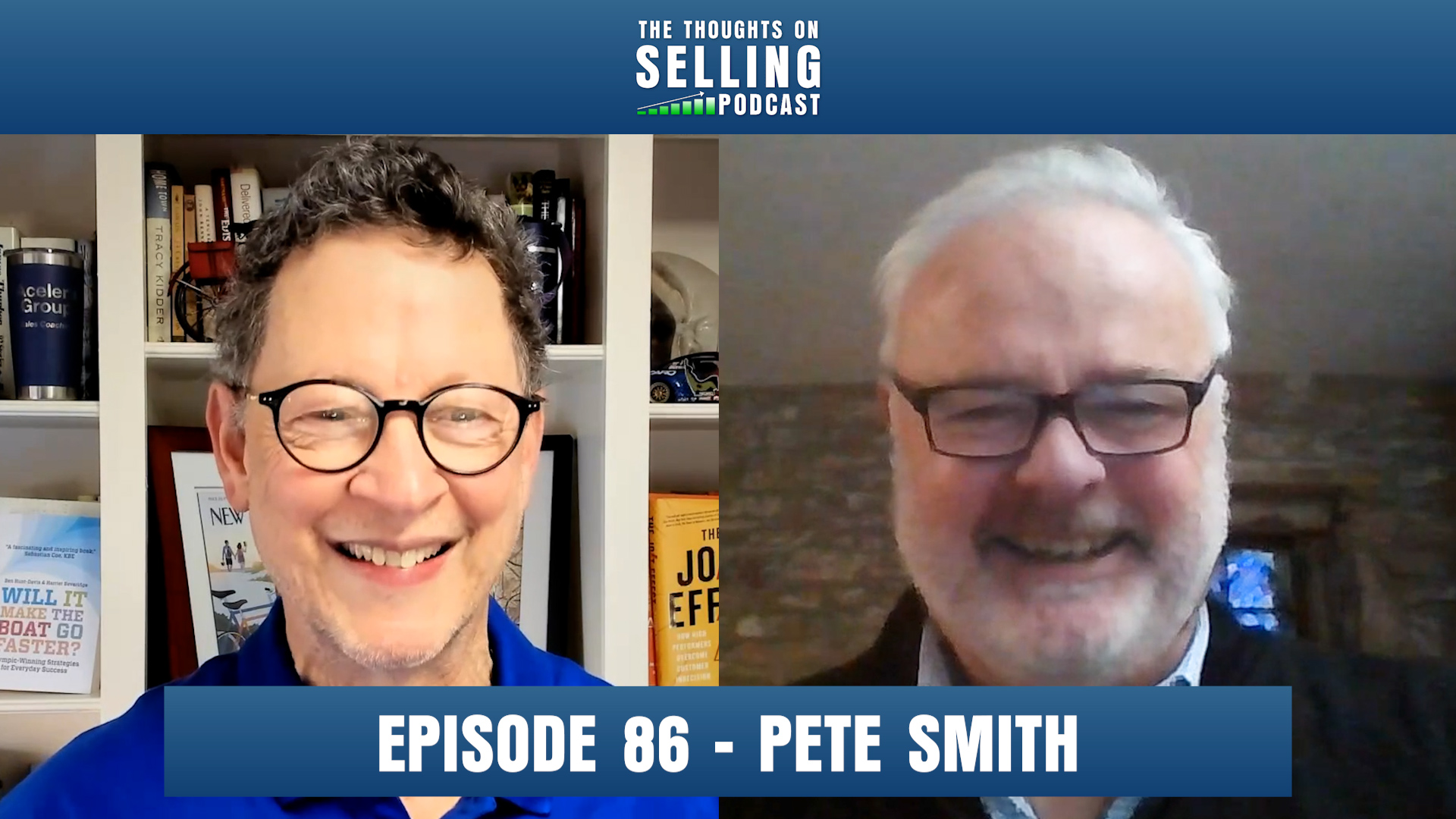
Welcome back to the blog, fellow sales enthusiasts! In our latest podcast episode, "Escape the Sales Treadmill!", we dove deep into the overwhelming reality of modern enterprise sales. We discussed how the sheer volume of tools, information, and demands on sales representatives can lead to a state of perpetual "winging it," a survival mechanism that, while sometimes effective in the short term, is ultimately unsustainable for closing truly complex deals. Today, we’re going to expand on one of the most profound insights from that conversation: the critical importance of understanding not just your buyer's immediate pain points, but their entire organizational ecosystem, with a particular focus on organizational risk. This understanding, as exemplified by the "Goldman Sachs Lesson," is the bedrock of moving beyond transactional selling to becoming an indispensable partner in your client's success. We’ll explore why this nuanced perspective is essential for navigating the inertia and risk aversion that often stand between you and closing those multi-million dollar opportunities.
The Goldman Sachs Lesson: A Case Study in Organizational Risk
The "Goldman Sachs Lesson," as shared by my guest Pete Smith on the podcast, is a stark and powerful reminder of how easily complex deals can be lost, even when your product or service is demonstrably superior. Pete recounted a situation where his team was competing to provide a critical infrastructure solution to a major financial institution, akin to a Goldman Sachs. The product his company offered was, by all accounts, a leap forward. It was more efficient, more scalable, and offered significant long-term cost savings. On paper, it was the obvious choice. However, the deal was lost. The reason wasn't a flaw in the product itself, nor a failure in the sales pitch to articulate its benefits. The reason was entirely rooted in organizational risk. Imagine the IT department of a behemoth like Goldman Sachs. They are responsible for a vast, intricate, and deeply embedded technological infrastructure. Any change, no matter how beneficial in isolation, carries inherent risks. There's the risk of implementation failure, the risk of unexpected downtime that could cost millions per minute, the risk of incompatibility with other mission-critical systems, and the risk of alienating established vendors who hold significant sway. Furthermore, there's the personal risk for the individuals making the decision. If the new system fails, careers can be jeopardized. The comfort of the status quo, even if it's suboptimal, often outweighs the allure of innovation when the stakes are this high. The existing system, while perhaps clunky and less efficient, was a known entity. Its risks were understood, managed, and accepted over time. The proposed new system, while promising, introduced a whole new spectrum of the unknown. This is organizational risk in its purest form – the collective apprehension within an organization to embrace change due to the potential negative consequences, both tangible and intangible, for the company and its employees. Understanding this fundamental dynamic is not just about identifying a customer's pain; it's about understanding their fear.
Beyond Pain Points: Understanding the Buyer's Ecosystem
Many sales methodologies emphasize identifying and addressing a buyer's "pain points." This is a valuable starting point, but in complex deals, it’s often insufficient. Pain points are the symptoms; organizational risk is often the underlying disease that prevents the cure from being accepted. To truly excel in complex sales, you must move beyond understanding isolated problems and instead, embrace a holistic view of the buyer’s entire ecosystem. This means understanding: * The Political Landscape: Who are the key stakeholders? What are their individual agendas and motivations? Who wields influence, and who holds veto power? Understanding internal politics can reveal why a seemingly logical solution might be opposed by a department that feels threatened or overlooked. * The Technical Architecture: How does your proposed solution fit into – or disrupt – the existing technological infrastructure? What are the integration challenges? What are the dependencies on other systems or vendors? * The Operational Workflow: How will your solution impact day-to-day operations? Who will be affected? What training will be required? Are there potential bottlenecks or inefficiencies introduced by the change? * The Financial Ramifications (Beyond the Price Tag): While the initial cost is important, what are the total cost of ownership implications? What are the potential savings or revenue generation opportunities, and how are these measured and validated within the buyer’s organization? Critically, what are the hidden costs associated with the *risk* of implementation, such as potential downtime or the need for extensive support? * The Cultural Norms: Is the organization risk-averse or risk-tolerant? Is it innovative or conservative? Understanding the company culture can inform your approach and the language you use. By mapping out this ecosystem, you can anticipate objections before they are raised. You can proactively address concerns about integration, training, and ongoing support. You can demonstrate a deep understanding of their business that goes far beyond simply listing features and benefits. This comprehensive view allows you to position your solution not just as a fix for a problem, but as a strategic enabler that minimizes disruption and maximizes positive outcomes, thereby mitigating organizational risk.
The 'Insider' Threshold: Earning Your Seat at the Table
Pete’s conversation on the podcast highlighted the crucial concept of crossing the "Insider Threshold." This is the pivotal moment when a buyer shifts their perception of you from an external vendor to an internal partner. It’s the point where they stop seeing you as someone trying to sell them something and start seeing you as someone who genuinely understands their challenges and is invested in their success. How do you cross this threshold? It’s not through slick presentations or aggressive closing tactics. It's through demonstrating that you've done your homework, that you understand their world, and that you’re asking the right questions. It’s by showing up prepared, not just with your product's value proposition, but with insights into their industry, their competitors, and their operational realities. When you can speak their language, understand their internal lingo, and even anticipate challenges they haven't yet articulated, you begin to build that trust. This is where understanding organizational risk becomes paramount. If you can articulate the potential risks associated with their current state, and then clearly demonstrate how your solution mitigates those risks and introduces manageable, well-understood new ones, you are speaking directly to their core concerns. You are not just a salesperson; you are a trusted advisor, a problem-solver. This earned credibility is what grants you a seat at the table, not as an outsider pitching, but as an insider collaborating. Without crossing this threshold, you remain "column fodder" – another vendor in a crowded field, easily dismissed when budget cuts or shifting priorities arise.
Discovery: Not a Checkbox, but a State of Mind
A recurring theme in our discussion, and one that Pete emphasized with great passion, is the idea that discovery is not merely a phase or a checkbox in the sales process. It is a continuous state of mind. Too many sales professionals treat discovery as a preliminary step: ask a few questions, fill out a form, and then move on to the pitch. This transactional approach is a death sentence for complex deals. True discovery is an ongoing process that begins long before the first meeting and continues long after the contract is signed. It involves active listening, relentless curiosity, and a genuine desire to understand the nuances of the buyer’s business. It means: * Pre-call Research: Going beyond the company website to understand recent news, industry trends, and the key people involved. * Open-ended Questioning: Asking "why" and "how" questions that encourage detailed responses, rather than simple yes/no answers. * Active Listening and Reflection: Not just hearing the words, but understanding the underlying message, the unspoken concerns, and the emotional context. * **Continuous Learning:** Recognizing that a buyer's needs and challenges can evolve. Staying engaged and continuing to probe for deeper understanding throughout the sales cycle. When you view discovery as a state of mind, you are constantly seeking to deepen your knowledge. You are looking for the hidden risks, the unarticulated needs, and the organizational dynamics that will ultimately influence the decision. This commitment to understanding, driven by a genuine curiosity, is what enables you to uncover the critical information about organizational risk that your competitors will miss.
The 'Pajama Problem' and the Evolution of Sales Interactions
The shift in sales interactions, from the formal suit-and-tie era to the often casual world of virtual meetings, is a fascinating aspect of modern business. Pete shared a humorous anecdote about Sun Microsystems and reps filming enablement videos in their pajamas, highlighting how the loosening of dress codes has, in some ways, mirrored a loosening of professional rigor. While Zoom has undoubtedly democratized access and enabled global reach, it has also blurred lines. The ability to connect from anywhere, anytime, has created an expectation of immediate availability and a higher cognitive load for reps. This evolution, however, has also led to a paradoxical situation. While we are more connected than ever, the depth of understanding can sometimes suffer. In the pre-Zoom days, sitting across from a client in a boardroom, observing their body language and the environment, offered subtle but important cues. Now, in the often sterile environment of a video call, it’s easier to miss these nuances. Furthermore, the proliferation of virtual meetings means reps are juggling more calls, more data, and more demands on their attention. This directly contributes to the "treadmill" effect. The "pajama problem" isn't just about attire; it’s a symptom of a broader cultural shift where the boundaries between work and personal life have become less distinct, and the demands on a sales professional's cognitive bandwidth have reached unprecedented levels. This makes dedicated, deep discovery and understanding of complex organizational risk even more challenging, yet paradoxically, even more critical for success.
The Treadmill of Modern Sales: Cognitive Load and 'Winging It'
The podcast episode’s central theme, the "treadmill of modern sales," perfectly encapsulates the challenge. Sales organizations are increasingly inundating reps with tools, CRM updates, marketing collateral, and performance metrics. The expectation is often that more tools mean more efficiency, but the reality is frequently the opposite. Reps are tasked with data entry rather than data insight. They are expected to be experts in multiple platforms, constantly switching contexts and absorbing information at a breakneck pace. This relentless pace creates an immense cognitive load. For complex deals, this load is amplified. The stakes are higher, the stakeholders are more numerous, and the potential implications of error are significant. When faced with this overwhelming pressure, the natural human response for many reps becomes "winging it." They jump on calls with superficial preparation, relying on their past experience and improvisational skills to get by. While this might allow them to survive the day, it's a recipe for disaster when it comes to closing large, intricate deals. They are simply not equipped to delve into the subtle, yet critical, aspects of organizational risk when they are struggling to keep their heads above water. This is why 84% of enterprise deals, as mentioned, often die in the first meeting – the initial interactions lack the depth and insight required to build true momentum.
SpotLogic: A Solution to the Cognitive Overload
This is precisely the problem that Pete Smith, with his extensive sales experience, sought to solve by creating SpotLogic. He didn't set out to build a startup; he built SpotLogic for himself, recognizing the need for a "force multiplier" to manage the complexity of modern sales. When he saw how it doubled his effectiveness, he realized he had something valuable. SpotLogic addresses the "treadmill" by tackling the cognitive overload head-on. It aims to reduce the time and mental energy required for preparation, allowing sales professionals to focus on what truly matters: understanding the buyer and their organizational risk. Instead of spending hours sifting through disparate data sources or struggling to recall key information, SpotLogic aims to provide reps with the insights they need in minutes. This means: * **Streamlined Preparation:** Enabling reps to quickly access relevant information about their prospect, their industry, and potential talking points. * Contextual Insights: Providing data that is not just available, but relevant to the specific deal and the individual buyer. * Reduced Mental Burden: Freeing up cognitive resources that would otherwise be consumed by administrative tasks and information retrieval. By empowering reps to be more efficient and insightful in their preparation, tools like SpotLogic allow them to dedicate more mental energy to the critical tasks of discovery and understanding. This, in turn, enables them to move beyond surface-level pain points and truly grasp the intricate web of organizational risk that can make or break a complex deal. It allows them to earn that "insider" status and consistently cross the threshold into becoming a trusted advisor.
Conclusion: Mastering Organizational Risk for Greater Deal Success
Our exploration today, inspired by the valuable insights from the "Escape the Sales Treadmill!" episode, underscores a fundamental truth: closing complex deals requires more than just a great product and a persuasive pitch. It demands a profound understanding of the buyer's entire organizational landscape, with a specific focus on the often-overlooked yet critically important element of organizational risk. The "Goldman Sachs Lesson" serves as a potent reminder that even the most superior offering can falter when the perceived risks of adoption are too high for the buyer’s organization to bear. By moving beyond mere pain points to meticulously map the buyer’s ecosystem – their politics, technology, operations, finances, and culture – we equip ourselves with the knowledge to proactively address concerns and build unshakeable trust. This deep understanding is the currency that allows us to cross the "Insider Threshold," transforming us from mere vendors into indispensable partners. It transforms discovery from a mere step in the process into a continuous state of mind, fueling our curiosity and driving genuine insight. In an era of increasing cognitive overload and the temptation to "wing it," tools and methodologies that streamline preparation and enhance understanding, like SpotLogic, are not luxuries but necessities. Mastering organizational risk is not just a strategy for deal closure; it is the key to unlocking sustained success in the challenging and rewarding world of complex sales. It’s about selling smarter, not just harder, and becoming the trusted advisor your clients truly need.