Ditch the Sales Persona: Why Your Authentic Self is Your Biggest Sales Asset
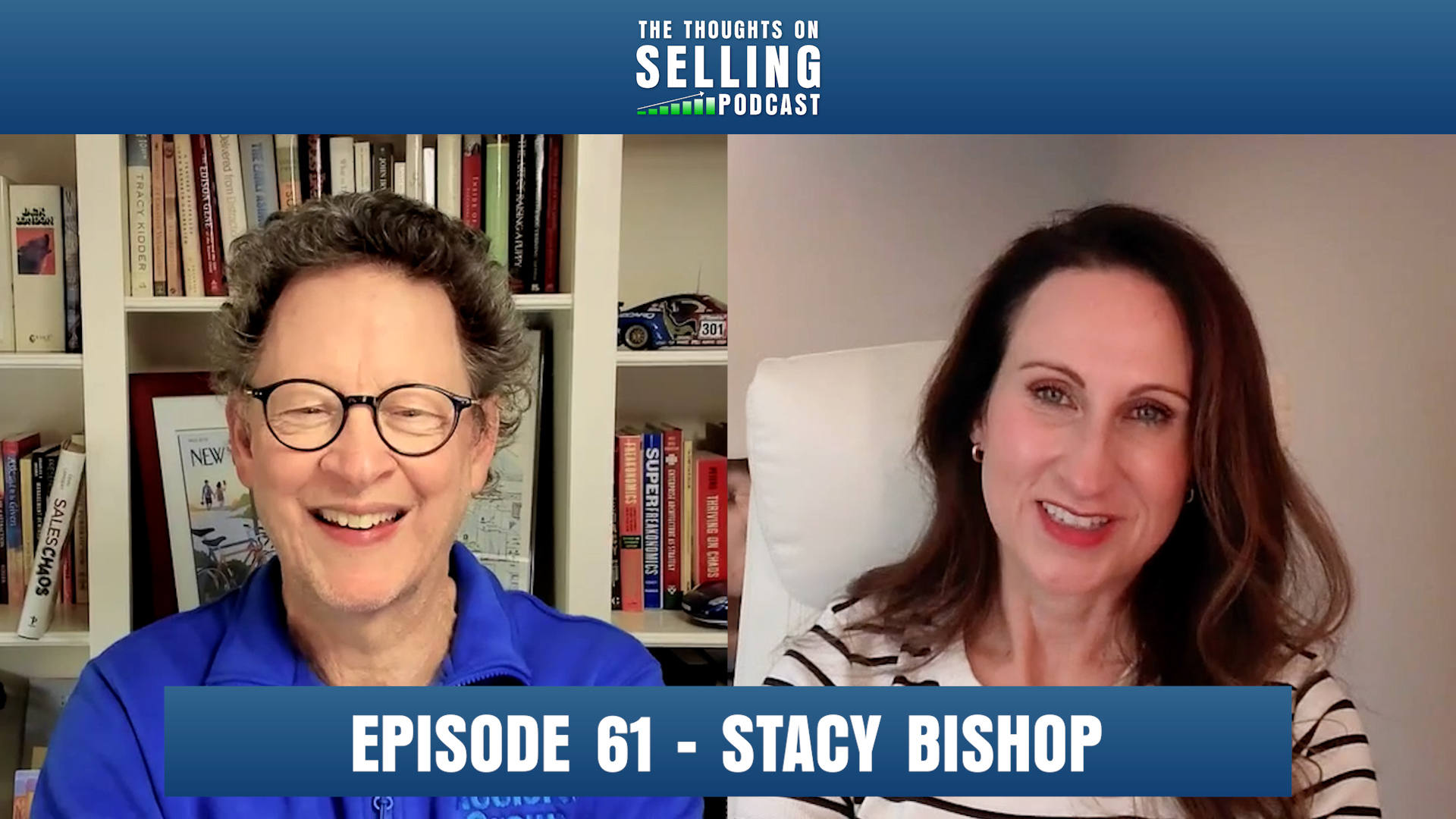
Welcome back to the blog, and welcome to a deep dive into a topic that's been resonating with me, and hopefully with you, after our latest episode of Thoughts On Selling. In episode 61, titled "Selling Without the Mask: Authenticity, Improv, and the Inner Game of Sales," my guest Stacy Bishop and I explored a fundamental truth about sales that often gets lost in the noise of tactics and scripts: the power of simply being yourself. This post will unpack those conversations, expanding on why shedding the artificial "sales persona" is not just liberating, but incredibly effective in building trust and closing deals. We'll delve into how our backgrounds, like Stacy's Midwest upbringing, can be a secret weapon, why pretending is a losing game, and how embracing principles from improv and mastering our inner mindset can transform our sales approach. So, grab a coffee, settle in, and let's get real about selling.
The Sales Persona Trap
We've all seen them, haven't we? The slick, polished salespeople who seem to have a pre-programmed answer for everything. They're charming, they're confident, and they’re… utterly forgettable. This is the "sales persona," the mask that many salespeople feel compelled to wear. It's a carefully constructed facade, designed to project an image of ultimate competence, unwavering enthusiasm, and a deep understanding of the client's needs, even when that understanding is superficial at best. The irony is that this persona, intended to build trust, often has the opposite effect. Clients, especially today, are savvier than ever. They can sniff out insincerity a mile away. This manufactured version of ourselves creates a barrier, preventing genuine human connection. It’s like trying to have a heartfelt conversation through a thick pane of glass. You can see each other, but the emotional resonance is lost. The constant effort to maintain this persona is also exhausting. It requires mental gymnastics, remembering what "character" you're playing, and suppressing your own natural reactions and impulses. This leads to calls that feel stilted, inauthentic, and ultimately, unproductive. It’s a trap that many fall into, believing that the "professional" salesperson needs to be a certain way, a way that's often far removed from who they truly are.
The Midwest Advantage: How Background Shapes Authentic Sales
One of the most fascinating aspects of our conversation in episode 61 was Stacy Bishop's reflection on her Midwest upbringing and how it directly influenced her approach to sales. Growing up in a region often characterized by its down-to-earth values, a strong work ethic, and a focus on community, Stacy found that these inherent traits translated beautifully into her career in banking and fintech sales. There's an unspoken understanding in many Midwest communities that values honesty, directness (delivered kindly, of course), and a genuine desire to help others. These aren't just regional quirks; they are the building blocks of authentic relationships. When you’re raised with a sense of collective responsibility and a belief in treating people right, that translates into how you interact with clients. It’s not about a hard sell; it’s about understanding a problem and offering a genuine solution. The "Midwest Nice" isn't just about being polite; it's often rooted in a deeper principle of reciprocity and mutual respect. This authentic approach fosters trust far more effectively than any polished sales script. When a client senses that you're not just trying to make a sale but are genuinely invested in their success, they are more likely to open up, share their true challenges, and ultimately, become a loyal customer. This inherent background can be a powerful asset, providing a foundation of trust and integrity that artificial personas simply cannot replicate. It’s a reminder that our personal histories, our values, and the way we were raised can be our greatest strengths in the professional world, especially in sales.
Beyond the Mask: Why Pretending Fails in Sales
Let's be brutally honest: pretending to be someone you're not is a losing game in sales. As we touched on in the episode, and I've experienced myself firsthand, trying to adopt a "sales persona" that feels alien to your true self is incredibly draining and ultimately counterproductive. It’s like trying to wear a suit that’s two sizes too small – it's uncomfortable, restrictive, and draws attention to the awkwardness rather than the quality of the fabric. When you’re not being authentic, your body language, your tone of voice, and your responses will often betray you. You might be saying all the "right" words, but if they don't align with your genuine feelings or intentions, the client will feel it. This disconnect erodes trust, which is the bedrock of any successful sales relationship. Think about it: would you rather do business with someone who feels like a manufactured robot or someone who is genuinely relatable, even if they have occasional quirks? The latter, hands down. Authenticity allows for genuine connection. It opens the door for empathy and understanding. When you’re comfortable in your own skin, you can listen more effectively, respond more thoughtfully, and build rapport on a deeper level. Pretending creates a barrier; authenticity dismantles it. This isn't to say you shouldn't be professional, but professionalism doesn't necessitate a persona. It means being respectful, knowledgeable, and committed to serving the client's needs – all things that can be done while remaining true to yourself.
Improv for Sellers: Embracing 'Yes, And' and Presence
This was one of the most eye-opening segments of our podcast episode. The world of improvisational comedy might seem a million miles away from the corporate boardroom, but the lessons it offers for salespeople are profound. At its core, improv is about being present, listening intently, and building on what’s given to you. The golden rule of improv is "Yes, and..." This simple phrase is a sales superpower. Instead of immediately jumping to objections or trying to steer the conversation back to your agenda, "Yes, and..." encourages you to acknowledge and accept what the other person has said, and then build upon it. In a sales context, this means truly hearing your prospect's statement, validating their point, and then adding your perspective or a relevant piece of information. It transforms a potential conflict into a collaborative exploration. For instance, if a client says, "We're concerned about the implementation timeline," an improv-inspired seller wouldn't immediately launch into a defense of their product's speed. Instead, they might say, "Yes, the implementation timeline is definitely something we want to get right, and we've found that by doing X, Y, and Z upfront, we can ensure a smooth and efficient rollout that aligns with your business objectives." This shows you've heard their concern and are offering a solution that addresses it directly. Furthermore, improv teaches the invaluable skill of presence. It’s about being fully in the moment, without distractions or preconceived notions. This heightened awareness allows you to pick up on subtle cues, adapt your approach on the fly, and respond genuinely to the unfolding conversation. As we discussed, your dog can even teach you about being present! The ability to be present in a sales conversation, to listen actively without planning your next sentence, and to respond spontaneously and authentically, is a game-changer. It fosters trust and makes the interaction feel less like a transaction and more like a partnership.
The Inner Game: Mastering Your Mindset in Sales
Beyond the external skills and techniques, the "inner game" of sales is arguably the most critical component of success, and it was a significant theme in our podcast. This refers to our internal mindset, our beliefs, and how we manage our thoughts and emotions, especially under pressure. Many salespeople get caught in the trap of overthinking, trying to strategize every single word and anticipate every possible objection. However, as in any complex activity, like playing tennis or performing a complex maneuver, you can't "think" your way through it. Overthinking can lead to paralysis, indecision, and a loss of natural flow. The concept of "go slow to go fast" – mentioned in our episode and applicable to many areas of life, including sales – highlights the importance of taking the time to develop foundational skills and a clear mindset, which ultimately leads to greater efficiency and effectiveness in the long run. This means practicing, developing self-awareness, and learning to manage internal dialogue. If you're constantly telling yourself you're not good enough, or that the client is going to reject you, that negative self-talk will inevitably impact your performance. Mastering the inner game involves cultivating self-confidence, resilience, and a positive outlook. It's about understanding that rejection is not personal, but rather a part of the sales process. It's also about recognizing when to quiet the internal chatter and trust your instincts. Just as an athlete needs mental fortitude to perform under pressure, a salesperson needs to manage their mindset to navigate the ups and downs of the sales cycle. This inner work is often the invisible engine driving external success.
Practical Tips: Stealing Strategies for Authentic Selling
We don't just want to talk about concepts; we want to equip you with actionable strategies. Here are some "steal-able" tips that emerged from our discussion and are rooted in the principles of authenticity and presence:
Dig Deeper with Open-Ended Questions: Instead of generic inquiries, ask questions that invite storytelling. For example, "What has kept you at this company for 25 years?" or "Tell me about a time you successfully navigated a major change in your industry." These questions go beyond surface-level needs and uncover deeper motivations, values, and pain points. This allows you to connect on a more human level and understand their true drivers.
Reframe "No" as an Offer: In improv, every statement is an offer. In sales, a "no" often feels like an ending. However, if you adopt the improv mindset, a "no" can be an opportunity to understand better and pivot. Instead of seeing it as rejection, ask yourself, "What is this 'no' offering me? What information is it trying to convey?" This reframing allows you to ask clarifying questions and explore alternative solutions. For example, if a client says, "That price is too high," instead of giving up, you can respond with, "I understand budget is a key consideration. What does an ideal investment look like for you in this area?"
Embrace the Element of Surprise: Don't assume you know what your prospect is thinking or how they will react. Give them the space to surprise you. When you approach a conversation with an open mind, you're more likely to discover unexpected needs or preferences. This involves active listening and a willingness to be led by the client's responses, rather than imposing your own agenda.
The Power of Silence: The "Zip It" Rule: This is a hard one for many salespeople! When a client is nodding, agreeing, and clearly engaged, it’s tempting to keep talking, to fill the silence, or to reinforce your points. However, often, when the client is responding positively, they are on the verge of making a decision or offering a key insight. Stop talking. Let them lead. The silence can be incredibly powerful, giving the client space to articulate their thoughts and commitment. In our episode, we emphasized that in these moments, it's crucial to "zip it."
Follow Up with Persistence (and Authenticity): Don't be afraid to follow up, but do so in a way that adds value and doesn't feel like harassment. Remember that today's "not now" can very well be tomorrow's "hell yes." Persistence, when delivered with genuine intent and value, builds trust over time.
Conclusion: The Power of Being You in Sales
In our latest episode, "Selling Without the Mask: Authenticity, Improv, and the Inner Game of Sales," we embarked on a journey to debunk the myth that successful selling requires a manufactured persona. As this blog post has explored, the truth is far more liberating and, crucially, far more effective. By embracing our authentic selves, drawing on the unique strengths shaped by our backgrounds – like the grounded values of a Midwest upbringing – we build genuine connections that transcend superficial transactions. Pretending to be someone else creates a barrier, while authenticity dismantles it, fostering trust and rapport. We learned how the principles of improv, such as the "Yes, and..." mentality and the importance of presence, can revolutionize our approach, allowing us to navigate conversations with agility and genuine engagement. Furthermore, mastering the inner game, managing our mindset, and trusting our instincts are the invisible engines that drive outward success. The practical tips we discussed, from reframing objections to understanding the power of silence, are all designed to help you shed the mask and operate from a place of true self. Ultimately, the most powerful sales asset you possess is your authentic self. It’s less exhausting, more rewarding, and infinitely more effective. So, I encourage you to reflect on your own sales approach and ask yourself: are you selling from a place of genuine connection, or are you hiding behind a mask? I invite you to listen to the full conversation with Stacy Bishop on episode 61 for even more insights and laughs. Go out there, be you, and sell like yourself. You've got this.