Beyond Training: Redefining Sales Enablement for Strategic Alignment
Introduction: Moving Beyond Traditional Sales Enablement
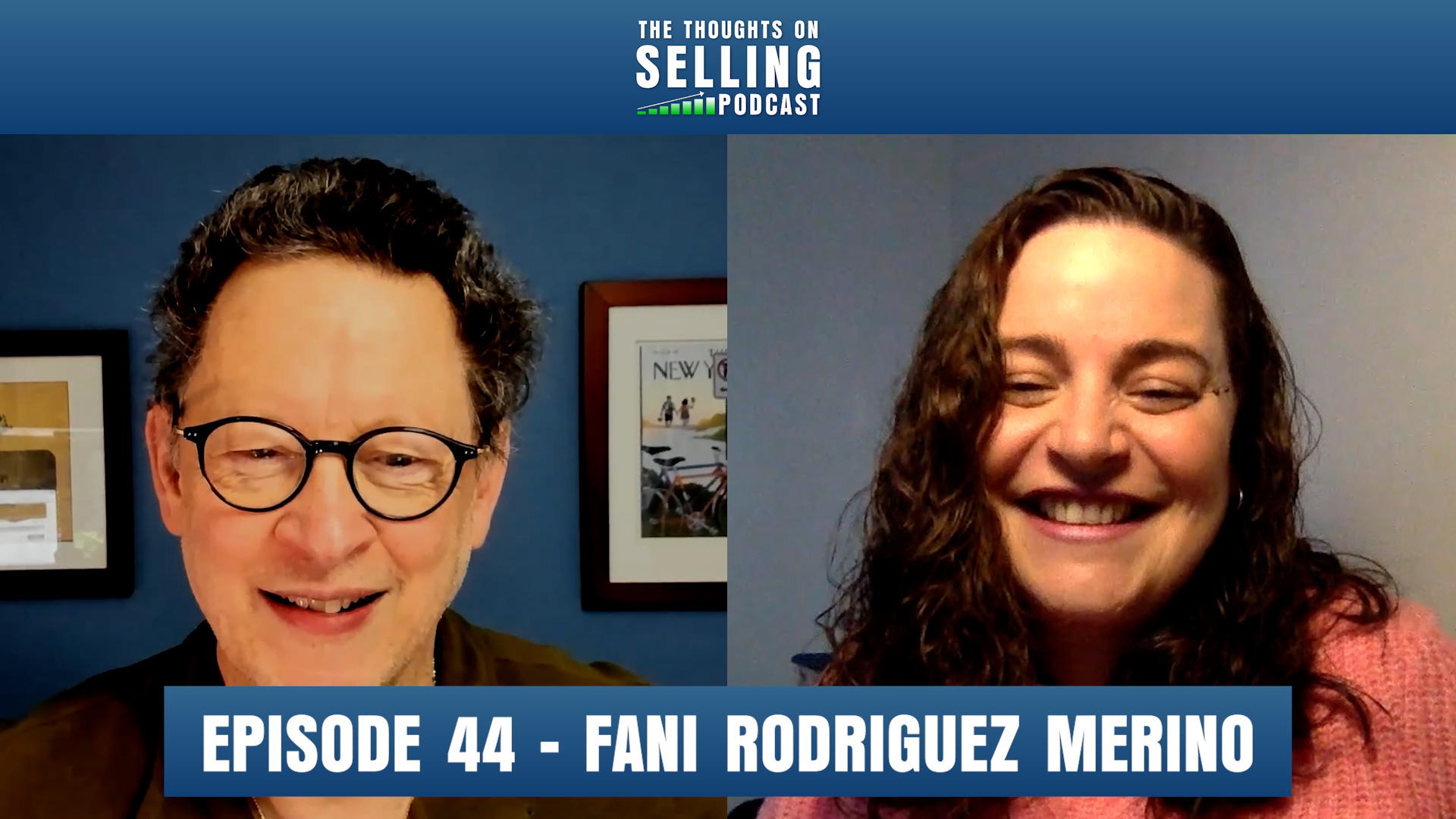
Welcome back to the blog, where we dive deeper into the conversations that spark new perspectives. In our latest episode, titled 44. The Art and Heart of Sales Enablement: Listening, Learning, and Driving Change With Fani Rodriguez Marino, we had an incredibly insightful discussion with Fani Rodriguez Marino about the true essence of sales enablement. It’s easy for the term "sales enablement" to conjure images of training modules and content libraries – the traditional pillars of the function. But as Fani so eloquently articulated, and as we will explore further in this post, the reality is far more dynamic and strategically significant. We’re moving beyond the surface-level understanding to uncover what sales enablement truly means when it’s executed with intent and purpose: aligning sales efforts with overarching company strategy and goals. This post will expand on Fani’s powerful definition, breaking down the core components and challenges of implementing a truly strategic approach to sales enablement.
Fani's Definition: Sales Enablement as Strategic Alignment
Fani's perspective on sales enablement is a breath of fresh air in a field that can sometimes feel bogged down by tactical execution. She doesn't see sales enablement as a standalone function focused solely on equipping the sales team with tools and information. Instead, she views it as a critical bridge, a strategic imperative that ensures the sales engine is precisely calibrated to drive the company’s overall objectives. This means that every enablement initiative, from the development of a new sales playbook to the delivery of a coaching session, must be able to answer the question: "How does this directly contribute to achieving our strategic goals?" This definition shifts the focus dramatically. It's no longer about simply providing more content or delivering more training sessions. It’s about understanding the company's vision, its market positioning, its competitive landscape, and then meticulously designing programs and processes that empower the sales team to execute effectively within that strategic framework. Imagine a well-oiled machine. Each part has a specific role, but its ultimate value is derived from how it contributes to the overall functioning of the machine. Sales enablement, in Fani’s view, is about ensuring every part of the sales machinery is perfectly aligned and functioning in harmony with the company’s strategic direction. This requires a deep understanding of both the business strategy and the nuances of sales execution, a delicate balancing act that is at the heart of effective enablement. It's about enabling sales to not just sell, but to sell strategically, to sell in a way that actively advances the company's broader mission.
The Heart of Enablement: Listening and Understanding Needs
At the core of Fani's philosophy, and indeed any successful sales enablement strategy, lies the profound importance of listening. This isn't just about passively hearing what people say; it's about actively listening to understand. This applies on multiple fronts: listening to customers to understand their pain points and needs, listening to the sales team to understand their challenges and opportunities, and listening to leadership to understand the strategic direction and priorities. For customer interactions, listening is the bedrock of building rapport and trust. Great salespeople don't just deliver a pitch; they engage in a dialogue, understanding what truly matters to the prospect. Sales enablement plays a crucial role here by equipping reps with the skills and frameworks to become exceptional listeners. This might involve training on active listening techniques, developing effective questioning strategies, and providing insights into customer psychology. Equally critical is listening to the sales team itself. Often, enablement professionals operate in silos, creating programs they *think* the sales team needs. Fani emphasizes that true enablement stems from understanding the day-to-day realities, frustrations, and successes of the frontline sales force. What are the obstacles they encounter? What information do they consistently struggle to find? What are the selling situations where they feel least confident? By actively soliciting and acting upon this feedback, enablement can deliver solutions that are relevant, practical, and impactful. This requires creating safe channels for communication, conducting regular surveys, holding feedback sessions, and observing sales interactions. Without this deep understanding of the sales team's needs, enablement efforts risk being misaligned and ultimately ineffective. It’s about fostering a collaborative environment where enablement is seen as a partner, not an overhead.
The Challenge of Change: Selling Enablement to Sellers
One of the most significant hurdles in sales enablement is the inherent resistance to change. Salespeople are often on the front lines, focused on hitting their numbers and navigating complex customer relationships. Introducing new tools, processes, or methodologies can be perceived as an added burden, a distraction from their primary objective. Fani wisely points out that sales enablement professionals need to be adept at "selling" enablement to their own sales teams. This isn't about coercion; it's about persuasion and demonstrating value. Just as a salesperson needs to articulate the benefits of a product to a prospect, an enablement leader must clearly communicate the advantages of new initiatives to the sales team. This means focusing on tangible outcomes: "This new CRM feature will save you X hours per week," or "This updated sales script will help you overcome common objections more effectively and close more deals." The key is to frame enablement efforts in terms of how they will make the sales rep's job easier, more efficient, and ultimately, more lucrative. This requires empathy and a deep understanding of sales motivation. It means understanding what drives a salesperson – recognition, commission, professional growth, the satisfaction of solving customer problems. Enablement initiatives should be designed to tap into these motivators. Furthermore, it's crucial to involve the sales team in the development and refinement of enablement programs. When reps feel they have a voice in shaping the resources and training they receive, they are more likely to buy in. Piloting new programs with a select group of enthusiastic sellers and gathering their feedback before a wider rollout can also be a highly effective strategy for building momentum and demonstrating success. The "why" behind any enablement initiative must be crystal clear and directly linked to the sales reps' own goals and aspirations.
Scalability vs. Personalization: Tailoring for Impact
A fundamental tension in sales enablement is the balance between scalability and personalization. On one hand, there's a need to create programs and resources that can be deployed efficiently across a large sales organization. This ensures consistency and allows for broad reach. Think of company-wide training modules on product features or standardized sales playbooks. These are essential for establishing a baseline of knowledge and ensuring everyone is working from the same playbook. However, Fani rightly highlights that true impact often comes from personalization. Sales reps operate in diverse territories, engage with different customer segments, and possess varying levels of experience and skill. A one-size-fits-all approach, while scalable, can fall flat for many individuals. For example, a seasoned, top-performing rep might not need introductory training on a specific sales skill, while a newer rep might struggle without it. Similarly, the challenges and opportunities in a fast-growing enterprise market might differ significantly from those in a mature SMB market. The art of sales enablement lies in finding this sweet spot. It involves creating foundational, scalable resources that provide a solid framework, and then layering on personalized support and tailored content. This could include: * **Differentiated training paths:** Offering advanced modules for experienced reps and foundational training for newer ones. * **Role-specific content:** Providing resources that address the unique needs of different sales roles (e.g., BDRs, Account Executives, Sales Engineers). * **Manager-led coaching:** Empowering sales managers to tailor enablement efforts to their individual team members' development needs. * **On-demand resources:** Creating a searchable knowledge base that reps can access based on their immediate needs. * **Personalized learning plans:** Utilizing technology to recommend relevant content and training based on individual performance data and career goals. Achieving this balance requires a sophisticated understanding of the sales force, robust data analytics, and flexible enablement infrastructure. It's about recognizing that while the strategy may be uniform, the execution often needs to be individualized to maximize engagement and drive meaningful improvement.
The Bigger Picture: Motivation and Context for Sales Success
Beyond the tangible tools and training, Fani’s insights underscore the critical importance of motivation and context in sales success. Salespeople are not robots; they are driven by a complex interplay of intrinsic and extrinsic factors. Understanding this human element is paramount for effective sales enablement. Motivation is more than just hitting targets. It's about feeling a sense of purpose, believing in the product or service, and experiencing the satisfaction of helping customers. Enablement plays a vital role in nurturing this motivation by: * **Reinforcing the "why":** Constantly connecting individual sales efforts back to the company's mission and values. * **Celebrating wins:** Recognizing and rewarding achievements, both big and small, to foster a positive and encouraging sales culture. * **Providing opportunities for growth:** Offering clear career paths and development opportunities to keep reps engaged and challenged. * **Building a supportive community:** Fostering collaboration and knowledge sharing among sales team members. Context, as Fani emphasizes, is equally crucial. Salespeople need to understand where they fit into the bigger picture. This includes understanding: * **The company's strategic objectives:** How their daily activities contribute to achieving these goals. * **The market landscape:** Who the competitors are, what trends are emerging, and how the company is positioned. * **The customer's journey:** The different stages a customer goes through and how sales can best support them at each point. * **The product's value proposition:** Not just the features, but the tangible benefits and solutions it provides to customers. When salespeople have this context, they are empowered to make better decisions, engage in more meaningful conversations, and adapt their approach to different situations. Enablement’s role is to continuously provide and reinforce this context, ensuring that the sales team is not just executing tasks but is strategically aligned and intrinsically motivated to drive the company forward. It’s about equipping them with not just the "how," but also the "why" and the "what for."
Conclusion: The Future of Strategic Sales Enablement
Our conversation with Fani Rodriguez Marino in episode 44. The Art and Heart of Sales Enablement: Listening, Learning, and Driving Change With Fani Rodriguez Marino was a powerful reminder that sales enablement is evolving, moving far beyond its traditional roots. As we've explored in this post, Fani's definition of sales enablement as strategic alignment is not just a nuanced perspective; it's a fundamental shift in how we should approach equipping our sales teams. It’s about understanding that true enablement is about fostering a deep connection between sales execution and the overarching business strategy. We’ve delved into the critical importance of listening – not just to customers, but to the sales team itself – as the foundation for understanding and meeting their needs. We’ve acknowledged the significant challenge of "selling" enablement to sellers, emphasizing the need to demonstrate tangible value and tap into their intrinsic motivations. The delicate balance between scalability and personalization emerged as a key area where effective enablement leaders can truly make an impact, tailoring approaches for maximum resonance. Finally, we’ve recognized that a motivated sales force, armed with the right context, is the ultimate driver of success, and enablement plays a vital role in nurturing both. The future of sales enablement is undeniably strategic. It requires a holistic approach that considers the human element, the business objectives, and the ever-evolving market landscape. By embracing Fani's principles, we can move beyond the transactional nature of training and content creation and build enablement functions that are truly integrated, impactful, and instrumental in driving sustainable business growth. Thank you for joining us on this exploration. We hope this post has provided you with a deeper understanding and actionable insights into redefining sales enablement for your organization.