Beyond the Script: Why Curiosity is Your Greatest Sales Asset
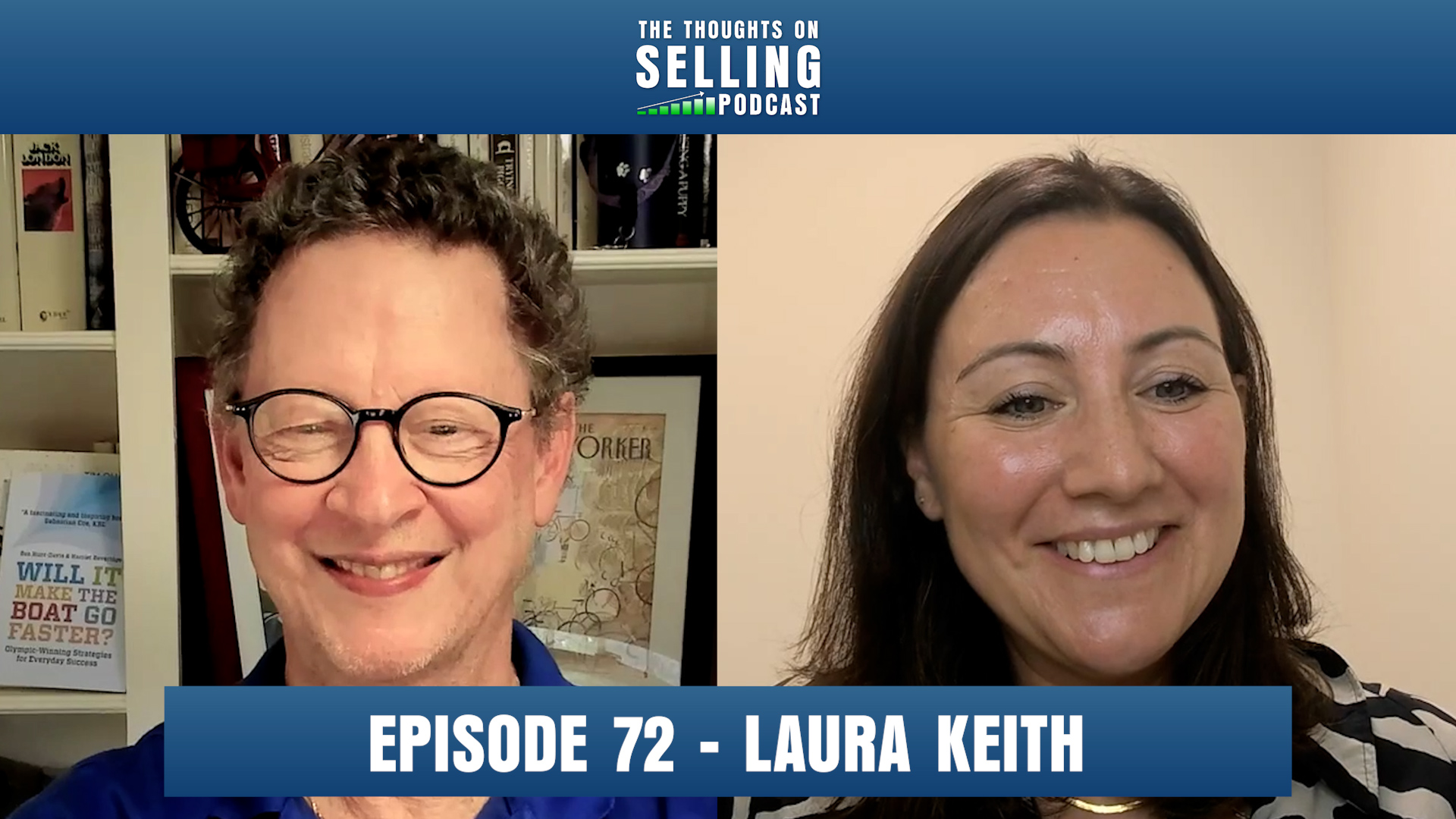
Welcome back to the blog, everyone! This week on the podcast, we had an absolutely fascinating conversation with the brilliant Laura Keith on episode 72, "The Psychology of Selling: Laura Keith on Data, Coaching, and the Human Edge." You can catch the full episode right here: Episode 72. Laura’s insights on the intersection of data, AI, and the crucial human elements in sales truly resonated with me, and it’s sparked a deep dive into one particular point she made that I believe is the bedrock of exceptional sales performance: the power of genuine curiosity.
In our discussion, Laura touched on how sales has, in many ways, lost touch with its human side, often becoming overly focused on process and product features rather than the people we're interacting with. She emphasized that in an increasingly automated world, the "art" of selling – the ability to deeply listen, understand motivations, and connect on a human level – becomes exponentially more valuable. This is where her point about curiosity trumping canned responses really hits home. Today, we're going to unpack why embracing your inner detective, asking "one more question," and truly seeking to understand your buyer is not just a nice-to-have, but your most potent sales asset.
Laura Keith's Insight: Why Curiosity Trumps the Script
Laura Keith's assertion that "curiosity beats scripts" is a powerful one, and it cuts through the noise of modern sales methodologies that often advocate for templated outreach and rehearsed responses. In her experience, and in the experience of many top-performing sales professionals, the magic happens not when you have the perfect answer ready, but when you have the perfect question that opens the door to understanding. Think about it: when a salesperson is clearly focused on delivering their pre-packaged pitch, it feels transactional, robotic, and frankly, a little disingenuous. The buyer senses they're being "sold to," not "helped."
Conversely, when a salesperson exhibits genuine curiosity, they signal that they are invested in understanding the buyer's unique situation, challenges, and aspirations. This shift from a monologue of features to a dialogue of discovery is fundamental. A script, by its very nature, limits exploration. It’s a predetermined path. Curiosity, on the other hand, is an invitation to explore uncharted territory, to uncover hidden needs, and to build a solution that is truly tailored. Laura’s point implies that the most effective sales interactions are less about presenting a solution and more about co-creating one, guided by insightful questions that reveal the underlying 'why' behind the buyer's needs.
The Psychology of Selling: Understanding Your Buyer's 'Why'
At its core, selling is an exercise in psychology. As Laura Keith brilliantly articulated, understanding what makes buyers tick is paramount. This goes far beyond understanding their job title or their company's industry. It delves into their motivations, their fears, their aspirations, and their perceived obstacles. Why are they looking for a solution now? What are they hoping to achieve? What keeps them up at night regarding their current situation? What are the potential consequences if they don't find a solution?
These are the deep-seated questions that curiosity helps us uncover. A script might address surface-level pain points, but genuine curiosity aims to unearth the root causes and the emotional drivers. Buyers are not just looking for a product or service; they are looking for a way to improve their situation, to mitigate risk, to achieve a goal, or to gain an advantage. Your ability to understand and articulate how your offering addresses these fundamental psychological drivers is what truly sets you apart. It's about moving beyond the "what" and delving into the profound "why." When you understand your buyer's 'why,' you can tailor your message, your approach, and your solution in a way that resonates deeply, making them feel truly understood and valued.
The 'One More Question' Technique: Unlocking Deeper Insights
The "one more question" technique, a concept championed by Laura Keith and many other sales thought leaders, is the practical embodiment of curiosity in action. It's the moment after you've asked a question, received an answer, and instead of moving to your next talking point, you pause and ask another, more probing question. This isn't about interrogation; it's about gentle, persistent exploration. This technique is incredibly powerful for several reasons:
- Uncovers Unstated Needs: Often, buyers articulate their surface-level requirements, but the underlying needs, the ones that truly drive their decision-making, remain unspoken. "One more question" can prompt them to elaborate, to think more deeply, and to reveal these critical, often hidden, insights.
- Reveals Priorities: By asking follow-up questions about their answers, you can gain a clearer understanding of what is most important to them. Is it speed, cost, reliability, innovation, or something else entirely? This helps you prioritize your own efforts and highlight the aspects of your solution that matter most.
- Identifies Objections Early: Sometimes, an answer to an initial question might hint at a potential objection. A follow-up question can proactively address this concern before it becomes a roadblock, demonstrating your foresight and your commitment to finding a viable solution.
- Builds Trust and Credibility: Each additional question that shows genuine interest and thoughtful consideration deepens the buyer's trust. It signals that you are not just going through the motions, but that you are truly invested in their success.
- Differentiates You from the Competition: In a world where many sales reps are trained to follow a rigid script, those who employ the "one more question" technique stand out. They demonstrate a higher level of engagement and a more sophisticated understanding of sales.
The key to using this technique effectively is to ensure your questions are open-ended, non-judgmental, and genuinely aimed at understanding. Avoid accusatory or leading questions. Instead, focus on "how," "what," and "tell me more about" to encourage elaboration.
Building Rapport: Curiosity as a Relationship Builder
Beyond unlocking critical sales insights, curiosity is a fundamental building block of strong buyer relationships. Think about your own personal interactions. When someone asks you genuine questions about yourself, shows interest in your opinions, and listens attentively to your answers, you feel valued, respected, and more connected to them. The same principle applies in sales.
When you approach sales interactions with curiosity, you're not just trying to close a deal; you're trying to understand a person and their world. This shift in perspective is transformative. It moves you from being a vendor to becoming a trusted advisor. Rapport isn't built on slick presentations or aggressive tactics; it's built on mutual understanding and a shared sense of connection. Curiosity is the bridge that facilitates this connection.
By asking about their challenges, their successes, their team dynamics, or even their industry trends, you demonstrate that you see them as more than just a potential transaction. You see them as a professional facing real-world problems. This creates a more human and collaborative selling environment. Buyers are more likely to open up, share their vulnerabilities, and ultimately, trust your recommendations when they feel genuinely understood and appreciated. This is the essence of long-term customer relationships – they are built on trust, and trust is cultivated through authentic curiosity.
AI and the Human Edge: Where Data Meets Empathy
One of the most compelling points Laura Keith made in our podcast episode was about the role of AI in sales. While AI is rapidly automating many aspects of the sales process, it’s not replacing the need for human skills; it’s actually highlighting their importance. AI can analyze vast amounts of data, identify trends, and automate repetitive tasks. It can provide insights into buyer behavior based on historical data. However, AI cannot replicate genuine empathy, intuitive understanding, or the ability to build authentic human connections.
This is where curiosity becomes the essential human edge. While AI can tell you *what* a buyer might be interested in based on data patterns, it cannot truly understand *why* they are interested, their underlying emotional drivers, or the nuanced context of their situation. This is where a curious salesperson excels. They can use AI-generated insights as a starting point, but then layer on their human intelligence, their empathy, and their probing questions to truly understand the individual in front of them. The best sales professionals will leverage AI as a powerful tool to enhance their efficiency and knowledge, but they will rely on their curiosity and empathy to create meaningful connections and build lasting relationships. It’s the fusion of data-driven insights and human understanding that will define successful sales in the future.
The Future of Sales: Human Skills in a Digital World
Looking ahead, the landscape of sales is undoubtedly being reshaped by technology, particularly AI. However, as we've explored through Laura Keith's insights and the power of curiosity, this technological evolution doesn't diminish the importance of human skills; it elevates them. The future of sales belongs to those who can effectively blend data-driven strategies with authentic human connection. This means cultivating the ability to listen deeply, to ask insightful questions, to understand buyer psychology, and to build genuine rapport.
In an era where information is abundant and readily accessible, the true differentiator will be the ability to process that information with empathy and to translate it into personalized, human-centered solutions. Sales professionals who rely solely on scripts and automated processes will likely struggle to connect with buyers who are increasingly sophisticated and discerning. On the other hand, those who embrace their curiosity, who see each interaction as an opportunity to learn and understand, will be the ones who forge stronger relationships, uncover deeper needs, and ultimately, drive more sustainable success.
The digital world provides us with incredible tools, but it's our human capacity for empathy, our desire to understand, and our courage to ask that will continue to be the most powerful assets in our sales arsenal. It's about mastering the art of human connection in a digital age.
Conclusion: Embrace Your Inner Detective
As we wrap up this exploration, it's clear that the lessons from Laura Keith's insightful conversation on episode 72, "The Psychology of Selling: Laura Keith on Data, Coaching, and the Human Edge," point towards a fundamental truth: genuine curiosity is not just a personality trait; it's a strategic imperative in sales. The scripted, transactional approach is becoming increasingly obsolete. Buyers crave authentic engagement and a genuine understanding of their unique challenges.
By embracing the "one more question" technique, delving into the psychology of your buyer, and recognizing the power of empathy in a data-driven world, you can transform your sales interactions from mere pitches into meaningful dialogues. This shift allows you to build stronger relationships, uncover deeper needs, and ultimately, provide solutions that truly resonate. So, I encourage you all to step away from the scripts, put on your detective hats, and let your curiosity guide you. It’s the most powerful asset you have for navigating the complexities of modern sales and forging lasting connections with your buyers.