Beyond the Script: Why Authenticity is Your Greatest Sales Superpower
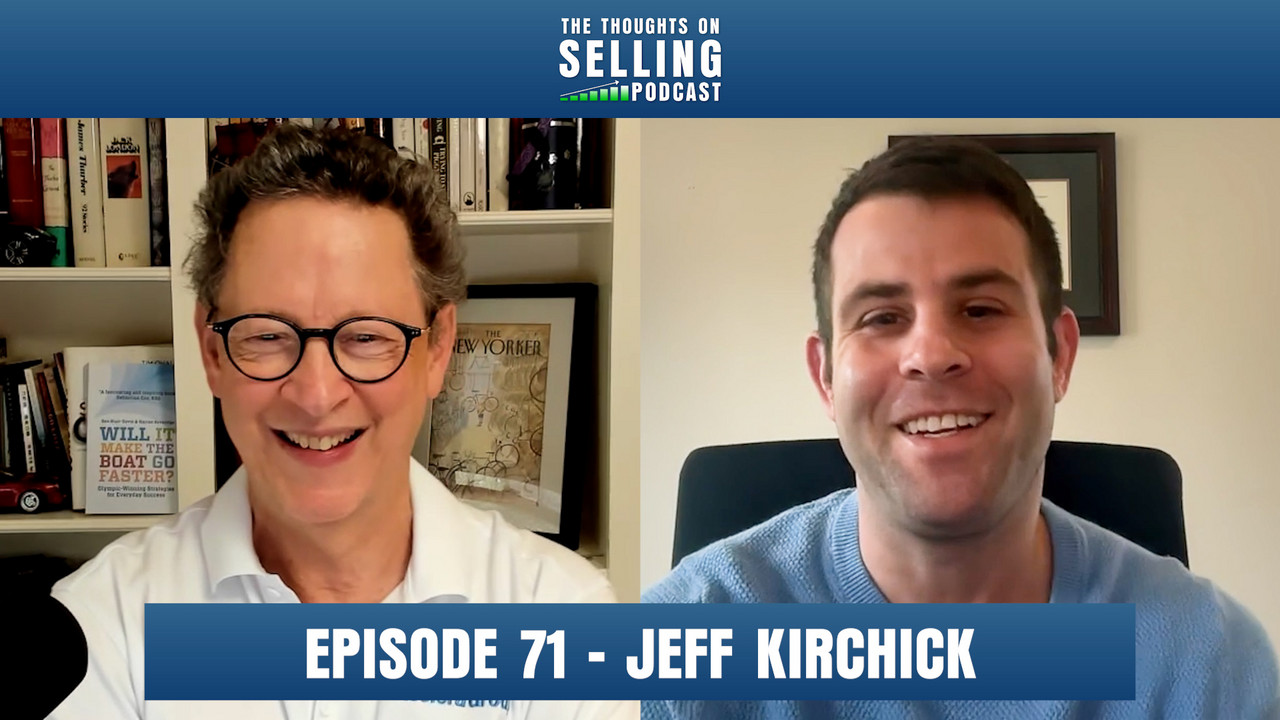
Welcome back to the blog, everyone! In our latest episode of the podcast, we dove deep into a topic that’s becoming increasingly critical in the world of sales: authenticity. We had a fantastic conversation with Jeff Kirchick, a sales leader who’s navigated the complex world of seven-figure deals by leaning into his genuine self. This episode, titled "Effective sales leaders don't hide behind a mask," really hammered home the idea that in an era saturated with AI and automated pitches, the human element of sales is not just a nice-to-have, but an absolute necessity. This blog post is going to expand on those ideas, exploring why being truly yourself is your most potent weapon in the sales arsenal.
The Age of Authenticity in Sales
We live in a fascinating time. Technology, particularly Artificial Intelligence, is rapidly changing the landscape of how we work, communicate, and yes, even sell. We can generate scripts, craft emails, and build entire sales playbooks with a few clicks. Yet, despite these incredible advancements, there’s a growing realization that something crucial is being lost – or perhaps, never truly found in the first place. That something is authenticity. Buyers are more sophisticated than ever. They’re bombarded with information and pitches from every angle. What cuts through the noise? It’s not a perfectly crafted, AI-generated message. It’s a human connection. It’s a seller who is honest, relatable, and genuinely interested in solving a problem, not just making a sale. This shift towards valuing genuine interaction is what defines the current age of sales.
Why Genuine Connection Trumps AI-Generated Pitches
Let’s be clear: AI is a powerful tool. It can streamline processes, analyze data, and offer valuable insights. But it cannot replicate the subtle nuances of human interaction, the empathy of understanding a client's unspoken concerns, or the genuine excitement of discovering a shared passion. An AI can generate a technically perfect sales pitch, but it can't convey sincerity. It can't read the room, sense hesitation, or build rapport based on shared human experience. Buyers, especially those making significant investments, are looking for more than just a transaction. They’re looking for a partner, someone they can trust, someone who understands their unique challenges. This level of connection is forged through genuine conversation, active listening, and a willingness to be vulnerable – qualities that AI, for all its advancements, simply cannot possess. When a buyer feels a genuine connection with a salesperson, they are far more likely to feel confident in their decision and to build a lasting relationship.
Jeff Kirchick's Journey: From Screenwriter to Sales Leader
Our conversation with Jeff Kirchick offered a compelling case study in this very principle. His journey from an aspiring screenwriter, steeped in the art of crafting narratives and understanding human emotion, to a high-achieving sales leader is remarkable. He didn’t abandon his creative roots; he brought them to the sales floor. This background gave him a unique perspective on communication, storytelling, and understanding motivations. Instead of relying on rote pitches, Jeff learned to craft genuine conversations, to listen for the underlying stories, and to connect on a human level. His success in selling multi-million dollar deals isn't just a testament to his sales acumen, but to his ability to be himself, to be genuine, and to build trust through authentic interaction. He showed us that the skills honed in understanding character and plot can be incredibly powerful when applied to understanding client needs and building relationships.
The Hard Truths of Writing About Authenticity
Jeff also spoke about the challenges of writing about authenticity, particularly in his book. The irony is that the very act of trying to define and codify authenticity can feel counterintuitive. Authenticity isn't a formula; it's a state of being. For Jeff, the "hard truths" likely involved wrestling with how to translate a deeply personal and internal quality into actionable advice without it becoming performative. It's easy to say "be authentic," but much harder to explain *how* to cultivate it, especially when faced with pressure to conform to traditional sales expectations. The real work of authenticity isn't in practicing a script; it's in practicing self-awareness, understanding your own values, and having the courage to express them. It's about showing up as you are, even when it feels uncomfortable, and trusting that your genuine self is enough.
Authenticity as the Ultimate Differentiator
In a crowded marketplace, what truly sets one salesperson or company apart? It's rarely the product alone, especially when competitors offer similar features and pricing. The differentiator is the human experience. When a buyer encounters a salesperson who is genuinely passionate about their product, who listens intently to their needs, and who offers honest advice – even if it means not making an immediate sale – that creates a lasting impression. This authenticity builds credibility and trust. It tells the buyer that you're not just trying to move a product, but that you're invested in their success. In the age of AI, where so many can mimic the mechanics of sales, being truly yourself becomes your most powerful competitive advantage. It's the intangible quality that cannot be replicated by algorithms, the spark that ignites connection and loyalty.
AI in Sales: What It Can and Can't Replace
Let’s revisit the AI discussion. AI can undoubtedly enhance the sales process. It can help with lead qualification, automate repetitive tasks, provide data-driven insights, and even suggest optimal talking points. However, it cannot replace the core elements of human connection, empathy, and trust-building. AI can't feel the pulse of a negotiation, gauge the unspoken anxieties of a prospect, or offer genuine reassurance during a complex decision-making process. It can analyze historical data to predict trends, but it can't forge the shared experience that builds lasting partnerships. The true value of AI in sales lies in its ability to augment human capabilities, freeing up salespeople to focus on what they do best: building relationships and solving problems for their clients.
Building Trust: The Foundation of Sales Success
At its heart, sales is about trust. Without trust, even the most compelling offer will fall on deaf ears. Authenticity is the bedrock upon which trust is built. When you are transparent about your intentions, honest about your capabilities, and open about potential challenges, you create an environment of credibility. Buyers can sense insincerity from a mile away. A polished, but inauthentic, pitch can feel manipulative, eroding trust before it even has a chance to form. Conversely, a salesperson who admits they don't have all the answers, but commits to finding them, or who acknowledges a prospect's concerns with genuine empathy, builds a far stronger foundation for a long-term relationship. This is especially true for complex, high-value sales where the stakes are high and the commitment is significant.
Beyond Scripts: The Power of Deliberate Practice
The traditional sales model often relies heavily on scripts and rehearsed pitches. While these can provide a framework, they can also lead to a robotic, inauthentic delivery. Jeff highlighted the importance of "deliberate practice." This isn't about memorizing lines; it's about internalizing your message, understanding your value proposition, and being able to articulate it in a natural, conversational way. It's about practicing how to handle objections with grace, how to pivot when a conversation takes an unexpected turn, and how to respond to different client personalities. Deliberate practice, coupled with authenticity, allows you to be present and responsive in the moment, rather than simply reciting a pre-written speech. It builds confidence and allows your genuine personality to shine through, making you a more effective and relatable communicator.
Non-Attachment to Outcomes: Curiosity, Honesty, and Freedom
One of the most liberating concepts discussed was non-attachment to outcomes. This means approaching sales conversations with a genuine sense of curiosity and a focus on understanding the other person's needs, rather than solely on closing the deal. When you're not desperately clinging to the outcome, you're free to be more present, more honest, and more human. This mindset allows you to ask deeper questions, to listen more effectively, and to offer solutions that are truly in the client's best interest, even if they don't align with an immediate sale. This approach not only fosters stronger relationships but also often leads to better long-term business outcomes. It transforms sales from a pressure-filled pursuit into a collaborative problem-solving endeavor.
Unexpected Role Models for Authenticity: Rodman & Larry David
It was refreshing to hear Jeff bring up seemingly unconventional role models for authenticity like Dennis Rodman and Larry David. While their personalities and professions are vastly different from sales, they embody a radical commitment to being themselves, flaws and all. Dennis Rodman, with his flamboyant persona and unconventional behavior, was undeniably himself. Larry David, the master of awkward social situations, portrays a character who is brutally honest and unapologetically himself. Their influence in sales, as suggested by Jeff, lies in their unwavering adherence to their authentic selves, even when it’s not the most conventionally appealing or easy path. This encourages salespeople to embrace their quirks, their unique perspectives, and their genuine emotions, rather than trying to fit a mold.
Cultural Nuances in Sales: Boston, Japan, and Boulder
The conversation also touched upon how cultural nuances shape the expression and reception of authenticity in sales. Selling in Boston, with its directness and no-nonsense approach, might require a different style of authentic communication than, say, selling in Japan, where politeness, indirectness, and relationship-building often take precedence. Similarly, a place like Boulder, with its emphasis on community and sustainability, might value a different kind of authentic connection. Understanding these cultural differences is crucial for any salesperson looking to build trust and rapport across diverse markets. It’s not about abandoning your authenticity, but about adapting how you express it to resonate with the cultural context and values of your audience.
Leadership and Authenticity: Setting the Example
Finally, the principle of authenticity extends all the way to leadership. As our episode title suggests, effective sales leaders don’t hide behind a mask. They set the tone for their teams by demonstrating vulnerability, empathy, and genuine care. When leaders are authentic, it creates a safe environment for their team members to do the same. This fosters greater collaboration, open communication, and a more positive and productive work culture. When a leader is willing to admit their mistakes, share their challenges, and genuinely support their team, it builds immense trust and loyalty. This, in turn, empowers the entire sales organization to approach their work with greater authenticity and effectiveness.
Conclusion: Embrace Your Superpower
As we wrap up this deep dive into the power of authenticity in sales, it’s clear that this isn’t just a buzzword. It’s a fundamental shift in how we approach building relationships and driving business success. In an age where AI can mimic many of the mechanics of sales, your genuine self becomes your most potent differentiator. It’s the foundation of trust, the key to forging lasting connections, and the ultimate path to sustainable success. Our latest episode, "Effective sales leaders don't hide behind a mask," with Jeff Kirchick, beautifully illustrated these points. I encourage you to listen to it if you haven’t already, and to reflect on how you can lean more into your own authentic superpower. It’s not about being perfect; it’s about being real. And in sales, being real is your greatest asset.