Beyond the Script: Why Authentic Passion is Your Sales Superpower
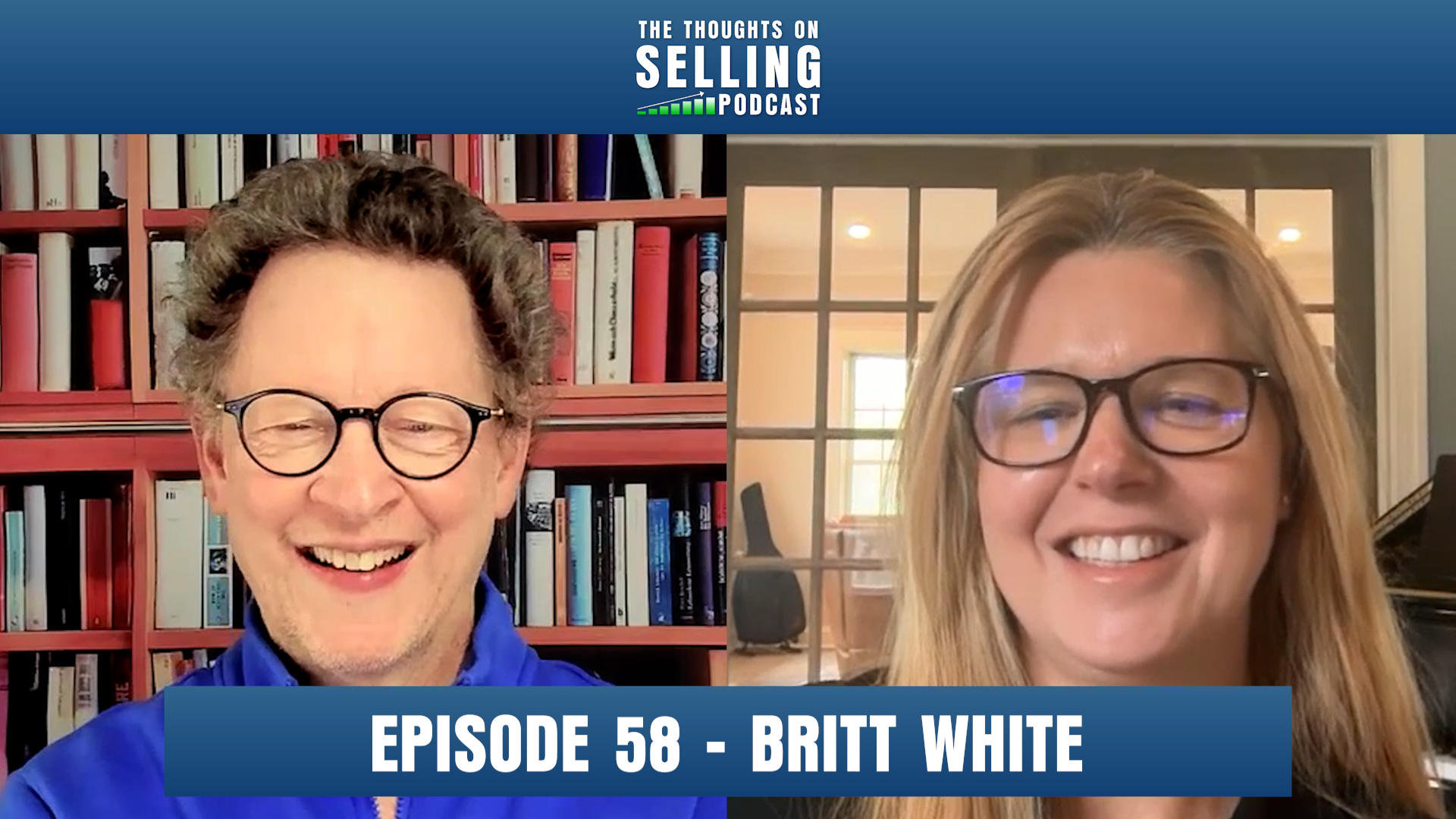
Welcome back to the blog, where we dive deeper into the conversations that spark our curiosity and challenge our perspectives. In our latest episode, "58. Sales Leadership with Bare Feet, Big Energy and an Open Heart," I had the immense pleasure of speaking with Britt White, a true force of nature in the sales world. Britt’s philosophy, as captured by the simple yet profound statement, "passion isn't optional, it's fuel," is the driving force behind this post. We explored how this approach can transform sales teams, moving beyond the transactional and into the realm of genuine, powerful connection. This blog post is an expansion on those ideas, a way to unpack how contagious energy, authentic passion, and a willingness to break the mold can truly elevate sales performance.
Introducing Britt White: The Power of Passion in Sales
Britt White is not your typical sales leader. Her energy is palpable, her approach is refreshingly authentic, and her belief in the power of passion is infectious. In our conversation, she shared how her own enthusiasm for her work, for her team, and for the solutions she helps bring to market, isn't just a personal trait – it's a strategic advantage. This isn't about putting on a brave face or a forced smile. It's about cultivating a deep-seated love for what you do, and understanding that this love is a powerful tool. When you are genuinely passionate about your product, your service, or the problems you solve for your customers, that energy radiates. It’s the difference between someone reciting a script and someone sharing a genuine recommendation. It’s the bedrock upon which trust is built, and trust is the currency of effective sales. Britt’s philosophy reminds us that the human element in sales is not a soft skill, but a critical driver of success.
Passion as a Contagious Force: Building Trust and Elevating Performance
Think about the last time you encountered someone who was truly passionate about what they were talking about. Did you find yourself leaning in? Did you feel more inclined to listen, to believe them, and even to try what they were recommending? This is the power of contagious energy. In sales, this translates directly into trust. When a salesperson exudes genuine enthusiasm, it signals to the prospect that they believe in what they’re selling. This belief isn't just about the product's features; it's about the value it brings, the problems it solves, and the positive impact it can have. This authenticity breaks down barriers. Prospects are more likely to open up, share their challenges, and feel comfortable exploring solutions when they sense genuine care and excitement from the other side of the table. This elevated energy doesn't just create a positive atmosphere; it directly impacts performance. When a sales team is fueled by passion, they are more resilient in the face of rejection, more creative in their problem-solving, and more dedicated to delivering exceptional customer experiences. They’re not just going through the motions; they are invested in the outcome. This intrinsic motivation fosters a higher level of commitment, leading to better conversion rates, stronger customer relationships, and ultimately, greater overall success. It transforms sales from a task into a mission, a calling, and when that happens, extraordinary results become the norm.
The Synergy of Passion and Process: Enabling Freedom, Not Chaos
One of the common misconceptions about passion is that it’s inherently chaotic. Some might fear that embracing raw enthusiasm could lead to a lack of discipline or direction. However, Britt White’s insights, and indeed the reality of high-performing sales teams, reveal a different truth: passion and process are not mutually exclusive; they are powerful allies. Britt emphasizes that "process enables freedom." This might sound paradoxical, but consider it this way: when you have robust, well-defined processes in place, they handle the foundational elements of the sales cycle. This frees up the salesperson's mental energy to focus on what truly matters – building relationships, understanding customer needs, and infusing their work with creativity and passion. Think of it like a skilled musician. They have years of training and practice (the process) that allow them to improvise and express their unique musicality (passion) with freedom and brilliance. Without the underlying structure, improvisation can devolve into noise. Similarly, in sales, effective CRM systems, clear sales methodologies, and well-documented best practices provide the framework. This framework prevents chaos and ensures consistency, but it doesn't stifle individuality or enthusiasm. Instead, it liberates salespeople to bring their authentic selves to every interaction, to go off-script when a genuine insight arises, and to connect with clients on a deeper, more human level. This synergy is where true sales excellence lies – a foundation of structure that allows for the unfettered expression of passion.
Leadership vs. Management: Inspiring Direction Over Control
The distinction between leadership and management is crucial, and Britt White articulates this with striking clarity. She states, "If I have to manage you, I’m probably managing you out." This is a powerful indictment of a purely command-and-control approach. Management, in its traditional sense, often focuses on oversight, rules, and ensuring tasks are completed according to plan. It’s about enforcing compliance. Leadership, on the other hand, is about inspiration, vision, and empowering individuals to achieve their full potential. In a sales context, a leader doesn't just track quotas; they inspire their team to believe in the mission, to understand the value they bring, and to overcome challenges with resilience. They set a compelling direction, foster a supportive environment, and provide the resources and coaching needed for growth. When a leader focuses on managing, they can inadvertently create an environment of fear and micromanagement, which stifles creativity and crushes passion. Conversely, when leaders inspire, they cultivate a team that is intrinsically motivated, self-directed, and committed to shared goals. This shift from "managing people" to "leading people" is fundamental to building a passionate and high-performing sales organization. It’s about guiding, not dictating; it’s about igniting a fire, not just ticking boxes.
The Role of Curiosity in Maintaining Freshness and Innovation
In the fast-paced world of sales, it's easy to fall into routines and rely on tried-and-true methods. However, to truly thrive and innovate, a healthy dose of curiosity is essential. Britt discusses how early career environments can sometimes stifle this innate human drive. We are often taught to find the "right" answer, to follow established procedures, and to avoid making mistakes. While structure is important, an overemphasis on these aspects can lead to a stagnant approach, where questions are no longer asked and assumptions are no longer challenged. Curiosity is the engine of innovation and continuous improvement. When salespeople are genuinely curious about their clients’ businesses, their industries, and the evolving market landscape, they are better equipped to identify unmet needs, uncover new opportunities, and offer truly valuable solutions. This curiosity extends to their own practices. A curious salesperson will ask: "Is there a better way to approach this? What if we tried this instead? What is the underlying 'why' behind this established practice?" This mindset prevents complacency and keeps the sales process dynamic and fresh. It’s the constant questioning that leads to breakthroughs, not just in closing deals, but in refining strategies and adapting to change.
Breaking Routines to Foster a More Open and Engaged Sales Environment
The traditional sales environment can often feel rigid and high-pressure. Britt shares a brilliant example of how her team engages in "cold call power hours" while sitting on the floor, with snacks in hand. This simple act of breaking routine has a profound impact. It lowers the perceived pressure, creates a more relaxed and communal atmosphere, and encourages open communication and shared energy. When we break away from the sterile boardroom setting or the solitary desk, we tap into a more human, more approachable way of working. These kinds of novel experiences can shift the entire vibe of a team. They signal that it’s okay to be human, to have fun, and to approach challenging tasks with a sense of camaraderie. This open and engaged environment is fertile ground for creativity and collaboration. When people feel comfortable and connected, they are more likely to share ideas, offer support to one another, and even take calculated risks. This type of environment not only boosts morale but also directly contributes to improved sales outcomes by fostering a more resilient, adaptable, and motivated team.
The Impact of Comfort on Confidence and Authentic Self-Expression
There’s a powerful link between feeling comfortable and exhibiting authentic confidence. Britt touches upon this by sharing her own practice of getting grounded, whether it's taking her shoes off or visualizing a client's challenge as her own. This act of creating a sense of personal comfort, of being in alignment with oneself, allows individuals to show up as their best selves. In sales, this translates to a more authentic and impactful presence. When a salesperson feels comfortable in their own skin, they are less focused on external validation and more focused on genuine connection and value delivery. This comfort allows their passion to shine through without being overshadowed by anxiety or self-consciousness. Confidence, derived from this internal sense of ease, is inherently attractive and persuasive. It allows for more natural conversation, more genuine empathy, and a greater ability to connect with clients on a human level. When we are not trying to be someone we’re not, our true selves emerge, and that authenticity is a superpower in any sales interaction.
Challenging Traditional Sales Practices: Questioning ‘Sacred Cows’
In any industry, there are practices that become so ingrained they are accepted without question – the "sacred cows." Britt White challenges us to look critically at these established norms, whether it's the way we conduct Sales Kick-Offs (SKOs) or the very concept of quotas. The question we should be asking is not "Is this how it's always been done?" but rather, "Does this actually work effectively today? Does it align with our goals and our values?" Questioning these traditional practices is not about being rebellious for rebellion's sake; it’s about a commitment to continuous improvement and ensuring that our methods are serving us optimally. Rigid adherence to outdated practices can stifle innovation, alienate team members, and ultimately hinder performance. By challenging these sacred cows, we open the door to discovering more effective, more engaging, and more human-centered ways of selling and leading. It requires courage to question the status quo, but it is precisely this courage that allows for true progress and the development of cutting-edge sales strategies.
Actionable Insight: Injecting Novelty into Your Week
Inspired by Britt's philosophy and her practical examples, here's a direct call to action. This week, identify something routine in your sales process or your team's workflow and deliberately inject novelty into it. This could be: * **Your next 1:1 meeting:** Instead of a standard sit-down, try conducting it while standing, walking outside, or using a different location entirely. * **Your team huddle:** Ditch the slides and start with a quick brainstorming session on a fun, non-work-related topic to build rapport, or have everyone share one surprising thing they learned this week. * **Your practice session:** If you role-play, change the scenario dramatically, play a different character, or even conduct it in a completely unconventional setting like a park bench. * **Your planning session:** Start by asking "What if?" questions that push the boundaries of your current thinking, or use a visual medium like drawing instead of writing. The goal is not to disrupt for the sake of disruption, but to consciously break free from the predictable. Observe the subtle shifts in energy, engagement, and creativity that emerge. You might be surprised at the insights and renewed enthusiasm this simple act can generate.
Conclusion: Embracing Your Authentic Self for Sales Success
In essence, this blog post, much like our recent podcast episode with Britt White, "58. Sales Leadership with Bare Feet, Big Energy and an Open Heart" (link to episode), is a testament to the transformative power of authenticity and passion in sales. Britt's philosophy that "passion isn't optional, it's fuel" is a guiding principle that can redefine how we approach our work. By embracing our genuine enthusiasm, fostering contagious energy, and understanding the synergy between passion and process, we can build trust, elevate performance, and move beyond transactional selling to create meaningful connections. Leadership that inspires rather than controls, a healthy dose of curiosity, and a willingness to break routines are all key components in cultivating a sales environment where people thrive. The comfort that comes from embracing our authentic selves is the bedrock of confidence, enabling us to connect with clients on a deeper level. And by courageously challenging the traditional practices that no longer serve us, we pave the way for innovation and greater effectiveness. As you move through your week, I encourage you to carry Britt's message forward: inject novelty, embrace your unique energy, and allow your authentic self to be your greatest sales superpower.