Beyond the Pitch: Why 'Yes, And...' is Your Secret Sales Weapon
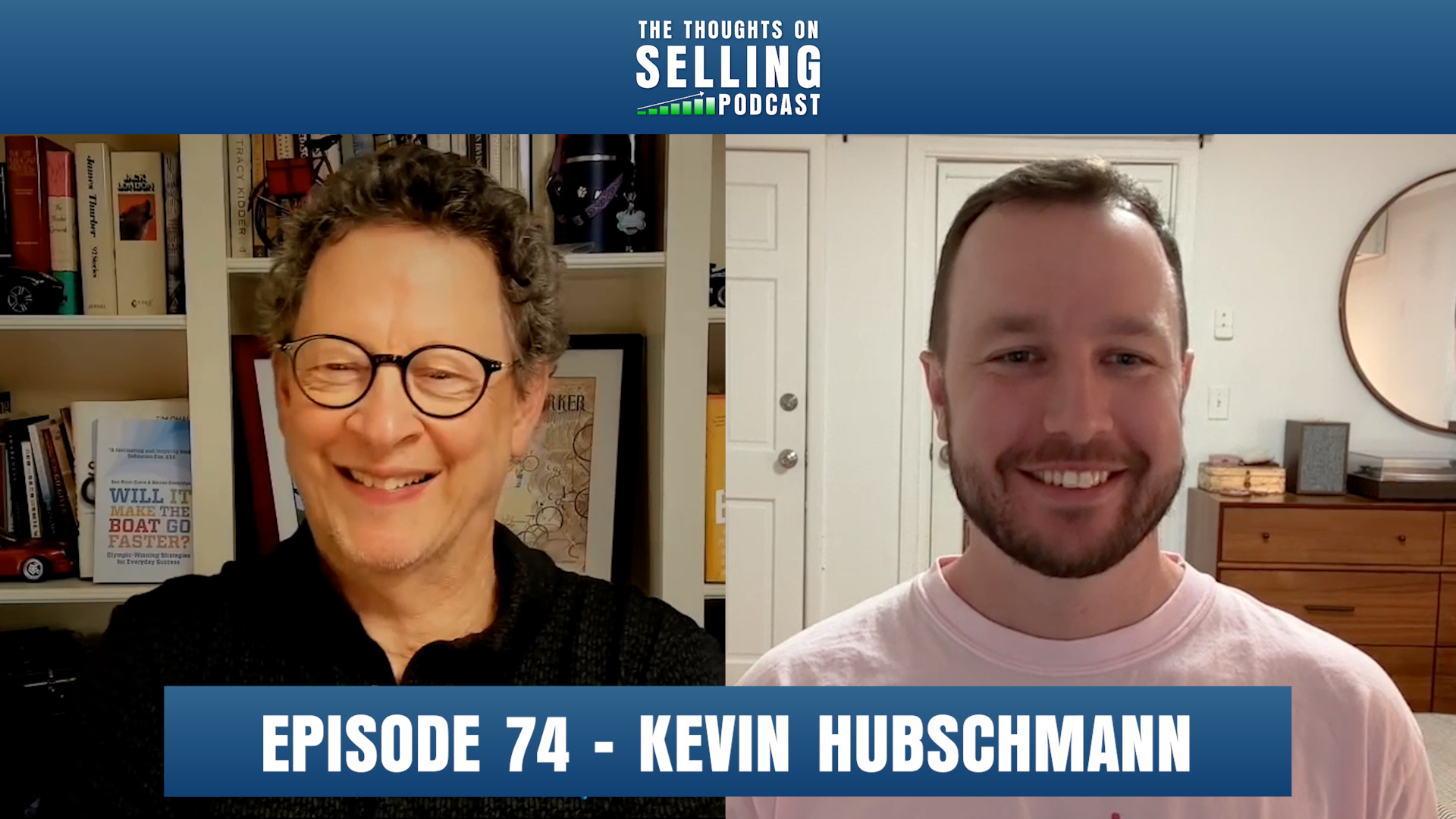
Welcome back to the blog, everyone! If you just tuned into our latest episode, Episode 74: Listen, Don't Think — Improv Rules for Effective Selling, you're in for a treat. We delved deep into a surprisingly powerful principle borrowed straight from the world of improvisational comedy: 'Yes, And...' And today, we're going to unpack why this simple phrase is not just a foundational rule for improv artists, but a revolutionary concept for anyone in sales. Forget the hard closes and the rehearsed monologues; the real magic in sales happens when we learn to collaborate, to build upon what our clients are already telling us, and to truly be present in the conversation. This post is all about shifting our mindset from control to co-creation, and discovering how embracing 'Yes, And...' can unlock unprecedented success in your sales interactions.
The Improv Principle: 'Yes, And...'
For those who didn't catch the episode, let's set the stage. Improv comedy is all about spontaneous creation. There's no script, no predetermined outcome. Performers are given a simple prompt, and then they have to build a scene, a story, a whole world, on the fly. At the heart of this collaborative chaos lies a deceptively simple rule: 'Yes, And...'. This means accepting what your scene partner has offered (the 'Yes') and then building upon it (the 'And'). It's about agreement and addition, not contradiction or negation. If one performer says, 'It's a beautiful sunny day, and I've just found a treasure chest!', the other performer can't respond with, 'No, it's raining, and there's no treasure.' Instead, they must accept the premise and add to it, perhaps by saying, 'Yes, and it's filled with sparkling diamonds and a map to a secret island!'
This principle is fundamental to creating cohesive and engaging scenes. It ensures that the narrative moves forward, that characters and situations develop organically, and that the performers are truly listening to and supporting each other. It's about trust, about surrender to the shared creative process, and about the understanding that the best ideas often emerge from collaboration, not from a single individual's unilateral vision.
Why 'Yes, And...' Works in Sales
Now, how does this translate to the often-perceived adversarial world of sales? We're trained to believe sales is about persuasion, about overcoming objections, about convincing a prospect to see things our way. But what if we flipped that script? What if, instead of trying to control the narrative, we learned to co-create it with our clients? This is where 'Yes, And...' shines. In a sales conversation, the 'Yes' signifies acknowledgment and validation of what the client is saying. It's not necessarily agreeing with their every word or premise, but rather acknowledging their perspective, their concerns, their desires. It's saying, 'I hear you,' or 'I understand where you're coming from.'
The 'And' is where the real sales magic happens. It's where we build upon their statements, offering solutions, insights, or new possibilities that align with their expressed needs. Instead of immediately jumping in with a counter-argument or a pre-programmed response, we use their words as a springboard. For example, if a client says, 'We're really struggling with our current system's inefficiency,' a traditional sales approach might be to immediately launch into a feature-by-feature comparison of your product. But with 'Yes, And...', you'd first acknowledge their pain: 'Yes, I understand that inefficiency can be a significant drain on resources and productivity.' Then, you add value by building on that: 'And, based on what you've shared about the specific bottlenecks you're experiencing, our platform has a unique module designed to streamline that exact process, reducing turnaround time by an average of 30%.'
This approach fosters a sense of partnership rather than an interrogation. It shows the client that you're not just trying to sell them something, but that you're genuinely interested in understanding their challenges and helping them find solutions. It shifts the dynamic from 'us versus them' to 'us working together to solve this problem.'
Shifting from Control to Collaboration
One of the biggest hurdles in adopting 'Yes, And...' in sales is our ingrained tendency to want to control the conversation. We have a product to sell, a quota to meet, and often, a script we feel compelled to follow. This desire for control can manifest as interrupting, dominating the conversation, or dismissing client concerns that don't fit our narrative. However, as our guest Kevin Hubschmann highlighted in Episode 74, true sales mastery often comes from letting go of that need for control and embracing a more collaborative stance.
When we try to control every aspect of the sales interaction, we can inadvertently shut down communication and alienate potential clients. They feel like they're being steered, rather than being heard. Shifting to collaboration means viewing the client as an active participant in finding the best solution. It's about creating a space where their input is valued, where their objections are seen as opportunities for deeper understanding, and where your product or service is presented as a collaborative solution to their specific needs.
This collaborative mindset allows for more agile and adaptable conversations. Instead of sticking rigidly to a script, you can pivot based on the client's responses. You become a partner in discovery, helping them articulate their needs more clearly and then showing them how your offering can meet those articulated needs. This makes the sales process feel less like a transaction and more like a genuine problem-solving engagement.
The Power of Active Listening in Sales
At the very foundation of 'Yes, And...' is active listening. You can't accept and build upon something if you haven't truly heard it. In sales, this is often where we fall short. We're so busy formulating our next response, thinking about our next talking point, or even rehearsing our pitch in our heads, that we fail to truly listen to what the client is actually saying. As Kevin emphasized in the episode, mastery of silence is a critical skill. It allows us to absorb information, to process it, and to respond thoughtfully.
Active listening in sales involves more than just hearing words. It means paying attention to tone of voice, body language (if applicable), and the underlying emotions or concerns being expressed. It's about asking clarifying questions, summarizing what you've heard to ensure understanding, and demonstrating genuine curiosity about the client's situation. When you actively listen, you gain invaluable insights into their pain points, their motivations, and their desired outcomes. These insights are the raw material that allows you to effectively employ the 'Yes, And...' principle.
Think about it: if a client expresses a concern about implementation time, and you weren't actively listening, you might dismiss it or offer a generic reassurance. But if you're actively listening, you'll hear the nuance, perhaps a specific fear of disruption to their current operations. Then, your 'Yes, And...' response can be far more targeted and effective. 'Yes, I understand that implementation timelines can be a major concern for businesses, especially when it comes to minimizing disruption. And, we've developed a phased rollout strategy specifically designed to integrate seamlessly into your existing workflows with minimal impact on your day-to-day operations, with dedicated support throughout the entire process.'
Embracing the Moment: Ditching the Script
The improv principle of 'Yes, And...' is inherently about embracing the moment. In improv, there's no time to go back and rewrite a scene. You have to work with what's happening right now. Similarly, in sales, while preparation is crucial, an over-reliance on a rigid script can be detrimental. When you're locked into a script, you're less likely to hear what the client is truly saying and more likely to force their responses into your predetermined narrative. This is where the 'F your good idea' mantra Kevin mentioned in the episode comes into play – it's about letting go of your preconceived notions and responding to the reality of the present moment.
Ditching the script doesn't mean being unprepared. It means having a strong understanding of your product, your value proposition, and common client challenges. But it also means being flexible enough to deviate when necessary, to follow the client's lead, and to use their input to shape the conversation. When you're present in the moment, you can pick up on cues, adapt your approach, and build a more authentic connection. It allows you to move beyond reciting features and benefits and instead, to engage in a meaningful dialogue that uncovers genuine needs and offers tailored solutions.
This embrace of spontaneity also makes sales conversations more dynamic and engaging for both parties. Instead of a predictable recitation, it becomes a collaborative exploration. This can lead to clients feeling more invested in the process and more confident in the solutions proposed, because they've had a hand in shaping them.
Building Trust Through Genuine Connection (and Maybe Laughter)
At its core, sales is about building trust. People buy from people they like and trust. The 'Yes, And...' principle, by fostering a collaborative and responsive environment, naturally builds trust. When you consistently validate your client's perspective ('Yes') and then offer valuable insights that build upon it ('And'), you demonstrate that you're listening, you care, and you're invested in their success. This creates a foundation of mutual respect and understanding.
Furthermore, as Kevin discussed, humor can be a powerful tool for building trust. It's not about being a stand-up comedian, but about creating shared moments of understanding and levity. Laughter can break down barriers, diffuse tension, and create a more human connection. A well-timed, appropriate piece of humor can signal to a client that you're relatable, that you're not taking yourself too seriously, and that you can find common ground. It's a sign of shared understanding, a moment where the client essentially says, 'I get you, and you get me.' This can significantly accelerate the trust-building process and make the entire sales experience more enjoyable for everyone involved.
Callbacks: Creating Deeper Client Relationships
Another powerful concept borrowed from comedy that Kevin highlighted is the 'callback.' In stand-up, a callback is when a comedian references an earlier joke or observation later in their set, creating a sense of continuity and rewarding attentive audience members. In sales, callbacks work in a similar way. They involve referencing earlier points of conversation, showing that you were not only listening intently but also remembering and integrating that information into your ongoing dialogue.
For example, if a client mentioned their company's recent holiday party early in the conversation, and later you're discussing how your service can help with team efficiency, you could make a callback: 'And thinking back to your team's holiday party, I imagine ensuring everyone has the tools to focus on their core tasks can really help prevent the kind of late-night scrambling that often happens before big company events. Our system can help by...' This not only demonstrates exceptional listening skills but also shows a genuine interest in their broader context. It makes the client feel truly seen and understood, strengthening the relationship beyond a transactional exchange.
Callbacks signal that you're not just going through the motions; you're genuinely invested in understanding their world. This level of attention to detail fosters deeper client relationships, leading to increased loyalty, repeat business, and valuable referrals.
Practice Makes Perfect: Sales as a Performance
Just as improv comedians hone their skills through constant practice, sales professionals can elevate their game by viewing sales as a performance. This doesn't mean being fake or inauthentic. Instead, it means understanding that effective selling requires skill, technique, and the ability to adapt and respond in the moment. The more you practice listening, the more you practice employing the 'Yes, And...' principle, and the more you practice building genuine connections, the more natural and effective you'll become.
Deliberate practice in sales involves actively working on specific skills, seeking feedback, and learning from both successes and failures. It's about rehearsing not your pitch, but your ability to listen, to ask insightful questions, to empathize, and to respond with value. By approaching sales as a performance – a dynamic interaction rather than a static recitation – you become more adept at navigating the complexities of client conversations, building rapport, and ultimately, driving successful outcomes. The more you practice these improv-inspired techniques, the more they become instinctual, allowing you to focus on the client and the shared goal of finding the best solution.
Conclusion: Your Secret Weapon for Sales Success
So, there you have it. 'Yes, And...' is far more than just a quirky improv rule; it's a potent strategy for transforming your sales approach. By embracing collaboration over control, actively listening, and being present in the moment, you can move beyond the limitations of a rigid script and build deeper, more trusting relationships with your clients. This principle, explored in depth in our latest episode Episode 74: Listen, Don't Think — Improv Rules for Effective Selling, offers a powerful framework for unlocking new opportunities and achieving more successful outcomes. It's about co-creating solutions, fostering genuine connections, and ultimately, becoming a more effective and appreciated partner in your clients' journeys. Start practicing 'Yes, And...' today, and watch your sales performance soar. It might just be the secret weapon you've been looking for.