Beyond the Pitch: Why Purpose is Your Ultimate Sales Superpower
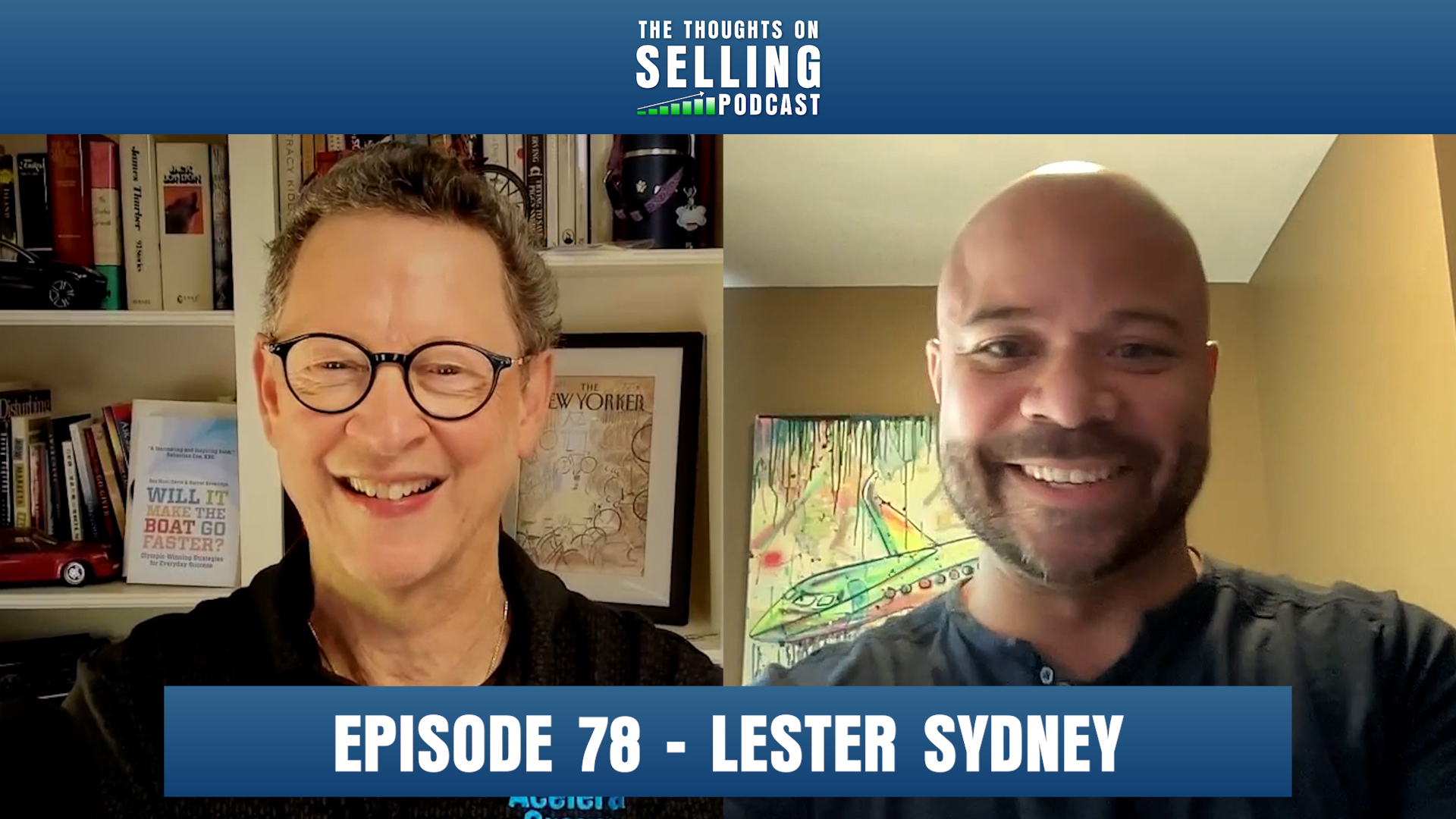
Welcome back to the blog, dear listeners! In our latest podcast episode, episode 78, we had a truly profound conversation with Lester Sidney that, quite frankly, has been resonating with me deeply. We dove into what it truly means to be a human seller, moving beyond the transactional and into the realm of genuine connection and purpose. This blog post is an extension of that episode, exploring the powerful themes we discussed and unpacking how finding your 'why' can transform your approach to sales, and indeed, to life. If you haven't had a chance to listen yet, I highly encourage you to do so. You can find it here: 78. Purpose, Energy and Real Human Selling.
The Human Element in Sales
In a world often driven by metrics, quotas, and polished presentations, it's easy to forget that at its core, sales is a fundamentally human endeavor. We're not just selling products or services; we're building relationships, solving problems, and ultimately, impacting people's lives. This realization is the bedrock of effective selling, and it's something Lester Sidney articulated beautifully in our recent conversation. He emphasized that humans run on purpose, energy, trust, and honesty. When we strip away the jargon and the tactics, we find that genuine human connection is the ultimate differentiator. This isn't about manipulation or clever tricks; it's about understanding the needs of others and authentically offering solutions. It's about recognizing that every interaction, every conversation, is an opportunity to connect on a deeper level, to be of service, and to leave a positive impact. When we prioritize the human element, we unlock a level of trust and rapport that transactional selling can never achieve. It's about seeing the person behind the prospect, understanding their challenges, their aspirations, and their fears. This empathetic approach allows us to tailor our solutions not just to their stated needs, but to their underlying desires. It transforms the sales process from a battle of wills into a collaborative journey of discovery and problem-solving. This is the essence of what Lester and I explored, and it's a perspective that can revolutionize how you approach your day-to-day sales activities.
Lester Sidney's Journey: From Depression to Purpose
Lester's story is a powerful testament to the resilience of the human spirit and the transformative power of finding one's purpose. He shared candidly about his battle with depression following a significant career setback, a period where his sense of self and his drive were severely tested. This wasn't just a professional challenge; it was a deeply personal one. It was during this dark time that Lester began to truly examine his 'why,' to understand what truly motivated him beyond external validation or financial gain. His journey from that low point to rediscovering his passion for helping others see their own potential is incredibly inspiring. It highlights that setbacks are not endpoints, but often catalysts for profound growth and re-evaluation. He realized that his extensive experience in sales, his ability to understand complex business needs, and his inherent desire to uplift others could be channeled into a powerful purpose. This wasn't a sudden epiphany, but a gradual uncovering, a process of introspection that led him back to the core of what makes him tick. His willingness to be vulnerable about this experience is what makes his story so impactful. It reminds us that even in the face of immense personal struggle, purpose can be a guiding light, pulling us forward and offering a renewed sense of meaning. This is the essence of what we discussed in episode 78, and Lester's personal narrative is a compelling illustration of these principles in action.
Unpacking Ikigai: Finding Your 'Why' in Sales
A key framework that emerged in our conversation was Ikigai, the Japanese concept that translates to "reason for being." Lester found immense value in this philosophy, using it to pinpoint his deepest motivations and align his career with his authentic self. Ikigai encourages us to explore the intersection of what we love, what we are good at, what the world needs, and what we can be paid for. For Lester, this exploration led him to the realization that his true passion lay in mentoring and coaching, in helping individuals unlock their own potential, a skill deeply rooted in his sales acumen and his desire to serve. Applying Ikigai to sales isn't about finding a grand, world-changing mission (though it can be!). It's about understanding the intrinsic value you bring, the problems you're uniquely equipped to solve, and the genuine satisfaction you derive from that process. When your sales efforts are aligned with your Ikigai, they cease to feel like a chore and become a natural extension of who you are. This alignment infuses your work with authenticity and passion, which in turn, resonates with your clients. It’s about identifying that sweet spot where your talents, your passions, and the needs of the market converge. For many in sales, this might involve a shift in perspective – seeing their role not just as a transaction facilitator, but as a guide, a trusted advisor, and a catalyst for positive change. This deep dive into Ikigai, as Lester shared, provided him with a powerful compass, ensuring that his professional endeavors were not just successful, but deeply meaningful.
The Power of Energy: Attracting Opportunities and People
Energy, as Lester articulated, is not just a buzzword; it's a tangible force that shapes our interactions and attracts opportunities. The energy we project – whether it's positive, enthusiastic, and authentic, or negative, jaded, and uninspired – dictates the people and circumstances we draw into our lives and our sales cycles. When you operate from a place of purpose and genuine passion, your energy shifts. It becomes magnetic. Prospects can sense this authenticity and are more likely to engage, to trust, and to buy. This isn't about putting on a show; it's about cultivating an internal state of being that radiates positivity and conviction. Think about it: who would you rather buy from? Someone who seems drained and just going through the motions, or someone who is genuinely excited about what they offer and the value they can provide? Lester’s emphasis on energy underscores the idea that our internal state has a direct impact on our external results. It's about showing up fully, with conviction and enthusiasm, and allowing that positive energy to fuel your interactions. This also applies to the people you surround yourself with. High-energy individuals tend to attract other high-energy individuals, creating a positive feedback loop of motivation and success. In sales, where rejection can be a frequent companion, maintaining positive energy is crucial for resilience and sustained performance. It’s about understanding that your emotional and mental state is an integral part of your sales toolkit, and that cultivating vibrant, purposeful energy can be a game-changer.
Giving vs. Taking: The 'Pay It Forward' Mentality
Lester’s perspective on giving versus taking is a refreshing departure from the often self-serving nature of traditional sales. He champions a 'pay it forward' mentality, where the focus shifts from what can be gained to what can be offered. This philosophy fosters a sense of abundance and goodwill, creating stronger, more enduring relationships. When you approach sales with a genuine desire to help and to provide value, rather than solely focusing on the commission, you build trust. This generosity of spirit can manifest in various ways: offering insights beyond the immediate sale, making helpful introductions, or simply being a reliable and supportive resource. The 'pay it forward' mindset cultivates a reputation for integrity and service, which in turn, attracts more opportunities and loyal clients. It's a long-term strategy that prioritizes relationship building over short-term gains. Lester’s insights here highlight the profound truth that true success in sales comes not from extracting value, but from creating it. By consistently giving, by being a source of support and solutions, you build a reservoir of goodwill that will inevitably benefit you. This isn't about altruism for the sake of it; it's a strategic approach that fosters a positive ecosystem around your business and yourself. When you lead with generosity, you create a powerful ripple effect that benefits everyone involved, including yourself.
Trust as the Cornerstone of Sales
Trust is the invisible currency of sales, and Lester eloquently underscores its paramount importance. Without trust, any sale is precarious and unlikely to lead to repeat business or referrals. He shared a powerful anecdote about the significance of walking away from a deal when it wasn't the right fit, a decision that, while seemingly counterintuitive, can be one of the biggest credibility builders. This act of integrity demonstrates that your commitment is to the client's best interest, not just to closing a deal. Building trust requires honesty, transparency, and consistency. It means delivering on your promises, being upfront about limitations, and always acting with integrity. When you prioritize building genuine trust, you create a foundation for long-term partnerships, moving beyond transactional exchanges to become a valued advisor. This is the bedrock of sustainable sales success. Lester’s emphasis on trust is not just about being honest; it’s about demonstrating a commitment to the client’s well-being, even if it means a short-term loss of a deal. This radical honesty builds an unshakeable foundation of credibility, making future engagements significantly easier and more profitable. In essence, protecting your reputation for trustworthiness is far more valuable than any single transaction.
Extreme Ownership: Responsibility in Sales Leadership
The concept of 'extreme ownership,' popularized by Jocko Willink, is a powerful principle for sales leaders and individual contributors alike. Lester touched upon this idea, highlighting the importance of taking responsibility for everything that falls under your purview. In sales, this means owning not just your successes, but also your failures and the outcomes of your team. It's about stepping up and taking accountability, rather than making excuses or blaming external factors. This mindset fosters a culture of accountability, drives continuous improvement, and builds a reputation for reliability. When leaders demonstrate extreme ownership, they inspire confidence and empower their teams to do the same. This principle extends beyond just leadership roles; individuals who take ownership of their pipeline, their targets, and their personal development are far more likely to achieve consistent success. It's about recognizing that you are in the driver's seat of your own sales journey, and that proactive engagement and unwavering responsibility are key to navigating challenges and achieving your goals. This is particularly relevant in team settings, where a leader’s commitment to owning their team’s performance, both good and bad, can foster a powerful sense of shared purpose and collective accountability.
Vulnerability: The Unconventional Sales Superpower
In a profession often characterized by a strong facade, Lester's embrace of vulnerability as a sales superpower is truly revolutionary. He candidly shared how being open and authentic, even about personal struggles, can forge deeper connections with clients. Vulnerability isn't weakness; it's courage. It's the willingness to be seen, imperfections and all. In sales, this translates to a more human-centered approach, where you connect with prospects on a more relatable level. By sharing your own experiences and challenges (appropriately, of course), you create an environment of trust and mutual understanding. This allows clients to open up more readily, revealing their true needs and concerns, which in turn, enables you to provide more tailored and effective solutions. It’s about moving beyond the polished persona and showing up as a real human being. This authenticity can disarm potential clients, break down barriers, and foster a sense of camaraderie that transactional selling simply cannot replicate. Lester’s brave stance on vulnerability is a powerful reminder that our humanity is not a liability in sales, but a significant asset. It’s about recognizing that the moments where we allow ourselves to be seen, flaws and all, are often the moments where the deepest connections are forged.
The Compound Effect: Small Wins, Big Transformations
The principle of the compound effect, popularized by Darren Hardy, speaks to the power of small, consistent actions accumulating over time to create significant results. Lester brought this concept into our discussion, highlighting its applicability to sales, fitness, and personal growth. In sales, this means focusing on small, incremental improvements each day – practicing a new skill, making an extra call, refining a pitch, or dedicating time to learning. These seemingly minor efforts, when compounded, lead to substantial transformations in performance and career trajectory. It's about recognizing that success isn't usually a sudden leap, but a steady climb built on a foundation of consistent effort and dedicated practice. This philosophy encourages patience and perseverance, reminding us that the small wins matter and contribute to a larger, more impactful outcome. The compound effect is the quiet force behind remarkable achievements, and Lester's application of it in our conversation serves as a powerful motivator for anyone seeking to improve their sales game. It's a reminder that consistent, disciplined effort, even in small doses, will yield extraordinary results over time. This can be applied to everything from prospecting and follow-up to skill development and personal well-being.
Raising Kids with Mindset: Teaching Resilience and Growth
Lester shared some incredibly insightful thoughts on raising children with a growth mindset, a topic that resonates deeply with many of us who are parents or mentors. He emphasized the importance of teaching resilience, framing mistakes not as failures, but as opportunities for learning and growth. This involves fostering an environment where children feel safe to experiment, to try new things, and to learn from their missteps without fear of judgment. Eliminating negative self-talk, like the word "can't," and encouraging a belief in their ability to learn and improve are crucial components of this approach. This philosophy of mindset training is directly applicable to sales. Just as we want our children to embrace challenges and learn from setbacks, we need to adopt a similar attitude towards our sales careers. Embracing a growth mindset allows us to view objections as opportunities for dialogue, rejections as lessons learned, and challenges as stepping stones to greater success. Lester’s approach to parenting underscores a fundamental truth: the principles of resilience and growth are universal, and cultivating them early in life, and continuously in our professional lives, is key to unlocking our full potential.
What Makes a Great Seller: The Importance of Coachability
When it comes to hiring and developing great sellers, Lester identifies one trait as non-negotiable: coachability. This is the ability and willingness to learn, to receive feedback, and to adapt. A highly coachable individual understands that they don't have all the answers and is eager to improve. They actively seek out guidance, listen intently to advice, and are committed to implementing what they learn. This is far more valuable than raw talent or extensive experience alone. A coachable seller is a growth-oriented seller, someone who is constantly evolving and refining their skills. This is essential in the ever-changing landscape of sales. In our episode, Lester stressed that even the most talented individual will plateau if they are not open to learning and evolving. Coachability, in essence, is the engine of continuous improvement in sales. It’s about humility, a desire to excel, and the understanding that there is always something new to learn. This makes them invaluable assets to any sales team, as they are the individuals who will consistently adapt, improve, and ultimately, drive greater success.
Conclusion: Selling with Heart and Authenticity
Our conversation with Lester Sidney in episode 78 was a powerful reminder that in sales, as in life, purpose is the ultimate superpower. It’s the driving force that fuels our passion, guides our actions, and enables us to connect authentically with others. Lester’s journey, from overcoming depression to embracing his purpose, beautifully illustrates how finding your 'why' can reignite your drive and make your sales efforts not just more effective, but more meaningful. By focusing on energy, generosity, trust, extreme ownership, and vulnerability, we can move beyond mere transactions to build genuine relationships and create lasting impact. As we continue to navigate the complexities of the sales world, let's remember the human element. Let's strive to sell with heart, with authenticity, and with a clear understanding of our purpose. I encourage you to revisit our conversation at 78. Purpose, Energy and Real Human Selling and reflect on how you can integrate these principles into your own sales journey. Thank you for joining me on the blog, and until next time, keep selling with purpose!