AI in Sales: Your New Best Friend, Not Your Replacement
Introduction: AI in Sales - The Conversation We Need to Have
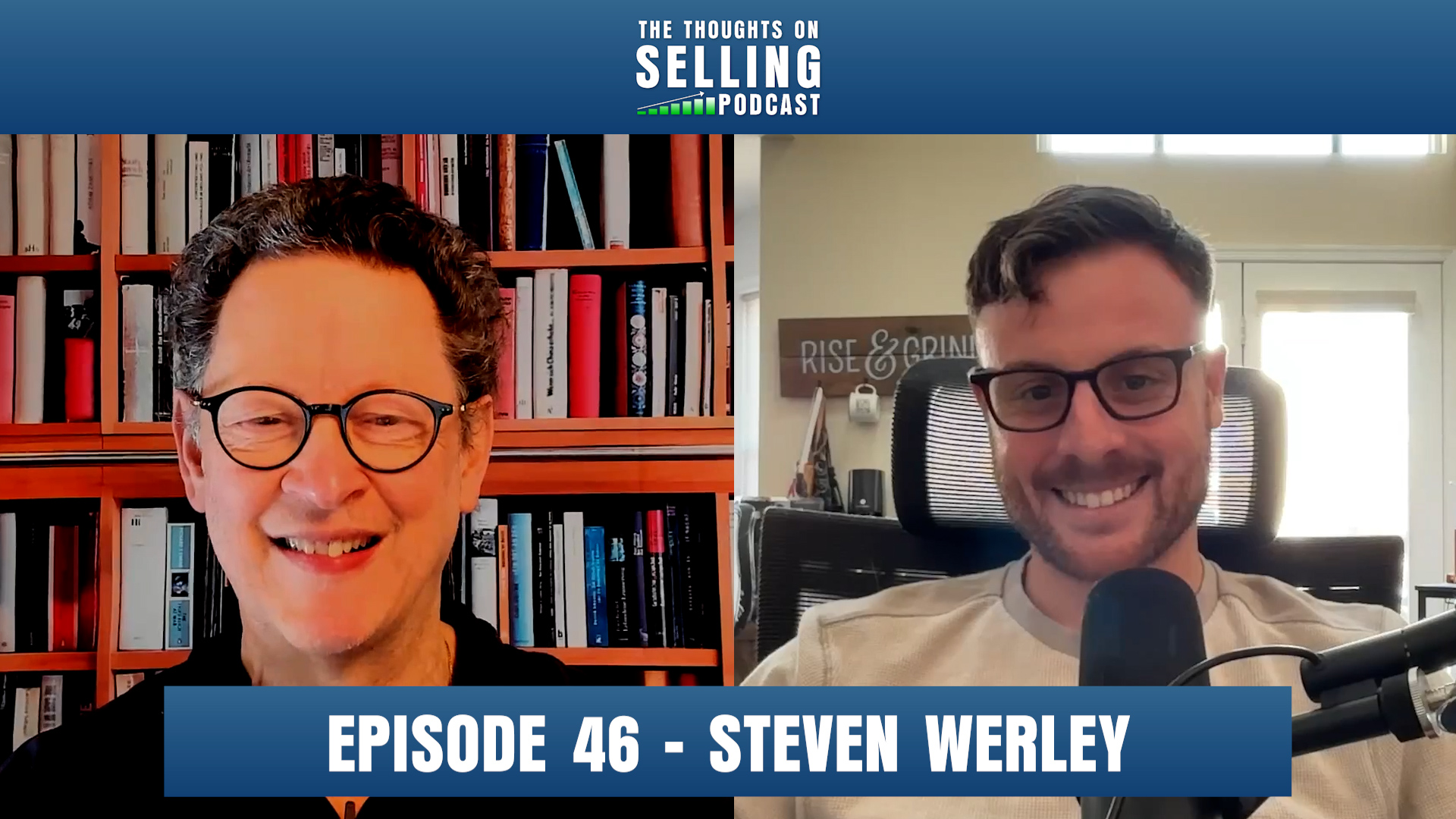
The air is thick with speculation, and frankly, a little bit of fear. When we talk about Artificial Intelligence, especially within the realm of sales, the narrative often leans towards displacement. Will robots take our jobs? Will algorithms render human connection obsolete? It's a valid question, and one that deserves a thoughtful, nuanced answer. In this blog post, we're going to dive deep into why AI in sales isn't the boogeyman some make it out to be, but rather a powerful ally that can elevate your performance, streamline your processes, and ultimately, allow you to do what you do best: connect with people and solve their problems. This discussion is a natural extension of our latest podcast episode, "46. Will AI replace sales people? Assist you? It's your choice!" where we had a fantastic conversation that really hammered home this message.
My Conversation with Steven Werley: AI as an Ally
Speaking of fantastic conversations, our recent episode with Steven Werley was exactly that. Steven, a seasoned sales expert, entrepreneur, and someone who truly understands the power of pushing boundaries (evidenced by his endurance athlete background and military service), brought an incredibly grounded perspective to the AI in sales discussion. He didn't shy away from the technology, nor did he blindly advocate for it as a silver bullet. Instead, he articulated a vision where AI acts as a force multiplier for sales professionals. Steven emphasized that AI's true value lies not in replicating human empathy or strategic thinking, but in taking on the repetitive, time-consuming tasks that often bog down sales teams. Think about it: how much time do you spend manually logging calls, crafting follow-up emails, or sifting through CRM data to find that one crucial piece of information? Steven's point, and the core of our discussion, is that AI can handle a significant portion of this, freeing you up for more meaningful engagements.
The show notes for our episode really capture this essence: "Steven shares his insights on the role of AI in sales, explaining that AI isn’t here to replace salespeople but to help them perform better. By automating follow-ups, streamlining call reviews, and taking over tedious CRM tasks, AI allows sales teams to focus on high-value interactions." This isn't about a subtle shift; it's a fundamental redefinition of how sales can be done, making it more efficient and, crucially, more human-centric. We also touched upon Steven's innovative project of building AI tools for businesses live on air, which is a testament to his belief in the practical, accessible nature of this technology.
Debunking the Myth: AI Isn't Replacing Salespeople, It's Empowering Them
Let's tackle this head-on. The idea that AI will make salespeople redundant is a deeply flawed one. Sales, at its core, is a human endeavor. It's about understanding needs, building trust, and forging relationships. Can an algorithm truly replicate the empathy of a salesperson who has genuinely listened to a client's pain points? Can it offer the reassurance of a trusted advisor who has navigated complex challenges alongside a customer? I would argue, emphatically, no. However, what AI *can* do is amplify the effectiveness of these human qualities. It can provide the data, the insights, and the automation that allow salespeople to dedicate more time and energy to those critical human interactions.
Consider the traditional sales funnel. There are numerous touchpoints that require consistent effort but don't necessarily demand a deep level of human creativity. Automated follow-up sequences, for instance, can ensure that no lead falls through the cracks, but the *content* of those follow-ups can be personalized by the salesperson. AI can transcribe and analyze sales calls, highlighting key moments, objections, and opportunities for improvement. This allows a sales manager to provide more targeted coaching, or for a salesperson to learn from their own interactions without having to re-listen to hours of recordings. The myth of replacement stems from a misunderstanding of AI's capabilities and its intended role. It's a tool, a sophisticated assistant, not a sentient being aiming to usurp human roles.
How AI Tools Are Supercharging Sales Performance
So, if AI isn't replacing us, how is it making us better? Let's get into the specifics. The applications are vast and growing daily, but here are some key areas where AI is already making a significant impact:
Automated Follow-ups and Nurturing
Remember those endless to-do lists for follow-up calls and emails? AI-powered tools can now automate these processes. Based on predefined triggers or customer engagement levels, AI can send out personalized follow-up messages, schedule next steps, and even suggest the optimal time to reach out. This doesn't mean generic, robotic emails. Advanced AI can craft content that mirrors your brand voice and references past interactions, making the outreach feel remarkably human. This frees up salespeople to focus on the leads that are showing the most genuine interest and require a more in-depth, personalized conversation.
Streamlined Call Reviews and Insights
Analyzing sales calls for coaching and improvement can be incredibly time-consuming. AI tools can now transcribe calls in real-time, identify keywords and sentiment, and even flag moments of success or areas of concern. Imagine a sales manager who can instantly see which reps are effectively handling objections or which pitches are resonating most with prospects, all without having to listen to every single call. This data-driven approach to coaching allows for more targeted and effective development, ultimately leading to better sales performance.
Enhanced CRM Management
The Customer Relationship Management (CRM) system is the backbone of any sales operation. However, keeping it up-to-date with accurate, comprehensive data can be a constant battle. AI can automate data entry, identify duplicate records, and even suggest missing information. This means less time spent on administrative tasks and more time spent actually selling. Furthermore, AI can analyze CRM data to identify patterns, predict customer behavior, and suggest the next best action for each lead, turning your CRM into a proactive sales intelligence hub.
Personalized Prospecting and Lead Scoring
Instead of casting a wide net, AI can help sales teams identify their ideal customers more effectively. By analyzing vast amounts of data, AI can help score leads based on their likelihood to convert, allowing salespeople to prioritize their efforts on the most promising prospects. This also extends to personalized prospecting, where AI can identify relevant individuals within target companies and suggest talking points based on their industry, role, and recent activities. This level of precision significantly increases the efficiency and effectiveness of the prospecting process.
Predictive Analytics for Sales Forecasting
Accurate sales forecasting is crucial for business planning and resource allocation. AI can analyze historical sales data, market trends, and various other factors to provide more reliable sales forecasts. This predictive capability allows businesses to make more informed decisions about inventory, staffing, and marketing strategies, reducing guesswork and improving overall business agility.
The Human Element: Why 'Sales is About Helping'
Steven Werley hit the nail on the head when he said, "Sales is about helping, not just closing." This is a fundamental truth that AI can enhance, but never replace. The most successful salespeople aren't those who can deliver a perfect pitch, but those who can truly understand a prospect's challenges and offer a solution that genuinely improves their situation. This requires empathy, active listening, and the ability to build rapport. These are inherently human qualities.
When AI handles the mundane tasks, it liberates the salesperson to focus on these human elements. Instead of worrying about sending a follow-up email, you can be on a call, actively listening to a prospect express their frustration with a current process. Instead of spending an hour updating CRM records, you can be crafting a personalized proposal that addresses their specific needs. AI empowers the salesperson to be a trusted advisor, a problem-solver, and a true partner to their clients. The "sales is about helping" mantra becomes not just a philosophical ideal, but a practical reality when technology is leveraged to support those who are on the front lines of customer interaction.
Embracing the Future: Why Top Sales Reps Leverage AI
The top performers in any field are those who are willing to adapt and evolve. In sales, this means embracing new technologies that can give them an edge. The sales reps who are already integrating AI into their workflows are not just becoming more efficient; they are becoming more strategic, more informed, and ultimately, more successful. They understand that AI is not a threat, but an opportunity to augment their skills and focus on what truly matters: building relationships and driving value for their clients.
Think about the early adopters of any significant technological shift. They are the ones who gain the competitive advantage. Those who resist AI in sales will likely find themselves falling behind those who are using it to streamline their processes, gain deeper customer insights, and dedicate more time to high-value interactions. The message from our episode and this blog post is clear: the future of sales is a collaborative one, where human ingenuity and artificial intelligence work in tandem. To be a top sales rep in the years to come, one must be willing to explore and embrace these powerful new tools.
The Power of Resilience: Lessons from Sports, Military, and Sales
Steven Werley's background as an endurance athlete and his time in the military are not just interesting anecdotes; they are crucial to understanding the mindset needed to navigate a rapidly changing landscape, including the integration of AI in sales. He rightly points out that "doing hard things prepares you for success." This applies directly to adapting to new technologies. Learning to use AI tools, integrating them into your workflow, and re-evaluating your strategies might feel like a "hard thing" initially. But the resilience built through pushing past challenges, whether in an ultramarathon, a military operation, or a tough sales cycle, is what enables individuals and teams to thrive in the face of change.
The ability to be resilient means not being paralyzed by the fear of the unknown. It means being proactive in learning and adapting. It means understanding that challenges are opportunities for growth. For sales professionals, this resilience will be key in mastering AI tools, leveraging them effectively, and continuing to focus on the human-centric aspects of selling that AI cannot replicate. The lessons are clear: embrace the challenge, learn the tools, and leverage them to become an even more effective salesperson.
Conclusion: Your AI-Powered Sales Superpower
The conversation around AI in sales is far from over, but the message we've explored here, and in our recent podcast episode "46. Will AI replace sales people? Assist you? It's your choice!," is a powerful one: AI is not here to replace you. It's here to empower you. By automating the mundane, providing invaluable insights, and streamlining your processes, AI tools act as your personal sales superpower, allowing you to dedicate more time and energy to the aspects of selling that truly require your unique human touch: building relationships, understanding needs, and providing exceptional value. The best sales reps are not the ones who shun technology, but the ones who learn to wield it to their advantage, becoming more efficient, more effective, and ultimately, more human in their approach. Embrace AI, and unlock your full sales potential.