AI in Sales: Supercharging Your Pipeline with Data-Driven Insights
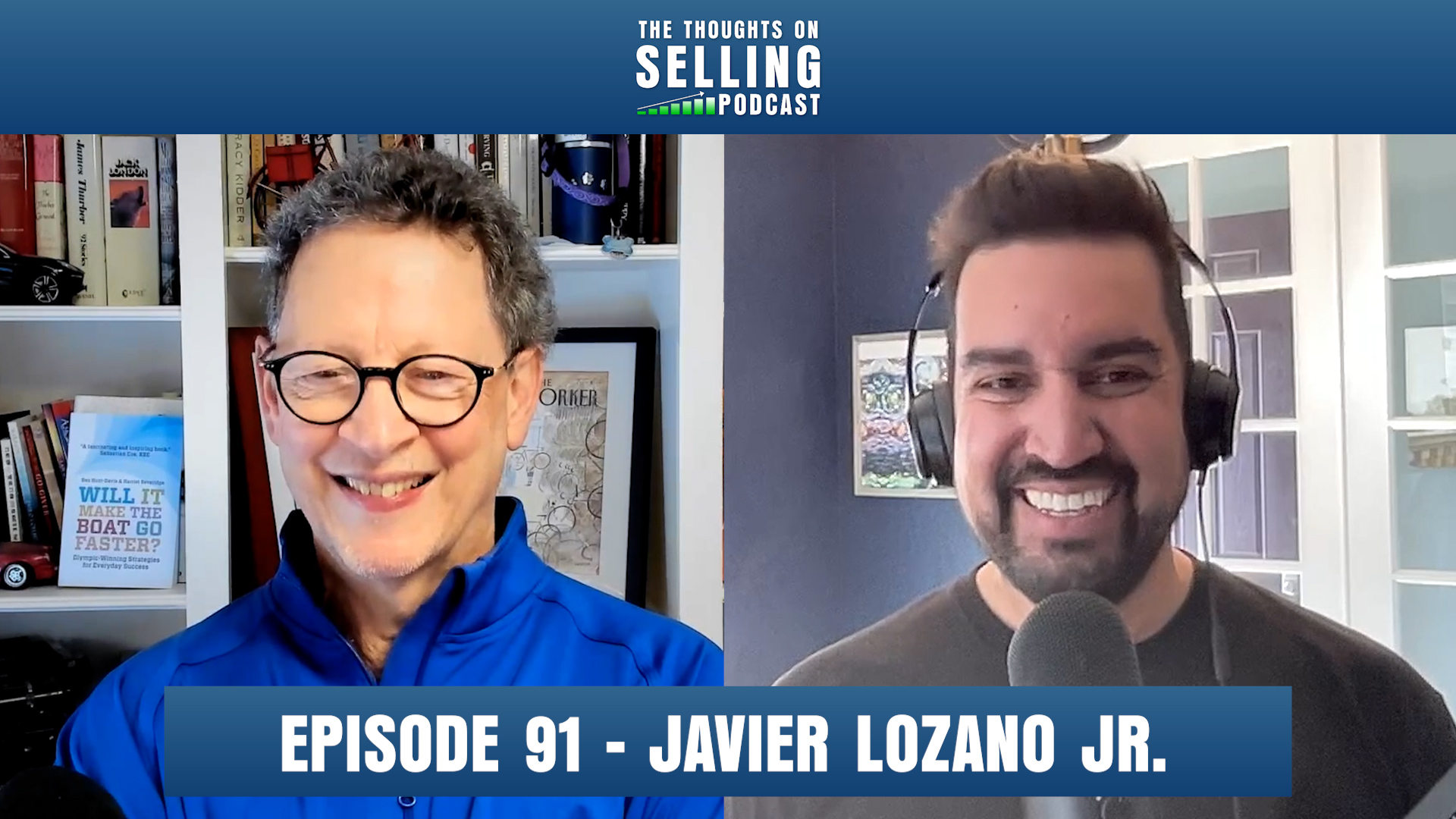
In our latest Thoughts on Selling podcast episode, "Your Best Leads Are Going to Waste," we had a truly insightful discussion with Javier Lozano Jr. about the critical intersections of sales, marketing, customer success, and the burgeoning power of Artificial Intelligence. This blog post expands on those themes, exploring how AI can be leveraged to identify and fix those frustrating leaks in your sales pipeline, transforming it into a predictable and profitable engine for growth. We'll be dissecting how analyzing the very words spoken in sales calls can unlock a treasure trove of insights, leading to sharper messaging, more efficient sales cycles, and ultimately, significantly higher conversion rates.
The Problem with Leaky Pipelines and Misaligned Teams
We've all been there. You've got a sales team hustling, a marketing department churning out content, and yet, the revenue numbers aren't where they should be. It feels like water slipping through your fingers – a leaky pipeline. But what's really causing these leaks? Often, the root cause isn't a lack of effort, but a fundamental misalignment between departments and a failure to truly understand what's working at the coal face of sales interactions. Marketing might be generating a high volume of leads, but if those leads aren't qualified or don't align with the company's ideal customer profile, they become dead weight. Sales might be having conversations, but if the messaging isn't resonating, those conversations don't move forward. This disconnect creates a cycle of frustration, finger-pointing, and wasted resources. In our podcast episode, Javier powerfully articulated that if sales and marketing aren't aligned on revenue, it's not just a pipeline problem; it's a structural one. The emphasis needs to shift from departmental metrics like MQLs (Marketing Qualified Leads) or activity numbers to the shared goal of closed-won deals.
The Critical Link: Why Sales and Marketing Must Share Revenue Goals
For too long, sales and marketing have operated in silos, each with their own set of KPIs and objectives. Marketing aims to generate leads, and sales aims to close them. This creates a natural tension. Marketing may feel pressure to deliver quantity, while sales may feel pressure to work with leads that are not a good fit. When these teams are not intrinsically linked by the same ultimate goal – revenue generation – the pipeline inevitably suffers. Javier's point about shared revenue goals is paramount. When both teams are incentivized and measured by the success of closed deals, the dynamics shift. The focus moves from "my department's success" to "our company's success." This fosters a collaborative environment where marketing can gain valuable insights into what types of leads are most likely to close, and sales can provide feedback on the quality and conversion potential of those leads. This closed-loop system, where feedback flows seamlessly between teams, is essential for optimizing the entire revenue generation process. Without this alignment, you're essentially trying to build a strong house on a shaky foundation.
Leveraging Customer Success as Your Most Powerful Marketing Asset
One of the most eye-opening aspects of our discussion was the redefinition of Customer Success as a core marketing function. Too often, customer success is viewed solely as a post-sale support activity. However, Javier argues, and I wholeheartedly agree, that our happiest customers are our most potent marketing asset. The language they use to describe their positive experiences, the problems your product or service solves for them, and the benefits they derive are the purest forms of social proof and product positioning. These are the words that truly resonate with prospects because they come from someone who has already navigated the same journey. Think about it: what's more compelling than a testimonial from a satisfied client? This is where AI can play a crucial role in distilling these insights. By analyzing customer success interactions, support tickets, and even case studies, AI can identify recurring themes, pain points addressed, and value propositions articulated. This information can then be fed back to marketing to refine messaging and to sales to equip them with compelling, customer-backed talking points. Ignoring the wealth of information within your customer success function is like leaving your most powerful marketing collateral on the table.
AI's Role in Sales Enablement: Uncovering What Truly Closes Deals
This is where we get to the heart of how AI can revolutionize your sales process. Sales enablement traditionally involves providing reps with the tools, content, and training they need to be effective. However, much of this enablement is based on assumptions, anecdotal evidence, or broad market research. AI, particularly through the analysis of sales call transcripts, offers a data-driven approach to sales enablement that can uncover what is *actually* working. Imagine feeding hundreds, or even thousands, of recorded sales calls into a sophisticated AI language model. This AI can then identify patterns and themes that may not be obvious to the human ear or even to experienced sales leaders. It can pinpoint specific phrases, questions, objections, and value propositions that consistently lead to positive outcomes – progressing the deal, securing a meeting, or ultimately, closing the sale. This goes beyond simply identifying good or bad calls; it’s about granularly understanding the mechanics of successful sales interactions. This is not science fiction; this is the present reality of how forward-thinking organizations are leveraging AI to gain a competitive edge.
Practical AI Applications: Sharper Messaging, Shorter Cycles, Higher Conversions
The insights gleaned from AI-powered transcript analysis translate into tangible benefits across the sales funnel. Let's break down some practical applications:
- Sharper Messaging: The AI can reveal the exact language that resonates with your ideal customers. This means marketing can refine its ad copy, website content, and email campaigns to mirror the language prospects are using and responding to. Sales reps can be coached to adopt these proven phrases and talking points, leading to more impactful conversations. If AI consistently shows that a specific benefit statement or a particular way of handling an objection leads to a positive shift in the conversation, that becomes a cornerstone of your training and enablement materials.
- Shorter Sales Cycles: By understanding which questions prompt the most progress and which information needs to be delivered at specific stages of the sales process, AI can help optimize your sales playbook. If calls consistently stall at a certain point because a key piece of information is missing or an objection isn't being addressed effectively, AI can flag this. This allows for proactive adjustments to the sales process, ensuring reps have the right information and approach at the right time, thereby accelerating deal progression.
- Higher Conversion Rates: Ultimately, sharper messaging and shorter sales cycles contribute to higher conversion rates. When sales reps are equipped with the most effective language, understand customer pain points deeply, and navigate the sales process efficiently, they are far more likely to close deals. AI helps move beyond guesswork and intuition to a data-backed strategy for improving sales performance. This can also extend to lead scoring, where AI can analyze the content of initial interactions to predict a lead's propensity to close, allowing sales teams to prioritize their efforts more effectively.
This is precisely the kind of transformation Javier discussed when he highlighted how feeding call transcripts into language models can reveal what's truly closing deals, leading to these improved outcomes. It's about moving from "what we think works" to "what the data shows works."
Measuring Pipeline Quality: Introducing the HIRO Metric
A common challenge in sales is the inability to accurately measure the *quality* of the pipeline. You can have a pipeline full of opportunities, but if they aren't likely to close, it's a false sense of security. This is where Javier’s introduction of the HIRO metric – High Intent Revenue Opportunities – is a game-changer. HIRO is a powerful diagnostic tool that goes beyond simple lead volume. It focuses on the percentage of opportunities that are genuinely moving towards a closed-won state. Javier suggests that a healthy pipeline, one where marketing is delivering quality leads and sales is executing effectively, should see a conversion rate of above 25% for these High Intent Revenue Opportunities. If your conversion rate dips below this threshold, it's a strong indicator that either the leads you're receiving are not high quality, or there's an issue with your sales process or enablement. This metric forces a critical examination of where the leaks are truly occurring and provides a clear benchmark for success.
Diagnosing and Fixing Your Pipeline: Where to Focus Your Efforts
Once you've identified a leaky pipeline, the next step is to diagnose the root cause and implement targeted fixes. Simply throwing more resources at the problem without understanding the underlying issues is rarely effective. Javier emphasizes the importance of a diagnostic approach, identifying the two or three key priorities that will move the needle. These often fall into categories like Revenue Operations (RevOps) gaps – inefficiencies in the systems and processes that support the revenue engine – or positioning problems – where the value proposition isn't clear or compelling. By focusing on these core areas, organizations can avoid the trap of trying to fix everything at once and instead concentrate their efforts on the interventions that will have the most significant impact. AI can be a powerful ally in this diagnostic process, helping to identify bottlenecks, areas of friction, and ineffective communication patterns within sales interactions.
Conclusion: Building a Predictable and Profitable Sales Engine with Data and AI
In our conversation on "Your Best Leads Are Going to Waste," we embarked on a journey to understand the interconnectedness of sales, marketing, and customer success, and how the intelligent application of AI can transform these functions into a cohesive and powerful revenue-generating machine. This blog post has expanded on those crucial points, illustrating how a leaky pipeline is often a symptom of deeper issues like departmental misalignment and a lack of data-driven insight into what truly drives conversions. We've explored the practical applications of AI, particularly in analyzing sales call transcripts, to unlock invaluable knowledge about effective messaging, optimized sales cycles, and ultimately, higher conversion rates.
The HIRO metric provides a tangible way to measure pipeline quality, enabling businesses to pinpoint where their efforts are most needed. By embracing data and AI, organizations can move beyond guesswork and intuition to build a truly predictable and profitable sales engine. The future of sales enablement is not just about providing resources; it's about intelligently harnessing the power of data to refine every aspect of the sales process, ensuring that every opportunity is maximized and every lead has the potential to become a loyal customer.
Thank you for joining us on this exploration, and we encourage you to listen to the full episode for even more actionable insights.